Live Wire
23:26ZINSIDERPAPPowerful earthquake strikes Maiquetía airport in Venezuela23:26ZFARSNANATO Secretary General Rutte tells Trump Iran represents terrorism, chaos23:25ZINSIDERPAPTwo earthquakes of 7.5 and 7.1 magnitude struck Venezuela23:25ZWFWITNESSBuilding collapses in Caracas area after earthquake in Venezuela23:25ZRNINTEL7.1 magnitude earthquake strikes west of Caracas, Venezuela23:24ZWFWITNESSMagnitude 7.5 Earthquake Hits Venezuela, USGS Reports Two Quakes23:20ZMEGATRONRO7.1-magnitude earthquake strikes Venezuela, multiple buildings collapse23:18ZFARSNADenmark proposes ban on mosque call to prayer, immigration minister says it does not belong
Markets
S&P 500736.83 0.48%Nasdaq25,477 0.43%Nasdaq 10029,220 0.43%Dow518.7 0.01%Nikkei93.68 1.13%China 5032.48 0.34%Europe87.2 0.30%DAX40.56 0.02%BTC$60,888 2.74%ETH$1,618 2.71%BNB$563.76 2.38%XRP$1.07 3.15%SOL$67.97 2.12%TRX$0.3268 0.68%HYPE$64.09 3.39%DOGE$0.0759 3.59%RAIN$0.0158 1.35%LEO$9.43 1.10%QQQ$723.95 1.88%VOO$679.18 0.49%VTI$365.77 0.59%IWM$297.87 0.37%ARKK$77.38 0.74%HYG$79.9 0.06%Gold$367 0.27%Silver$52.05 0.54%WTI Crude$106 0.24%Brent$40.66 0.17%Nat Gas$11.76 0.20%Copper$36.9 1.57%EUR/USD1.1340 0.00%GBP/USD1.3161 0.00%USD/JPY161.68 0.00%USD/CNY6.8109 0.00%
CLOSEDNYSEopens in 14h 0m
The Monexus
Vol. I · No. 175
Wednesday, 24 June 2026
Saturday Ed.
Updated 23:29 UTC
  • UTC23:29
  • EDT19:29
  • GMT00:29
  • CET01:29
  • JST08:29
  • HKT07:29
← The MonexusOpinion

Trump's Turkey Reset: F-35s, a Personal Phone Call, and the Limits of 'Stayed Out of the War'

On 24 June 2026, Donald Trump called Recep Tayyip Erdoğan a friend who 'stayed out of the war' with Iran — and JD Vance confirmed F-35 certification is under review. The price of NATO's most unpredictable member is being recalculated in real time.

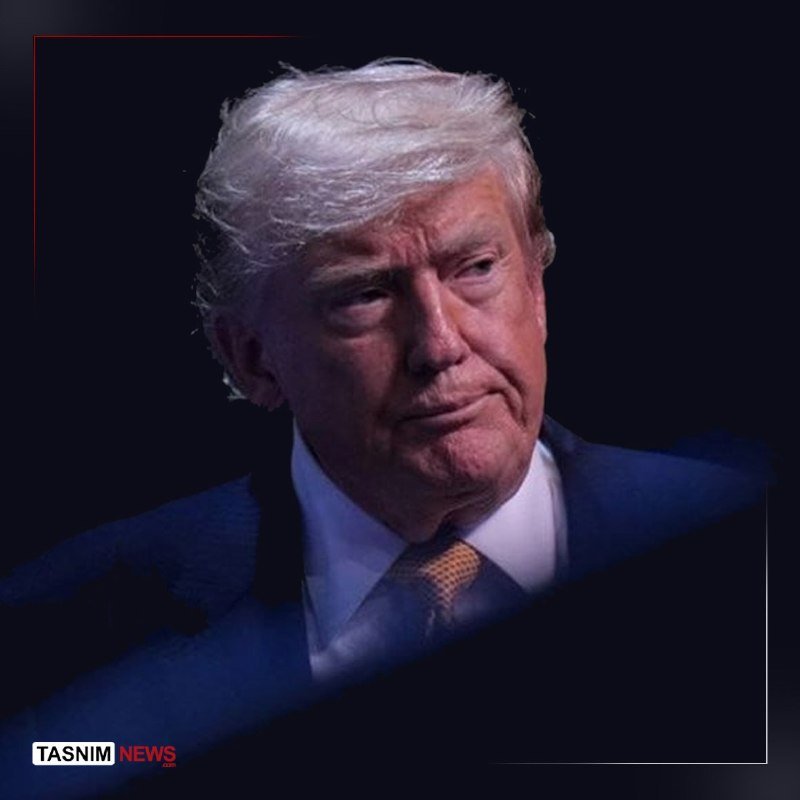
@presstv · Telegram

On 24 June 2026, Vice-President JD Vance confirmed that the Trump administration is actively reviewing whether Türkiye can be brought back into the F-35 programme, telling reporters that Secretary of State Pete and "the entire team are reviewing this right now, because there are certain things that we have to certify have happened — that have happened — in order to comply" with US conditions. The comments, reported by Clash Report at 20:50 UTC, came minutes after President Donald Trump used his own press appearance to describe Turkish President Recep Tayyip Erdoğan as a "friend of mine" and "a respected man" who "stayed out of the war" with Iran. The pairing of statements is not incidental. Washington is rewriting the terms under which a NATO ally it publicly punished four years ago is allowed back into the Western defence architecture — and the currency being offered is personal rapport, not institutional process.

The Turkish question has been parked in legal limbo since 2021, when Ankara's acquisition of the Russian S-400 air defence system triggered the activation of CAATSA sanctions and Türkiye's removal from the F-35 joint strike fighter programme. The argument inside Washington was straightforward: an F-35 partner state running Russian radar in the same airspace as a fifth-generation stealth platform could not be reconciled with alliance intelligence-sharing. The argument inside Ankara was equally clear — Russia offered a sovereign weapon Türkiye could not buy anywhere else, and the United States had refused to sell its own equivalent on reasonable terms. Both readings are defensible. What is new this week is that the second one is being treated as solvable.

Vance's "certification" language is the giveaway. Certification under the F-35 partnership is not a casual administrative step; it is a binding US determination that partner-state systems, personnel and infrastructure meet programme standards on cybersecurity, software integrity and operational security. A US administration does not float certification language publicly unless it is preparing the legal scaffolding to say yes. The vice-president's phrasing — that "certain things" must have "happened" — implies a checklist, and the implicit subject is what happens to the S-400s and the Russian-built infrastructure they depend on. On the substance, the administration is keeping its options open. On the political signal, it is announcing a door.

The Trump comments on Erdoğan, posted by Clash Report at 20:32 UTC and 20:33 UTC, frame that door in transactional terms. Erdoğan, the president said, "loves Türkiye" and is "doing a great job." More pointedly, he told reporters the Turkish president "was a prime candidate to go into the war with Iran. Maybe, on the Iran's side, because he's not a" — and the clip cuts. The subtext is the headline: a NATO frontline state with the second-largest army in the alliance, sitting on the Syrian and Iraqi borders and projecting power across the Black Sea, chose not to enter a war that the same administration is conducting against Tehran. Trump is rewarding restraint. The form of that reward — readmission to the F-35 programme, normalisation of a defence relationship that was structurally broken — is the single most expensive item on the menu.

The counter-narrative inside the US defence establishment should not be dismissed. Critics will note that Türkiye has deepened cooperation with Moscow since 2021, hosted Russian financial infrastructure, and expanded its drone-export footprint into regions where Washington would prefer not to compete. The S-400s remain physically present in Turkish territory. The Baltic and Eastern European NATO allies, who watched Russia's full-scale invasion of Ukraine and who regard Türkiye's selective accommodation of Moscow as strategically corrosive, will read a Türkiye reset as an American decision to trade frontline credibility for transactional flexibility. That is not a fringe view. It is the view from Warsaw, Tallinn and Vilnius, and it has been quietly consistent across both Republican and Democratic administrations.

What is happening here is a structural shift dressed in personal language. The post-2021 framework — which held that NATO interoperability was a hard technical floor below which no partnership could slip — is being replaced by a transaction in which compliance is negotiable, reciprocity is bilateral, and the ultimate arbiter is the personal relationship between the Oval Office and the Çankaya palace. That is a meaningful change for an alliance whose entire operating logic, since 1949, has been to depersonalise strategic commitment. Whether that change survives the next crisis — whether it survives a Russian move on the Black Sea, an Iranian move on its eastern border, or an Israeli strike on Syrian air defences — depends on whether the certification Vance described is treated as a one-off concession or the template for how Washington handles future allied indiscretions.

The Iranian dimension is the one that gives this moment its specific 2026 weight. Türkiye is the swing state between the Caucasus and the Gulf. Its refusal to enter the war with Iran — confirmed now, on the record, by the US president — is what kept the eastern Mediterranean quiet during the escalation. The F-35 reset is, in effect, a delayed bill for that quiet. Ankara will extract its own price: continued access to Western financial architecture, relief on remaining CAATSA-era secondary sanctions, and quiet tolerance of its footprint in northern Syria and Libya. The administration appears to have decided that those costs are cheaper than the alternative of a Türkiye that drifts toward the Moscow-Beijing axis while a hot war rages on its southern border. That calculation may be correct. It is also the calculation that, taken together with the Iran posture and the Ukraine posture, defines what this administration's NATO actually is.

What remains uncertain is whether certification can be completed before Ankara's domestic politics intrude — Erdoğan's parliamentary arithmetic, the opposition's posture on Russian systems, and the legal exposure of any senior Turkish official who signs off on decommissioning S-400 batteries. The sources do not specify a timeline. They confirm only that the process is live, that it is being conducted at the highest level of the US government, and that it is being justified, in public, in the language of personal friendship rather than institutional verification. That, on its own, is the story.


Desk note: Monexus read this story from a single Telegram source cluster (Clash Report, three posts between 20:32 and 20:50 UTC on 24 June 2026). Wire confirmation from Reuters, AP or Bloomberg will be needed before the F-35 certification language moves from speculation to policy. We publish the framing now because the signals are unambiguous; the procedural detail will follow.

Wire provenance

This editorial synthesis draws on the following public wire/social posts:

  • https://t.me/ClashReport
  • https://t.me/ClashReport
  • https://t.me/ClashReport
© 2026 Monexus Media · reported from the wire