Trump's Iran gambit: sanctions relief for soybeans
A self-described knockout of Tehran is being cashed in for grain shipments and lower petrol prices. Whether the leverage is real or merely rhetorical is the question the next 30 days will answer.
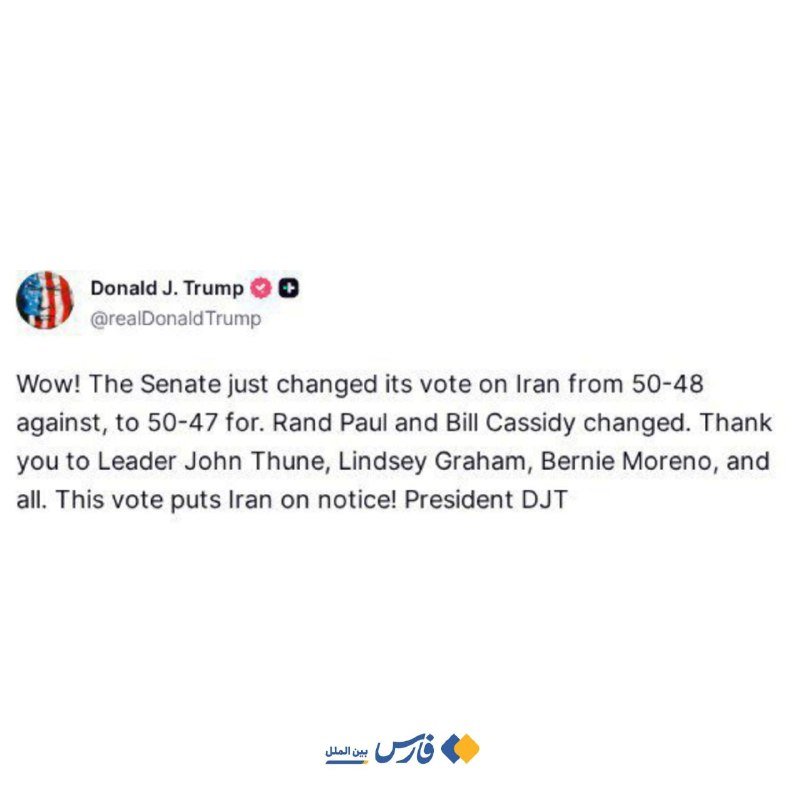
Donald Trump told reporters on 24 June 2026 that Iran's unfrozen assets would be used to purchase food from US farmers, a transactional phrasing of US-Iran détente that puts agricultural surplus at the centre of any deal. The same morning, the US president said he had "Iran on the ropes," a claim that doubles as both boast and negotiating posture [02:55 UTC, 24 Jun 2026]. Hours later, Turkish President Recep Tayyip Erdogan said a one-on-one meeting with Trump would "most likely" take place in Türkiye — the clearest signal yet that Ankara, not Geneva or Vienna, is being framed as the host of the next phase [12:38 UTC, 24 Jun 2026].
Taken together, the day's signal traffic describes a US administration attempting to convert battlefield language and the promise of sanctions relief into three concrete deliverables: cheaper petrol at the American pump, a buyer of last resort for American grain, and a managed regional photo-op. The premise — that Iran's position is weaker than at any point since the war began — is itself the asset being traded.
The mechanics of the deal being sketched
Trump's own framing, repeated across the day's statements, is that Tehran faces hunger, food, medicine and inflation problems, and that the release of frozen Iranian funds will be directed back into US commodities rather than into Tehran's military-industrial base. The arrangement, if executed as described, would do three things at once: refill Iranian hard-currency accounts enough to stabilise the rial, route a portion of that liquidity through US exporters, and give the White House a measurable win ahead of the autumn midterms.
The vehicle is plausibly the same Swiss-channel humanitarian mechanism used in earlier prisoner exchanges, expanded and politically repackaged. The size of the unfrozen pool has not been disclosed by US, Iranian, or Swiss sources in the day's reporting; the operational question is whether the Treasury Office of Foreign Assets Control will issue the specific licences that allow Iranian accounts held abroad to settle food purchases with named US counterparties. Until that happens, the food-for-assets line is policy intent rather than a contract.
The counter-read: leverage with an expiry date
The dominant US framing — maximal pressure culminating in Iranian capitulation — does not survive contact with two inconvenient facts. First, the BBC reports that global oil prices have fallen but remain higher than before the Iran war [07:09 UTC, 24 Jun 2026], a pattern consistent with a market that reads Tehran as damaged but not broken, and that still prices a risk premium for the Strait of Hormuz. Second, Iran's negotiating leverage has not collapsed: Erdogan is offering territory and a presidential platform to Trump precisely because Ankara believes Iran still has enough regional weight — through Iraq, Syria, and the Shia political class in Lebanon — to make a deal worth hosting.
A second alternative read, common in regional commentary, holds that the "ropes" rhetoric is for the American electorate, not for Tehran. Under this view, the White House needs a visible Iran file to balance a hardening posture elsewhere and is using the language of imminent victory to lock in a partial deal before Iran's domestic position stabilises and the leverage depreciates. This publication finds the timing evidence — a fuels-gouging probe announced as prices ticked down, an Erdogan meeting on the calendar within days — consistent with that read, but the underlying question of how much of Iran's asset base is actually releasable on a US timetable remains open.
Petrol, soybeans, and the domestic economy
The fuels-gouging probe announced on 24 June is the political tell. With oil lower but still above pre-war levels, the White House has two ways to make the pump number move: tighter supply-side enforcement against refiners and traders, or a foreign-policy move that lowers the crude benchmark. The probe signals the first path is the active one; the Iran deal, if it produces an Iranian crude return to market in any controlled form, is the second. The two paths are not independent. A deal that releases Iranian barrels would undercut the political case for a gouging investigation, because the price move would then be attributable to supply rather than to refinery behaviour.
The soybean angle is less commented but structurally more interesting. Iranian wheat production has been hit by successive droughts and the war's disruption of fertiliser imports; Iran's domestic wheat shortfall is widely understood among regional analysts to be the binding constraint on ration stability. If US grain is part of any deal, it sits inside a global粮食 (food) market in which Russia and Ukraine are also major exporters, and in which Türkiye is the natural transit and milling hub. The Erdogan meeting therefore makes logistical sense as well as diplomatic sense.
What could derail this
Three failure modes are visible from the day's reporting. The first is internal: any US Treasury action that touches Iranian-held dollars will draw congressional scrutiny, particularly from senators who have opposed past humanitarian channels on the grounds that they reach Iranian military-adjacent entities. The second is regional: an Israeli security objection, not on the public record in the day's items, would compress the political space for a粮食-for-assets arrangement within hours. The third is the asset itself: if the unfreezing requires Iranian compliance with specific IAEA inspections as a precondition, and if Tehran rejects the sequencing, the粮食-for-assets line returns to being rhetoric. None of these failure modes is visible in the 24 June reporting, but each is the kind of friction that has derailed similar arrangements since 2018.
The Stakes
If the trajectory holds, Iran buys regime stability and粮食; the US buys a lower pump price and a visible deal; Türkiye buys a seat at the table its Gulf rivals do not have; American farmers buy a contracted buyer of last resort. The asymmetry is that Iran is buying survival while the other three parties are buying advantage. That asymmetry is what makes the "Iran on the ropes" line a negotiating asset rather than a finished fact, and what makes the next 30 days — between any Erdogan-Trump meeting and the political calendar — the window in which the rhetoric either becomes a deal or evaporates into the next cycle of pressure.
Desk note: Monexus is treating the 24 June Trump statements as policy intent, not as a concluded transaction. Where wire reporting has named the conflict's economic backdrop (oil benchmarks, gouging probes), we have used it directly; where the day's items describe intent rather than mechanism — the size of the unfrozen pool, the licensing pathway — we have flagged the gap in prose rather than filling it.
Wire provenance
This editorial synthesis draws on the following public wire/social posts:
- https://t.me/ClashReport/