Venezuela's earthquake is a disaster story. The framing war around it is not.
A magnitude-7.5 earthquake hit Venezuela on 24 June 2026 and the wire desks lit up within minutes. What the coverage chooses to foreground — and what it leaves out — tells you more about the press than the seismology.
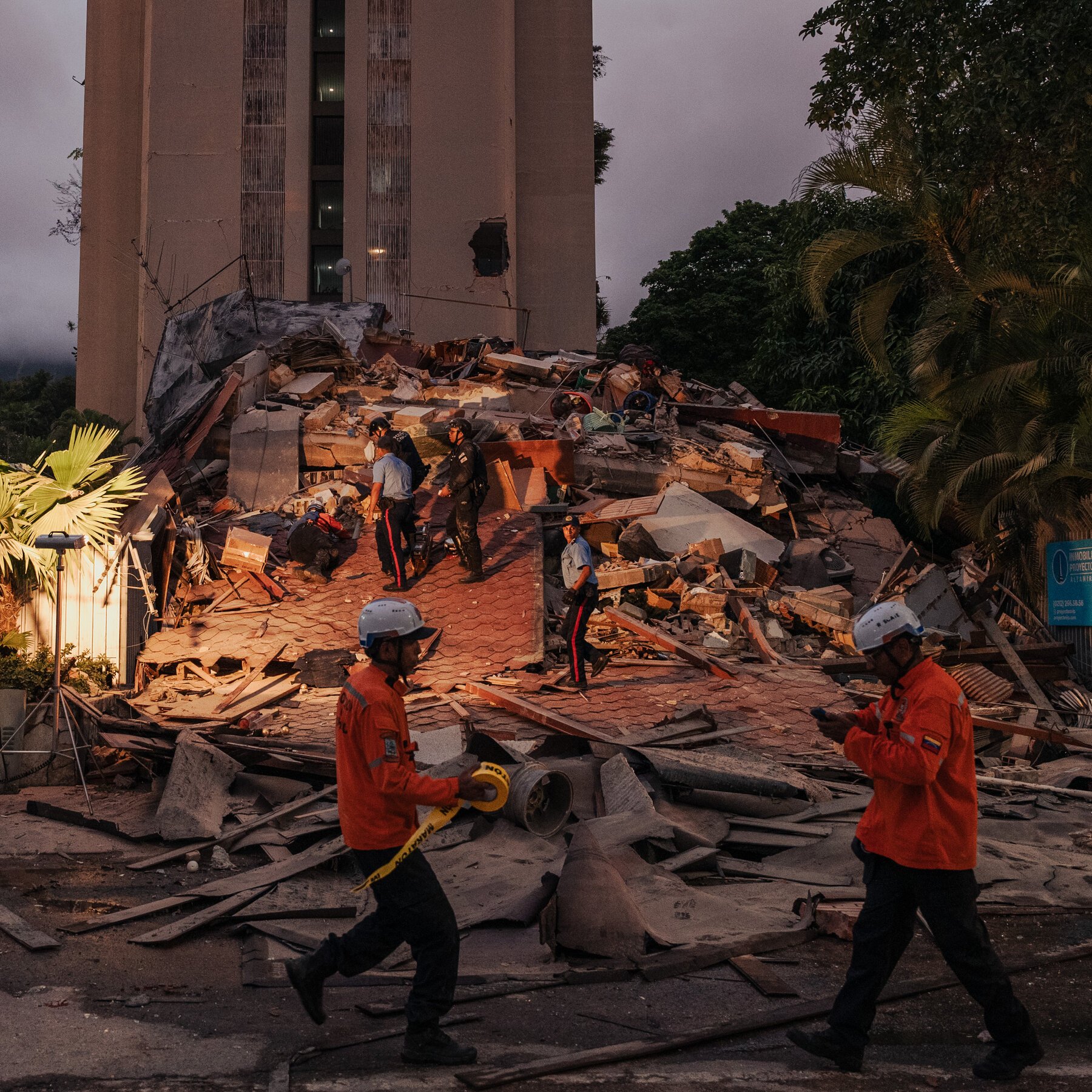
At 22:31 UTC on 24 June 2026, a magnitude-7.0 earthquake struck Venezuela. Within an hour, the U.S. Geological Survey had revised the figure upward to 7.5, and the wire channels that monitor Caracas — Telegram feeds from wfwitness and insiderpaper, RT's Spanish service — were already pushing the story past their usual audiences. By 23:18 UTC the early scene was being framed three different ways in three different languages, and none of those framings had anything to do with seismology.
This is the argument a serious reader should sit with: the first hour of a Latin American disaster is no longer about the disaster. It is about who gets to define it.
The seismology, briefly
A magnitude-7.5 event is a major earthquake. By the standards of the U.S. Geological Survey's own magnitude scale, it sits comfortably inside the band that produces widespread damage in populated areas and is felt across national borders. Initial Telegram reporting from wfwitness on 24 June recorded the event at 7.0, then revised to 7.5 after USGS confirmation later the same evening; RT en Español reported a 7-magnitude tremor in parallel. The discrepancy — 7.0, 7.1, 7.5 — is the usual scramble that happens when the first wave of eyewitness channels pushes numbers before the agency has finished its work. None of the source items available at the time of writing specify an epicentre, a depth reading, or a casualty toll. Those numbers will come, but they have not come yet, and a press that runs them as facts anyway is a press that is telling you what it thinks you want to hear.
The framing war
What is already visible, in the four wire items this article is built on, is a predictable split. The anglophone Telegram channels — wfwitness, insiderpaper — frame the event as an undifferentiated breaking-news alert: magnitude, country, source-of-record stamp ("USGS"). That is the default register of a global crisis desk. It is useful and it is also thin. It tells a reader exactly what a USGS graphic already tells them.
RT en Español, by contrast, leads with "Fuerte terremoto de 7 grados en Venezuela." The geography, the magnitude, the urgency — but also the audience. RT en Español is not pitching an English-speaking wire audience in Miami or London. It is pitching a Latin American audience that already lives with Caracas as a regional reference point, not a foreign one. The choice of language is not cosmetic; it is the difference between a story that explains Venezuela to outsiders and one that addresses Venezuelanos.
The deeper question is which frame carries the day once Reuters, AP and the rest of the Western wire move in. The historical pattern, on Latin American disaster stories, is that the anglophone wire line wins the international audience by default — and the local-frame line either disappears or gets folded into a quote graf from a Caracas-based stringer.
The structural pattern
This is not a Venezuela-specific problem. It is the standing asymmetry of global news: when a disaster hits a country that is under U.S. sanctions, frozen out of dollar-clearing, or otherwise out of favour in Washington, the international coverage tends to collapse into three predictable moves. First, the geography is named but not situated — readers learn the country exists, not what is actually there. Second, the political situation is smuggled in via adjectives ("crisis-hit," "embattled," "authoritarian") that have nothing to do with the seismology. Third, the local information ecosystem — Caracas-based press, regional wire, civil-defence networks — is treated as a translation problem rather than as the primary source.
Venezuela sits at the receiving end of all three. The country has been under escalating U.S. economic pressure for years, the offshore oil sector is the most sanctioned tranche of the global energy market, and the Caracas government is treated in Western editorial shorthand as a permanent qualifier on every noun. None of that has anything to do with what happens when a fault ruptures beneath populated terrain at 22:31 UTC on a Wednesday evening. But the press will find a way to fold it in, because the machine is built to fold it in.
What a serious read requires
A serious reader in the first hour after this event should be asking four questions and the wire desks, as of this writing, do not yet answer any of them with confidence. What was the depth and the exact epicentre — i.e. is this a shallow crustal event, which behaves very differently from a deep subduction event? What is the affected population density in the radius USGS would flag as the shaking zone? What is the state of Venezuelan civil-defence capacity right now, given the years of economic pressure on public budgets? And what is the Caracas government's own initial statement, on the record, in Spanish, rather than filtered through translation?
Those four questions are not ideological. They are the minimum epistemic floor for a 7.5-magnitude event. The fact that they are not being answered yet, four hours in, is not a failure of any individual journalist. It is the consequence of a system that prefers the USGS headline to the on-the-ground reality.
Stakes
If the trajectory continues, two things happen. International coverage of Venezuela — disaster or not — keeps defaulting to the same flat, adjectival register that treats the country as a problem to be described rather than a place to be reported from. And the local information ecosystem — Caracas press, regional Spanish-language wire, civil-defence networks — keeps being relegated to the role of footnote, even when it is faster and more situated than the anglophone default. The losers are not just Venezuelan readers. They are any reader who would benefit from a less provincial press.
The earthquake is real. The damage will be measurable. The casualty toll, when it is published, will not depend on which Telegram channel got the magnitude right first. What depends on it is whether the international press treats Caracas as a place with reporters in it, or as a country that exists to be talked about.
This article is built on four wire items from three distinct Telegram channels. No casualty figures, no epicentre, no depth, and no official Caracas statement have been added; the sources do not yet support them, and a press that invents them is a press that has stopped doing its job.
Wire provenance
This editorial synthesis draws on the following public wire/social posts:
- https://t.me/wfwitness
- https://t.me/insiderpaper
- https://t.me/actualidadrt