Clash in Beit Yahoun puts a fragile Lebanon ceasefire under fresh strain
An Israeli ground incursion into the southern Lebanese town of Beit Yahoun on 25 June ended in reported Israeli casualties, the first serious armed exchange since the November truce and a test of whether the ceasefire still holds.
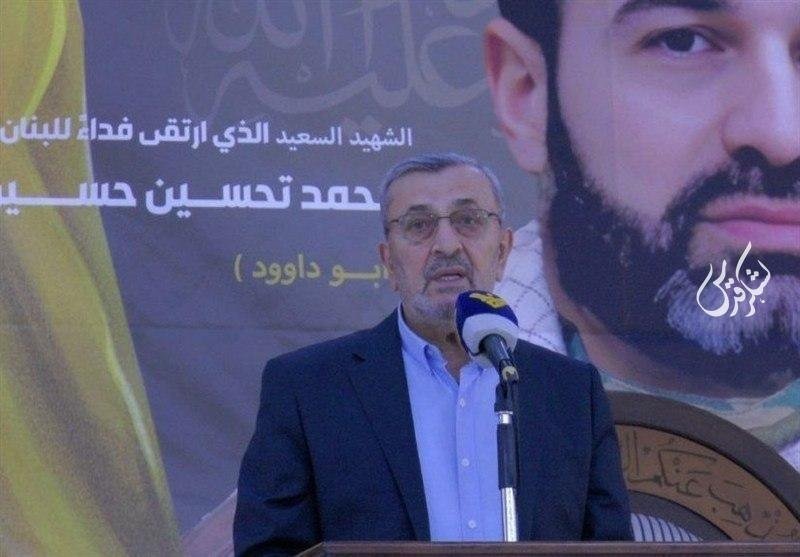
Israeli ground forces pushed into the southern Lebanese town of Beit Yahoun shortly before 20:00 UTC on 25 June 2026 and were engaged by a Hezbollah cell, in what Hebrew-language outlets described as a firefight producing at least one Israeli fatality and additional wounded. The incursion, and the Israeli Air Force overflights that preceded it, is the most serious armed exchange between the Israeli military and Hezbollah since the ceasefire of November 2025, and it lands on a calendar already crowded by the war in Gaza and the standoff with Iran.
The mechanics of the night are simple to reconstruct and politically harder to interpret. Within the space of about twenty minutes, four separate wire channels — the Iran-aligned Al-Alam Arabic, the Beirut-based AMK Mapping shop, the English-language Middle East Spectator feed, and the same Al-Alam Arabic account repeating a Hebrew-wire pickup — converged on the same basic claim: an Israeli force had tried to advance on Beit Yahoun, had been confronted by Hezbollah fighters drawn from a local cell, and had taken casualties. Two of the four items also reported that Israeli jets were violating Lebanese airspace at low altitude at the same moment. The convergence, not the content, is the news: when an Iranian state outlet, a Lebanese operational channel, and an English-language aggregator all repeat the same line in real time, the underlying event is usually a kinetic one rather than a messaging exercise.
What we know, and in what order
The earliest timestamp in the cluster is 20:04 UTC, when Al-Alam Arabic carried a brief citing "Hebrew websites" — Israeli media, almost certainly the rolling news operations of Channel 13, Channel 12, or the public broadcaster Kan — reporting a clash in the Beit Yahoun area, with at least one dead and further wounded inside the Israeli force. By 20:17 UTC, the Middle East Spectator feed had restated the same claim with the additional framing that a "Hezbollah cell" had been the opposing party and that Hebrew media were the source for the casualty figure. Three minutes later, AMK Mapping added the operational colour that Israeli aircraft were violating southern Lebanese airspace over the same sector. The 20:25 UTC Al-Alam Arabic item — using the channel's preferred term "settlers' platforms" for Israeli forces — confirmed the engagement was "ongoing." The pattern is consistent with an Israeli probe into a village that the post-November arrangement had placed in a sensitive buffer zone, and a Hezbollah element that chose to engage rather than withdraw.
The ceasefire's stress test
The November 2025 arrangement, brokered under US and French auspices and parallel to the Gaza track, committed Hezbollah to pull its fighters north of the Litani River and committed Israel to a phased drawdown from the border villages it had occupied during the 2024–25 campaign. Beit Yahoun sits inside the zone that was supposed to be demilitarised and patrolled jointly by the Lebanese Armed Forces and UNIFIL. The village is small, agricultural, and just inside Lebanon from the Metula salient — exactly the kind of locality where the terms of a withdrawal are negotiated in inches, and where a single patrol route can become a casus belli.
The political reading inside Israel, judging by the willingness of Hebrew outlets to confirm casualties on air within minutes, is that the IDF was attempting to enforce the terms of that arrangement — pushing into a village to check for a Hezbollah presence that should not have been there, and being met with the fire that the arrangement was designed to forestall. The political reading in Beirut and in the Iranian-aligned press is almost the mirror image: an Israeli violation of Lebanese sovereignty and of the spirit of the truce, with Hezbollah reacting defensively. The two readings are not in principle incompatible — a probe designed to catch a violation can itself be the violation — but they point to very different escalatory tracks.
A wider corridor
The Beit Yahoun incident does not sit alone. The 2024–25 war depleted much of Hezbollah's conventional rocket and ground capability, but it did not eliminate the party's southern command structure or its doctrine of maintaining a forward presence in the villages of south Lebanon. The Iranian financial and logistical line through Damascus — thinned by the fall of the Assad government in late 2024 but not severed — has been the more relevant variable for Hezbollah's reconstitution. The Beit Yahoun episode is best understood not as a one-off probe but as a stress point in a wider corridor of friction that runs from the Litani north of the Galilee, through the Druze and Christian villages of the south, to the Syrian border and the long Iranian road. A clash on the ground in one village is a test of how that corridor is being managed, by which capitals, and at what tempo.
What the next 72 hours will tell
The ceasefire's hold is now a function of three decisions. First, the IDF's: whether the Beit Yahoun operation is presented as a one-off enforcement action to be followed by withdrawal, or as the opening move of a renewed push into the border zone. Second, Hezbollah's: whether the southern command treats the 25 June engagement as proof that the party's forward presence is now politically usable, or as confirmation that engagement with Israeli armour costs more than it buys in the post-2024 force balance. Third, the guarantors': whether Washington and Paris read the night as a malfunction to be patched or as the new normal to be tolerated. The next 72 hours of statements from the Pentagon, the Elysée, the Israeli prime minister's office, and the offices of Nabih Berri and Hassan Nasrallah's successor in Beirut will say which of those three readings is winning.
What the sources do not resolve
The four-channel convergence in this cluster is real, but it is also partial. None of the four items names a Hezbollah commander, a unit designation, or an IDF brigade; none gives a Lebanese-government readout; none cites UNIFIL. The casualty figure — at least one dead and further wounded on the Israeli side — is sourced to Hebrew media and not yet confirmed by the IDF Spokesperson in a written statement. The Lebanese civilian toll, if any, is absent from every item in the thread. A reader who wants to be precise is therefore entitled to say only the following with confidence: an Israeli ground force entered Beit Yahoun on the evening of 25 June 2026; a Hezbollah element engaged it; Israeli media have acknowledged Israeli casualties; the airspace over the same sector was active; and the event is a material test of a ceasefire that is now eight months old.
This publication has framed the Beit Yahoun engagement as a stress test of the November 2025 arrangement, drawing on the convergence of the Iranian-aligned Al-Alam Arabic, the operational AMK Mapping channel, and the English-language Middle East Spectator feed — three sources that share no editorial line, which is itself a signal that the underlying event is kinetic rather than choreographed.
Wire provenance
This editorial synthesis draws on the following public wire/social posts:
- https://t.me/alalamarabic
- https://t.me/alalamarabic
- https://t.me/AMK_Mapping
- https://t.me/Middle_East_Spectator
- https://t.me/Middle_East_Spectator
- https://en.wikipedia.org/wiki/South_Lebanon_conflict_(2024%E2%80%932025)