Israeli soldier killed and four wounded in Beit Yahoun clash as cross-border flare-up deepens
Clashes erupted in Beit Yahoun on 25 June 2026 when Israeli forces attempted to advance into the southern Lebanese town, leaving one Israeli soldier dead and four wounded in fighting with Hezbollah fighters.
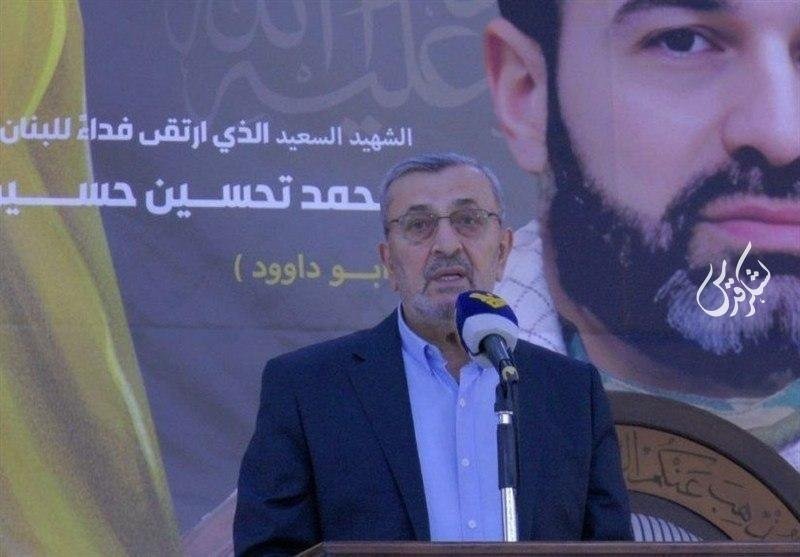
Heavy fighting broke out in the southern Lebanese border town of Beit Yahoun late on the evening of 25 June 2026, when an Israeli ground force attempted to push into the area and was engaged by a Hezbollah cell. According to Hebrew-language reporting cited by Al-Alam News Network at 20:41 UTC, one Israeli soldier was killed and four others were wounded in the clash, with Israeli aircraft operating in southern Lebanese airspace at the same time.
The fighting underscores the persistence of low-intensity cross-border warfare along the Israel-Lebanon frontier more than a year after the November 2023 ceasefire arrangement. Each new incursion-and-retaliation cycle raises the cost of the arrangement's continued silence, and Beit Yahoun — a town that has appeared repeatedly in incident reports from this period — sits squarely in the contested zone.
The incident
Iran's Tasnim News Agency reported at 20:32 UTC on 25 June that "fierce clashes" were ongoing between Israeli soldiers and Hezbollah fighters in Beit Yahoun, citing Lebanese sources. The Middle East Spectator channel, posting at 20:17 UTC, said an Israeli force "attempted to advance into the town of Beit Yahoun" and was "confronted by a Hezbollah cell," with casualties among Israeli troops. AMK Mapping, posting at 20:19 UTC, confirmed that Israeli jets were violating southern Lebanese airspace and that fighting had erupted after Israeli forces attempted to infiltrate the area.
Al-Alam News Network, an Arabic-language outlet operating from Iran, added that four further Israeli soldiers were injured in the engagement. The four accounts, posted within roughly twenty-five minutes of one another across channels with different editorial vantage points, converge on the same sequence of events: an Israeli advance, contact with a Hezbollah element, ground and air activity, and Israeli casualties.
Why Beit Yahoun matters
The town of Beit Yahoun sits in the Bint Jbeil district of south Lebanon, a stretch of territory the United Nations identifies as falling on the Lebanese side of the Blue Line. The area has been one of the more persistent flashpoints since the November 2023 arrangement paused large-scale hostilities between Israel and Hezbollah. Ground incursions of the kind reported on 25 June — even limited ones — test that arrangement's central premise: that quiet at the border can be sustained without active enforcement operations on either side.
Hezbollah's continued ability to mount a coordinated response inside a town that Israeli forces chose to enter is the operationally significant fact of the evening. The group's fighters, by multiple accounts, were not caught off guard. They were waiting.
Counter-narratives
The available reporting is consistent on the broad shape of what happened, but the framing diverges sharply. Israeli security concerns about cross-border attack infrastructure are well-documented and must be taken seriously: rocket, drone, and anti-tank fire into northern Israeli communities has been a recurring fact of life for residents of the Galilee panhandle. Western wire reporting on Hezbollah's post-2023 reconstitution has generally treated this as the backdrop against which ground operations like the one reported on 25 June are launched.
The accounts collected here — Tasnim, Al-Alam, AMK Mapping, and Middle East Spectator — present the Israeli force as the initiator, with Hezbollah responding defensively once its fighters were engaged. That is the framing the Iranian and Iranian-adjacent press has consistently applied to border incidents of this kind. The framing is not unreasonable: a force that advances into a town across an internationally recognised boundary is, by the basic grammar of the November 2023 arrangement, creating the contact. But the available sourcing does not include the Israeli side's own operational account, and the question of what the Israeli force was attempting to do — routine operation, targeted raid, response to a specific threat — cannot be resolved from these four items alone.
Structural pattern
What the 25 June reporting reveals, more than the specific incident, is the architecture of how border news travels in 2026. The first public accounts of Beit Yahoun came not from Western wires or from the IDF Spokesperson's office, but from a network of Telegram channels and Iranian-aligned outlets with rapid publication reflexes and ideological angles. Within twenty-five minutes of the clash beginning, at least four accounts — two Iranian state-adjacent, one independent mapper, one regional aggregator — had produced versions of the story. That speed has real informational value; it also means the framing baked into early coverage often comes from actors who have a stake in how the incident is read.
The deeper pattern is the slow drift toward active enforcement along the Blue Line. The November 2023 arrangement was always understood, on both sides, as a pause rather than a settlement. Each incident that requires a Hezbollah response — each Israeli patrol that draws fire, each rocket that draws return fire — chips away at the equilibrium the arrangement was designed to preserve.
Stakes and what remains uncertain
If the trajectory on 25 June continues, the cost falls first on the civilians of south Lebanon and northern Israel, whose homes sit closest to the contact line, and on the diplomats trying to keep the ceasefire architecture intact. The Hezbollah side gains another data point about the group's continued ability to mount coordinated tactical responses inside Israeli-detected operations. The Israeli side faces a familiar problem: limited ground incursions produce tactical successes but rarely strategic ones, and each one carries the risk of escalation.
The principal sources of uncertainty in the available record are these: the Israeli side has not, in the items collected here, published its own account of what the force at Beit Yahoun was attempting to do; the casualty figures cited — one killed, four wounded — come from Arabic and Iranian-channel reporting citing Hebrew-language sources, and have not yet been independently corroborated by a Western wire; and the full extent of the Israeli air activity over south Lebanon described by AMK Mapping at 20:19 UTC is not specified in any of the four accounts. The shape of the incident is clear. The details, as of 25 June 2026 at 21:00 UTC, remain partial.
Desk note: where wire reporting on southern Lebanon has tended to trail the event by hours, the Telegram-and-Iran-channel network this article draws on published within minutes — which is why the first accounts of Beit Yahoun carry clear sourcing caveats. The incident as reported is consistent across four independent channels; the framing is not.
Wire provenance
This editorial synthesis draws on the following public wire/social posts:
- https://t.me/alalamfa/
- https://t.me/JahanTasnim/
- https://t.me/AMK_Mapping/
- https://t.me/Middle_East_Spectator/