France boards the Deliver: how a single tanker off Sicily tests Europe's shadow-fleet playbook
A French Navy boarding of a Cameroon-flagged tanker near Sicily, announced by Emmanuel Macron on 25 June 2026, is the most visible European move yet against Moscow's sanctions-evasion tanker network — and the first to test the legal perimeter of an interception in international waters.
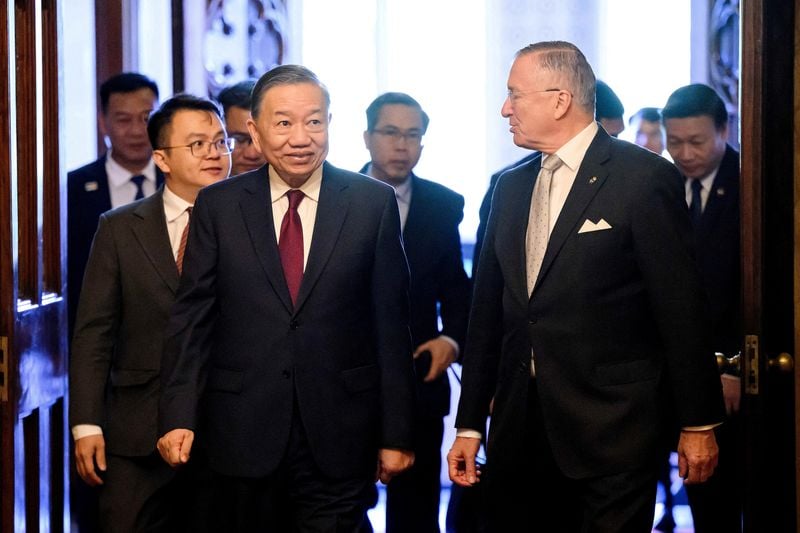
The French Navy boarded the oil tanker Deliver on the morning of 25 June 2026 as the vessel transited international waters south of Sicily, according to a cluster of dispatches posted between 10:09 and 10:32 UTC. French President Emmanuel Macron publicly linked the Cameroon-flagged ship to a Russian "shadow fleet" used to circumvent the G7 oil price cap and EU sanctions, and footage circulating on Ukrainian and Russian Telegram channels showed what appeared to be armed personnel standing on the deck of a dark-hulled tanker. The intercept — the first publicly claimed French boarding of a sanctioned-vessel suspect since the policy framework around the cap was tightened — is now the test case for how far a European navy can press enforcement in waters that are neither French nor, on the face of it, EU.
The episode matters less for the single ship than for the legal scaffolding it will force into view. Russia's sanctions-evasion fleet has grown from a curiosity in 2023 into a recognised industrial architecture: ageing Aframax and Suezmax tankers reflagged to opaque registries, ownership layered through Gulf and Central Asian front companies, and insurance and certification arranged through a parallel service market that has itself become a sanctions battleground. France's choice to board, rather than merely shadow, Deliver is a deliberate signal to Moscow — and to the rest of the fleet — that the practical cost of running a sanctioned cargo through the Mediterranean has risen.
What happened, in the timeline the sources support
The earliest dispatches in the cluster come from a Russian-aligned intelligence channel at 10:09 UTC, which reported that the French Navy had boarded the Deliver "in violation of maritime law." The post framed the action as an unlawful interception, and added that it had come "just days" after another, unnamed action against the same network — a chronology Monexus could not independently verify from the available sources. By 10:26 UTC, a Belfast-based commentator on X amplified a short statement from Macron: the Deliver is Cameroon-flagged, linked by Paris to Russia, and was transiting international waters near Sicily. Ukrainian outlets carried the French line almost verbatim at 10:27 and 10:30 UTC, noting the tanker had been sailing from the Russian Baltic port of Primorsk, and a Ukrainian journalist posted what he said was detention footage at 10:32 UTC.
What the sources do not establish with the same clarity is the legal predicate. Macron's public statement, as quoted in the X thread, describes the ship as belonging to "Russia's shadow front" and as being in breach of the sanctions regime — a characterisation that may be true, but that has not yet been tested in a public docket. The Russian-aligned channel's "violation of maritime law" framing is the inverse of that claim. Between those poles, the core facts the sources do support are narrower: a boarding occurred, a tanker was detained, the flag state is Cameroon, the loadout origin was Primorsk, and the intercept happened in international waters close to Sicily on 25 June 2026.
The shadow-fleet architecture, in plain terms
The phrase "shadow fleet" is now used loosely, but the apparatus it describes is concrete. After the G7 price cap took effect in December 2022 and the EU import ban on seaborne Russian crude followed in early 2023, Russian exporters found that traditional tonnage, insurance and banking rails had become too expensive or too visible. A parallel ecosystem filled the gap: older tankers, often operating under flags of convenience and owned through chains of shell companies, transporting crude or refined product in ways that obscure origin, price and beneficial ownership. Independent investigators have put the size of this fleet in the low hundreds; the exact count is hard to pin down because ownership is, by design, opaque.
The architecture has three pressure points where enforcement can bite. The first is insurance: a tanker without P&I cover from a recognised club is effectively uninsurable in most major ports. The second is the flag state: registries that knowingly carry sanctioned cargo expose themselves to secondary sanctions on the registry itself. The third is the ship-to-ship transfer zones in the Baltic, the eastern Mediterranean and off the Greek coast, where cargoes are laundered between hulls to break the chain of custody. A boarding in international waters is a fourth pressure point, and the most legally fraught, because the boarding state's authority to act is sharply limited outside its own waters and the territorial sea of a willing coastal state.
Why Deliver — and why now
The cluster does not explain why this particular ship was chosen. What it does establish is the pattern: a tanker sailing from Primorsk, on the Gulf of Finland, towards the Mediterranean, flagged to Cameroon, identified by French intelligence as part of the sanctions-evasion network, and intercepted in international waters south of Sicily. Each of those elements fits the textbook profile of a shadow-fleet transit. The route itself — Baltic to Mediterranean via the Atlantic — is the standard path used to deliver Russian crude to non-sanctioning buyers, because the Suez Canal route raises the ship to easier Western surveillance.
The timing sits inside a wider European push. Reporting in recent months — referenced in passing in the Russian-aligned channel's "just days after" line — has described an intensification of European Union efforts to broaden the legal grounds for boarding. France's maritime prefects have already directed inspections of suspect vessels in French ports; the gap that Deliver fills is the inspection of a suspect vessel not in port. If the French can point to a Cameroon-flagged ship carrying cargo tied to a sanctioned trade, in waters close enough to EU territory to make a Rome or Marseille prosecutor a plausible venue, the legal theory is that the boarding becomes supportable as enforcement of EU restrictive measures.
The legal perimeter — and the counter-narrative
The Russian counter-framing, as carried by the Russian-aligned intelligence channel in the cluster, is that the boarding is itself unlawful — a use of naval force in international waters to interfere with commerce that has not been adjudicated. That framing has a kernel of legal seriousness. The United Nations Convention on the Law of the Sea permits a warship to board a foreign vessel in international waters only on a narrow set of grounds: consent of the flag state, a pre-existing treaty authorisation, or reasonable suspicion of piracy, the slave trade, unauthorised broadcasting, or — most relevantly — "other internationally prohibited acts" where the flag state has authorised enforcement. Sanctions enforcement is not, on its face, one of those grounds. The question the Deliver boarding now forces is whether the EU's restrictive measures regime, combined with a willing flag state, can be assembled into a defensible composite authority.
Two structural points complicate the picture. First, Cameroon does not appear in the source material as having publicly authorised the boarding; the cluster describes the flag as "Cameroon-flagged," not as Cameroon-consented. If Paris does not have a flag-state consent on the record, the legal theory of the boarding is thinner than the political messaging suggests. Second, the cargo itself has not, on the available evidence, been tested in a court. A French prosecutor may now have to establish, in a public proceeding, that the Deliver was carrying Russian crude above the price cap or to a sanctioned end-user — a process that gives Moscow and the tanker's owners a forum in which to test the evidence.
Stakes — concrete, dated, and over a short horizon
If the Deliver prosecution holds, the precedent is significant: a European navy can board a foreign-flagged tanker in international waters on sanctions grounds, with the cooperation — or at least the acquiescence — of the flag state and the political backing of a major EU capital. The shadow-fleet response, by Monexus's reading of the cluster, is already forming in the language the Russian-aligned channel chose: a public claim that France has acted in "violation of maritime law." That claim will be repeated by Moscow, and tested in any subsequent legal proceeding. The price-cap architecture, already under quiet strain as Russian crude trades above the cap through grey-market mechanisms, becomes harder to enforce if a precedent boarding can be challenged and overturned.
If the prosecution does not hold, the political cost is borne by Paris. A failed Deliver case is also a signal to the rest of the network that European naval enforcement, when tested in court, does not extend to international waters. The next shadow-fleet transit south of Sicily can then proceed with a clearer legal comfort.
What remains genuinely uncertain, on the sources Monexus has, is the legal chain: whether Cameroon consented, whether the cargo has been independently verified as Russian-origin and above the cap, and whether the Deliver itself is the first of a series or a one-off demonstration. The cluster supports only the first layer — that a boarding happened, and that the political messaging around it has begun.
Desk note: Monexus carried the French claim in the same paragraph as the Russian counter-claim that the boarding violated maritime law, and declined to assign the ship to "Russia's shadow fleet" in its own voice until a flag-state consent and a documented cargo chain are on the record. The wire cycle led with the boarding; the legal cycle will follow.
Wire provenance
This editorial synthesis draws on the following public wire/social posts:
- https://t.me/Tsaplienko/2070091089386651648
- https://t.me/uniannet/2070091089386651648
- https://t.me/Pravda_Gerashchenko/2070091089386651648
- https://x.com/brianmcdonaldie/status/2070091089386651648
- https://t.me/rnintel/2070091089386651648
Follow the event.
These dated source records provide context. They do not retrospectively verify this archive article.
A dated voting record is evidence of one decision. Use the original UN record before turning it into an alignment label.
Visual explainer · historical vote of 2022-03-02 →