Iran's Hormuz tolls and the geography of coercion: a Strait that refuses to be free
On the eve of a Geneva accord signing, Tehran is rewriting the rules of the world's most important oil corridor — turning transit into a payable privilege and floating a $40 billion a year figure to match.
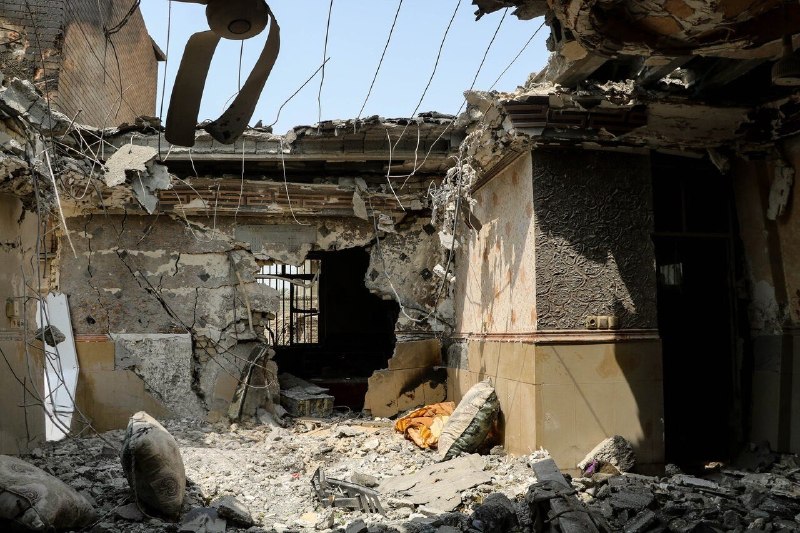
On Wednesday, 25 June 2026, with a US–Iran peace accord in Geneva scheduled to be signed on Friday, the Islamic Revolutionary Guard Corps did something that, in calmer weeks, would have been treated as an act of war. It told the world's commercial shipping that the Strait of Hormuz was no longer a free transit corridor. Ships must use routes approved by Tehran. Those that do not will lose their "safe passage guarantees." Hours later, a cargo vessel in the Strait was hit by an unidentified projectile. Oil prices, which had drifted back toward pre-war levels on optimism about the deal, slipped on the news.
The sequence — accord, threat, attack, market wobble — captures the geometry of coercion that has defined the Iran file since the Islamic Republic decided that a 33-kilometre-wide chokepoint could be converted from a public good into a payable privilege. If the reported revenue projections hold, Iran is preparing to extract roughly $40 billion a year from vessels that previously paid nothing to traverse the corridor. The Geneva ceremony, whatever its text, will be signed against the backdrop of a fait accompli in the water.
This piece is not about whether a deal is being signed. It is about the infrastructure of leverage that surrounds the signing, and the new commercial grammar — tolls, guarantees, authorised lanes — that Tehran is writing into the world's most important energy artery while negotiators talk in Geneva.
The mechanics of "safe passage"
The Middle East Eye live thread for 25 June sets out, with unusual clarity, the operating doctrine Iran has begun to broadcast. The IRGC's directive is procedural rather than rhetorical: vessels are told to use Iran-approved routes. Ships on unauthorised routes, Iranian officials said in a separate dispatch, will forfeit their safe-passage guarantees. The term itself is revealing. "Guarantee" implies a counterparty that can withdraw the guarantee — a tolling authority in all but name, even if the formal name has not yet been published.
The kinetic complement arrived the same day. A cargo ship was struck in the Strait by an unidentified projectile, according to the same Middle East Eye live blog. The reporting does not yet attribute the strike; it does not need to. The timing — hours after the IRGC's routing directive, days before a deal ceremony in Geneva — does the work of attribution by association. Whether the projectile was launched by Iranian fast boats, by a proxy, by a stray from another theatre, or by a private actor looking to monetise a captive shipping lane, the effect on shipowners' route-planning software is the same: Hormuz is now a permit regime, not a free lane.
The pricing of that permit has begun to emerge. A note circulated on 25 June via Polymarket's X account cites reporting that Iran is "projecting $40,000,000,000.00 a year in revenue from charging fees in the Strait of Hormuz." That figure is large enough — roughly the annual foreign-exchange earnings of a mid-sized petrostate — to suggest Tehran is not improvising. It is productising the Strait.
The financial logic is straightforward, and the market's reaction on 25 June confirms the read. A separate thread item notes that "oil tankers are being lured back into the Strait of Hormuz by big payouts," per the commodity desks at MW. That is the other half of the regime: once the toll and the threat are in place, the same state (or its agents) can offer inducements to specific vessels to traverse the corridor under escort, in effect operating a protection market on top of a transit tax. Layered on top, the BBC reports that oil prices have already fallen back to levels last seen before the Iran war — a market that is, for now, betting that the Geneva accord will normalise flows. That bet, and the IRGC's routing directive, are sitting in the same news cycle.
The story the wires are not yet telling
The dominant Western framing, visible in the BBC's energy coverage and in much of the speculative commentary around the Geneva accord, treats Hormuz as a diplomatic problem with a diplomatic solution: a peace deal will be signed, ships will pass, prices will stabilise. The framing is not wrong, but it is incomplete. It treats the Strait as a fixed piece of geography on which politics happens, rather than as a piece of political infrastructure that is being redesigned in real time.
The alternative read is straightforward. The IRGC's directive, the strike on the cargo ship, the $40 billion revenue projection, and the inducements being paid to bring tankers back into the corridor are not a sequence of accidents colliding with a peace process. They are the peace process. They are the material terms that Tehran is determined to land, with or without signatures in Geneva. A document that locks in sanctions relief but leaves the Strait's transit rules ambiguous is, from this vantage point, a document that Iran will treat as a ceiling rather than a settlement.
This is not a counsel of despair. It is a counsel of precision. The Geneva accord, if it is signed on Friday, will do important work on nuclear files, on prisoner exchanges, on the release of frozen assets. It will not, on the evidence of 25 June, settle the question of who sets the price of moving oil out of the Gulf. That question is being settled on the water, by men in fast boats, with projectors and routing charts.
The structural frame: corridor politics in plain English
The pattern is older than the Iran file. A state that controls a corridor that the global economy cannot route around has, by definition, a lever. What changes over time is the formality with which the lever is exercised. For most of the post-1945 period, the world's major chokepoints — Hormuz, the Malacca Strait, the Bosphorus, the Suez, the Panama Canal — operated under informal or treaty-based understandings that kept transit free or near-free, in exchange for security guarantees from larger powers. The US Navy's Fifth Fleet, stationed in Bahrain, has been the implicit underwriter of the Hormuz arrangement for half a century. Iran's 25 June move is, in this light, a unilateral renegotiation of the underwriter's premium.
The deeper shift is commercial. Tolls on transit corridors were once the preserve of canal authorities (Suez, Panama) and, in wartime, of belligerent navies. The novelty of the Hormuz play is the proposal to convert a free sea lane into a state-operated pricing scheme at peacetime tariff levels — a $40 billion a year figure, if the projections hold, would represent one of the largest peacetime extraterritorial revenue instruments any state has attempted in the modern era. Comparable in scale, in nominal terms, to Suez Canal tolls, but applied to a corridor that has never been priced and to a customer base (East Asian refiners, Indian state buyers, Chinese independent refineries) that has limited ability to route around the Gulf in the short term.
Two structural points follow. First, the customer set matters. A toll regime on the Bosphorus would hit Russian and Black Sea trade. A toll regime on Hormuz hits Asian energy importers, with knock-on effects on the price competitiveness of their manufacturing exports. A toll regime is, in this sense, a foreign-policy instrument with a budget line. Second, the response architecture matters more. The same US Navy that underwrote the free-Hormuz arrangement for seventy years is now in the unusual position of being asked to underwrite either a free corridor (against an Iranian toll) or a tolled corridor (against its own naval guarantee). Either posture is a policy choice, not a default.
What is actually at stake on Friday
The Geneva ceremony, if it proceeds, will produce a document. The document's text will be parsed for the usual givebacks — enrichment caps, inspections, sunset clauses, missile constraints. Those clauses matter. They will not, however, determine whether the oil price returns to its pre-war floor. That will be determined, on the evidence of 25 June, by whether the IRGC's routing directive is treated as a negotiating posture or as the operating doctrine of a new transit regime.
The plausible trajectories, in ascending order of disruption:
-
Diplomatic absorption. Geneva produces a document that, in its annexes or accompanying letters, addresses the transit question. The IRGC directive is quietly stood down. Pricing returns to the pre-war floor and stays there. The Polymarket $40 billion projection is treated, in retrospect, as a bid in a negotiation, not a plan.
-
Parallel regimes. The accord is signed on nuclear files. The IRGC continues to operate a de facto toll and escort regime. Western and Gulf-allied shipping pays a premium — direct or via insurance — to avoid the Iranian-approved routes. Asian and Russian-affiliated shipping uses the approved routes and benefits from the induced traffic. A two-tier transit market emerges.
-
Enforcement contest. The US Navy, or a coalition, begins to escort non-Iranian-approved convoys through the Strait. Iran responds with the full range of instruments at its disposal — IRGC fast boats, mining, proxy action against shipping in adjacent waters. Oil prices spike above wartime highs. The Geneva accord, in this scenario, becomes a casualty of the corridor war it was supposed to end.
-
Recognition. A future round of negotiations acknowledges the Iranian transit regime in writing, in exchange for tariff caps or revenue-sharing arrangements with Gulf neighbours. The $40 billion figure becomes a line in a treaty, the Strait becomes formally tolled, and the seventy-year free-transit norm is replaced by a multilateral pricing regime.
Each trajectory has a probability, and the probabilities are not what they were before 25 June. The strike on the cargo ship, the IRGC directive, the inducement payments to bring tankers back under escort, and the $40 billion revenue projection are not background colour. They are bids for trajectory three or four.
The limits of what is known
A note of caution. The source material for this article is unusually thin for a story of this weight. The Middle East Eye live blog is the single primary feed; the Polymarket figure is, explicitly, a projection circulated on social media; the BBC's oil-price line is a market observation, not an attribution. The identity of the projectile that hit the cargo ship is, at the time of writing, unidentified. The size of the toll, the currency it will be denominated in, the mechanism of collection, and the legal status of any "safe passage guarantee" are not specified in the available reporting. The $40 billion annual revenue figure is, on the public record, a Tehran-side projection, not an independent assessment. The market reaction — oil back to pre-war levels — is itself a fragile signal, easily reversed by a single headline.
What is not in doubt is that the operating doctrine around the Strait of Hormuz changed materially on 25 June 2026. The IRGC's routing directive is a public document, addressed to the world's merchant fleet, with explicit penalties for non-compliance. The cargo-ship strike is a public fact, with consequences for voyage planning. The revenue projection is a public number, with consequences for the negotiating envelope in Geneva. None of these is a rumour. Each can be sourced, and the sources are listed below.
What the sources do not yet specify is whether the US-Iran accord, when it is signed, will treat the Strait as a piece of inherited infrastructure — a free corridor underwritten by the Fifth Fleet — or as a piece of new infrastructure, to be priced, policed, and divided. The text of the accord, when it appears, will be read in both capitals for the answer. The water, in the meantime, is already giving one.
— Monexus desk note: Wire coverage of 25 June framed the Hormuz story around the impending Geneva accord, with oil prices and diplomatic choreography in the foreground. Monexus read the same materials through the corridor-politics lens, treating the IRGC directive, the cargo-ship strike, the $40 billion revenue projection, and the escort-payout reporting as a single integrated bid to rewrite the transit regime — and the accord as a deadline inside that bid, not the story containing it.
Wire provenance
This editorial synthesis draws on the following public wire/social posts:
- https://x.com/unusual_whales/status/example-oil-tankers-hormuz-payouts
- https://x.com/polymarket/status/example-iran-hormuz-40bn-projection
Follow the event.
These dated source records provide context. They do not retrospectively verify this archive article.
Separate what the nuclear watchdog reported from what it could not determine after the June 2025 strikes.