Tehran races to move $8.5bn in crude as US-Iran talks produce a 60-day clock
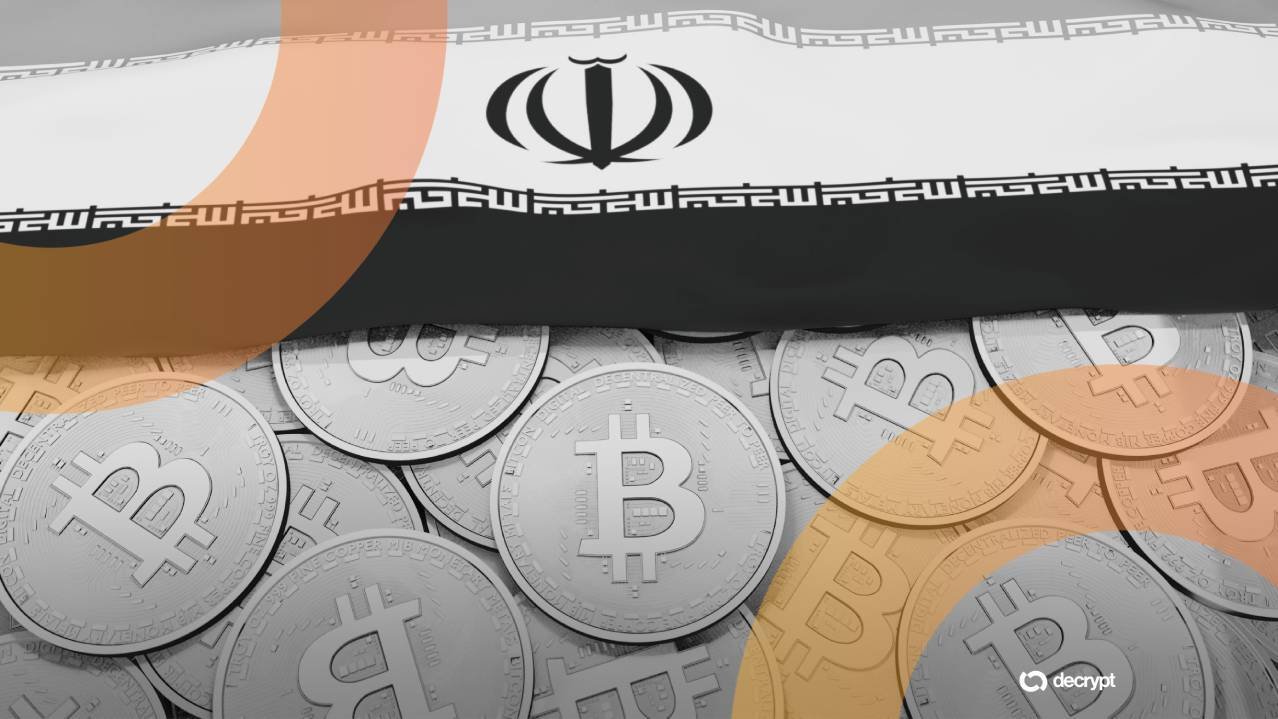
Iran has begun loading tankers with crude worth an estimated $8.5bn after Washington quietly relaxed enforcement, even as negotiators claim progress on a 60-day framework that includes a committee to wind down hostilities in Lebanon.
Lead
Within a single 24-hour window this week, the United States and Iran moved from hostile standoff to something resembling a calendar. On 2026-06-25 at 04:31 UTC, the market-watching account Unusual Whales reported that Washington and Tehran had made progress toward a final agreement "within 60 days," including the establishment of a committee and a dedicated mechanism to end hostilities in Lebanon. Hours earlier, on 2026-06-24 at 17:01 UTC, Nikkei Asia reported that Iran had begun loading crude onto tankers in the Persian Gulf, racing to move an estimated $8.5 billion in oil after the United States temporarily relaxed sanctions enforcement. The two events sit on the same timeline, and that is the story: relief at the tap is moving faster than the diplomacy on paper.
Nut graf
What is unfolding in the Gulf this week is not a clean breakthrough so much as a sequenced unwinding. The Trump administration appears to be trading short-term enforcement flexibility for a binding Iranian commitment — nuclear constraints, hostage or proxy file movement, and a Lebanon track — inside a two-month sprint. Tehran, for its part, is monetising the window before any deal collapses. The dollar geometry matters as much as the diplomacy: roughly $8.5 billion of crude, loaded and moving, is itself a negotiating instrument, because once that oil is sold to Asian and refiners in third countries, the Iranian state has cash and the United States has less leverage to revoke.
What the deal-track actually says
The Unusual Whales summary, posted 2026-06-25 at 04:31 UTC, is the most explicit public read of where the talks stand. Its core claims are narrow and verifiable: the two sides have agreed in principle to a 60-day timeline, to the creation of a joint committee, and to a mechanism — language is deliberately vague — for ending hostilities in Lebanon. None of those items, on their own, resolves the underlying dispute over Iran's nuclear programme, missile architecture, or support for the so-called axis of resistance. But a 60-day window is itself a thing: it converts a chronic confrontation into a deadline, with named artefacts (a committee, a mechanism) that have to either exist or be conspicuously absent on a known date.
The Lebanon component deserves its own weight. Tying Iranian behaviour to a winding-down of fighting on the Israeli-Lebanese frontier is the kind of conditionality that previous US-Iran engagements have struggled to formalise, because it requires a third party — Hezbollah, the Lebanese state, Israel — to perform. If the committee is to function, it will have to absorb inputs from at least one of those actors, which is why outside analysts have treated the framework with measured scepticism rather than the optimism that has, at times, marked earlier rounds.
The $8.5 billion cargo
The Nikkei Asia report, dated 2026-06-24 at 17:01 UTC, supplies the commercial spine of the story. According to that account, Iran has begun loading crude onto tankers in the Persian Gulf after Washington temporarily eased sanctions enforcement, opening a window for the Islamic Republic to monetise stored and floating inventory that had been effectively locked out of legitimate markets. The $8.5 billion figure is an estimate of the value of oil that Iran is now moving, not a single transaction.
The mechanism matters. A sanctions regime is enforced in the gap between statute and the willingness of the enforcing power to pursue individual shipments, banks, and refineries. When enforcement pauses, the gap fills with buyers, brokers, and insurance contracts almost immediately. Tehran's incentive is to convert barrels into foreign exchange and into prepaid contracts before the policy reverses. Iran's clients in this window are almost certainly in Asia — Chinese, Indian, and a small set of smaller buyers that have historically tolerated secondary-sanctions risk when prices discount. The US incentive is the opposite: a credible threat to resume enforcement keeps the $8.5 billion as a hostage against Iranian non-performance on the 60-day track.
The two flows are intertwined. The same Iranian decision-makers who are now loading tankers are the ones who have to deliver the committee, the mechanism, and the Lebanese de-escalation. If they deliver, the United States has a domestic political problem — explaining why a hostile state is selling oil into the legitimate market. If they do not, the United States has a clean pretext to snap the window shut, in which case the $8.5 billion that did move is already in accounts outside the dollar perimeter.
The Gulf diplomatic backdrop
A third thread, dated 2026-06-25 at 09:09 UTC, carried by Fars News International and citing a CNN report, frames the regional reaction. The CNN piece, as summarised by Fars, describes Gulf Arab states as increasingly distrustful of a US posture that swings between confrontation and accommodation, and as exploring reconciliation with Tehran. The framing in Fars — an outlet close to Iran's security establishment — is predictably sympathetic, but the underlying signal is real. Saudi Arabia, the United Arab Emirates, and Qatar have spent the last two years performing a careful, parallel-track re-engagement with Iran, both through Beijing-mediated talks in 2023 and through quiet bilateral channels. A visible US-Iran détente does not change that trajectory; it accelerates it, because the Gulf monarchies prefer to deal with a Tehran that is being courted rather than a Tehran that is cornered, and they want to be inside the room when the new geometry is set.
A counter-narrative deserves weight here. Iranian state-aligned outlets have a structural interest in presenting Gulf outreach as a function of Iranian strength and US pressure. The reverse reading — that the Gulf states are hedging because they distrust the durability of any US-Iran deal and want insurance against the next reversal — is at least as plausible. The 60-day clock is the operative variable: if it slips, the Gulf hedging intensifies; if it holds, the Gulf states have an interest in being seen to have helped deliver it, and the regional architecture consolidates around an arrangement that includes Tehran.
What remains uncertain
Three things are genuinely unknown. First, the scope of the US enforcement relaxation: a temporary licence for a defined volume to specific buyers is one thing; a broad de facto reprieve is another, and the same Nikkei report that names the $8.5 billion figure does not specify which it is. Second, the institutional weight of the committee: a working group with a secretariat and a chair is not the same as a venue that can actually bind Iranian decisions on Lebanon. Third, the Israeli and Saudi reading of the framework. Both governments have been in the room for previous rounds; neither has yet been heard from publicly on this one. Their silence, on a 60-day timeline, is itself a data point.
The structural frame, in plain terms, is a familiar one. The United States is using controlled access to the dollar-cleared oil trade as leverage to extract verifiable behaviour from a sanctioned state on a fixed clock. Iran is using the same clock to monetise the window before the clock expires. The two are not in contradiction; they are the same transaction seen from two sides. What this publication will be watching, over the next eight weeks, is whether the committee exists, whether Lebanese hostilities actually de-escalate, and whether the $8.5 billion is allowed to clear into Asian refineries unmolested — or whether, as on previous occasions, the window slams shut and the barrels are forced into floating storage, into shadow fleets, and back into the long, patient geometry of evasion.
Desk note: Western wires have so far carried the 60-day framework in summary form via market-data accounts; the oil-flow detail is currently best documented in Nikkei Asia's reporting and in Iranian-aligned summaries of CNN's regional analysis. Monexus is leading with the sequencing of the two — sanctions relief in motion, deal still in negotiation — rather than treating either as the headline, because the gap between them is where the story lives.
Wire provenance
This editorial synthesis draws on the following public wire/social posts:
- https://t.me/NikkeiAsia
- https://t.me/nikkeiasia
- https://t.me/FarsNewsInt