Israel-Lebanon talks: Iranian sources frame Israeli withdrawal from south Lebanon as a 'red line' in any final deal
Iranian-aligned outlets Tasnim and Tasnim Plus say an Israeli pullback from occupied Lebanese territory is non-negotiable. The framing reveals who is signalling inside a deal no Western wire has confirmed.
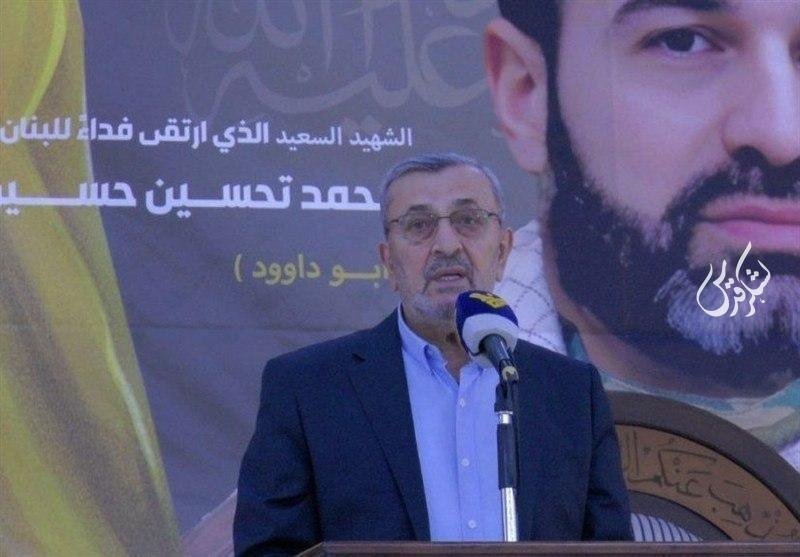
On 25 June 2026, four separate Iranian state-affiliated channels published, within a 39-minute window, the same line: that the withdrawal of Israel from territory it holds in southern Lebanon is a condition of whatever final agreement is being negotiated, and that a source close to the Iranian negotiating team has described the demand as an "important red line." The earliest posting, at 13:10 UTC, came from Tasnim Plus; three follow-ups followed from Tasnim's English service and the Jahan Tasnim channel between 13:42 and 13:49 UTC. The common source for the claim was identified as the Sedavasima — or Sada Vasima, in variant transliterations — news agency, described as close to the negotiating team. The synchronised publication pattern is itself the story: in the choreography of Middle Eastern diplomacy, who is told what, and when, is part of the deal being made.
The substantive claim is narrow but consequential. It does not announce a deal. It announces a floor: the lowest-common-denominator demand that Tehran, acting on behalf of its Lebanese client, will accept in any settlement that formally ends the current phase of the Israel-Hezbollah war. The demand is being laundered through a Lebanese-front news agency rather than stated by Iranian officials on the record, which is consistent with Tehran's habit of letting allied outlets set public parameters while leaving its diplomats room to deny or amend.
What the Iranian channels are actually saying
The four Tasnim-affiliated messages, read in sequence, do more than relay a single bullet point. They construct a hierarchy. The 13:10 Tasnim Plus version is the most explicit, naming the withdrawal an "important red line from the Iranian" side — the sentence appears to truncate in the source feed, but the framing is unmistakable. The three follow-ups from Tasnim English and Jahan Tasnim between 13:42 and 13:49 UTC strip the "red line" language and present the demand as a procedural matter: a condition of the final agreement, not a precondition to talks. The softening is deliberate. The harder version travels into Persian-language audiences as a marker of resolve; the softer version travels into English-language channels as a marker of flexibility. Both are being published on the same afternoon by the same media complex.
The named intermediary — Sedavasima / Sada Vasima — is not a household name. Its use as the attribution for the red-line claim is a routine feature of Iranian-aligned regional reporting: a Beirut- or Damascus-based outlet close to Hezbollah or its political allies carries a line that can be sourced to "a source close to the negotiating team," which in turn lets Iranian outlets repeat the claim with one further layer of plausible deniability. The structure is familiar from previous rounds of Gaza and Lebanon diplomacy; what is new is the speed at which the same line was syndicated across four channels in a single news cycle.
Why this matters — and why it might not
Two reads of the same signal are available, and both deserve airtime. The dominant read, held inside most Western and Israeli reporting on the file, is that Iran's public-facing media is performing resolve to compensate for battlefield and political pressure: a regional power signalling toughness in the language of negotiations because it cannot signal it in the language of war. Under that reading, the red-line claim is a bargaining posture, not a description of red lines that would actually block a deal.
The other read, given more weight in Global South and Iranian-aligned coverage, is the opposite: that the public marking of a red line is itself the point, because the negotiating partner — whether the United States, France, or Israel directly — needs a face-saving Iranian demand it can claim to have "won" by extracting. Under that read, the withdrawal demand is being telegraphed in advance so that, when it is conceded in some form, Tehran can present the concession as the product of Iranian firmness rather than of Iranian weakness. Both readings rest on the same primary fact — that the demand is now in the public domain — and the same primary uncertainty, which is what the United States, Israel, and the Lebanese state are actually prepared to trade for it.
The structural picture
The reporting sits inside a longer pattern. When one side in a regional negotiation wants to set the public terms of an eventual deal without committing to them privately, it tends to use allied media as a parallel channel. The pattern was visible in the 2015 Iran nuclear framework, in the Abraham Accords lead-up, and in the 2024 Gaza ceasefire talks. What is distinctive in this cycle is the simultaneity: four channels, one hour, one line. That is the signature of a coordinated press operation, not a leak. The question for analysts is whether the operation is aimed at a domestic Iranian audience, at the Israeli negotiating team, at the American back-channel, or at all three at once.
The withdrawal demand also has a specific geographical referent. Israel currently holds a strip of southern Lebanon adjacent to the border that, under the 2024-2025 ceasefire understandings, was meant to return to Lebanese state control under UNIFIL monitoring in phases tied to Hezbollah's disarmament. The phased-withdrawal framework has slipped repeatedly. The Iranian demand, as syndicated, would compress that phased framework into a single, Israeli-led, time-bounded act tied to a final deal — a structural change to the arrangement on the ground, not a tweak to its timetable.
Stakes, and what the sources do not say
If the demand holds in any final agreement, the Israeli government will need to defend a fuller pullback than the incremental withdrawals currently scheduled; the Lebanese government will need to absorb the political cost of accepting a deal that does not address the wider territorial dispute; and Iran will need to deliver a Hezbollah that has lost both its border forward positions and its Iranian-supplied standoff capability in southern Lebanon. The trade is not costless for any of the three.
What the four Tasnim-affiliated messages do not specify is equally important. They do not name the counterparty in the negotiation. They do not give a timeline. They do not indicate whether the demand is a precondition to further talks or a condition of a deal already in late drafting. They do not name a spokesperson, an institution, or a government. They do not link the demand to specific UN Security Council resolutions, to UNIFIL mandates, or to the broader Gaza track. They do not say what happens if the demand is refused. The sources are, in short, telegraphing posture rather than substance — which is exactly what a red line, as a rhetorical instrument, is designed to do.
How Monexus framed this: the wire so far has carried the Iranian demand as a single line in a wider Lebanon file. Monexus is foregrounding the choreography — four channels, one hour, one line, one unnamed agency — because the publication pattern is the part most likely to shape how the demand is received by negotiators on the other side.
Wire provenance
This editorial synthesis draws on the following public wire/social posts:
- https://t.me/JahanTasnim/
- https://t.me/tasnimnews_en/
- https://t.me/JahanTasnim/
- https://t.me/tasnimnews_en/
- https://t.me/tasnimplus/
Follow the event.
These dated source records provide context. They do not retrospectively verify this archive article.
Separate what the nuclear watchdog reported from what it could not determine after the June 2025 strikes.