Macron's Washington read: a mediator no more
Paris says Washington has dropped the pretense of neutrality and now openly backs Kyiv on territorial integrity. The shift, announced by Macron on 25 June 2026, recasts America's role in the war.
On the evening of 25 June 2026, Emmanuel Macron told reporters what a long string of officials in Kyiv and several European chancelleries have been arguing in private for months: that the United States has stopped pretending to be a neutral broker in the war between Russia and Ukraine. The French president, speaking in Paris, said Washington had for the first time approved text that drops the mediator framing and instead affirms American support for Ukraine's territorial integrity, accompanied by continued military aid. The shift, he suggested, is no longer something diplomats can hint at — it is now written into the joint language.
The remarks matter less for what they reveal about American policy than for what they expose about the diplomatic fiction the Trump administration has tried to maintain in public. Washington has spent the better part of a year oscillating between transactional outreach to Moscow and substantive backing for Kyiv. Macron is now asserting that the second pole has won, and that the rhetorical scaffolding of evenhandedness has collapsed.
The mediator fiction
The mediator frame carried weight because it licensed a particular kind of diplomacy: long phone calls between Washington and Moscow, the exchange of concepts on sanctions relief and territorial freezes, the implicit suggestion that a deal could be cut over Kyiv's head if the terms were right. That frame required a posture of distance from the outcome — the broker is supposed to be dispassionate about who wins, only about how the table is set.
What Macron is describing is the end of that distance. If the United States is on the page as a supporter of Ukrainian territorial integrity, it has a stake in the result. A stakeholder does not mediate; it lobbies. The move is not a surprise — US military aid to Ukraine has continued, intelligence sharing has continued, sanctions architecture has held — but naming it in a joint text is a different kind of commitment than continuing those flows in practice.
What the European reaction reveals
Paris is the natural messenger for this announcement, and not only because Macron is the European leader most willing to speak in declarative registers. France has been the loudest European advocate for the view that the war must end on terms that recognise Ukrainian sovereignty rather than reward Russian fait accomplis. Berlin, Warsaw and the Baltic governments have effectively held the same position, but have tended to express it through action — Patriot batteries, Leopard deliveries, sanctions enforcement — rather than through on-the-record statements about American positioning.
Macron's choice to flag the change so publicly reads as both reassurance and pressure. It reassures Kyiv that its most powerful backer has stopped hedging. It pressures other European governments to align their rhetoric with their behaviour, and it puts Moscow on notice that the diplomatic terrain has shifted underneath it. The risk is that the Kremlin treats the statement as confirmation of what it has long alleged: that Washington was never a honest broker, and that the negotiating track it pursued in 2025 was, in the Russian framing, a managed withdrawal rather than a genuine search for compromise.
A hegemonic adjustment, not a reset
The language of global order is full of euphemisms for the moment when a great power stops pretending to be above the fight and accepts that it is a party to it. The American position on Ukraine has been drifting in that direction since 2022, accelerating through two administrations that disagreed on tone but not on the underlying commitment to prevent a Russian victory. Macron's announcement is the moment the drift becomes an admission.
For Europe, the admission cuts both ways. It removes the ambiguity that gave certain European governments cover to maintain their own hedges — most visibly Hungary and Slovakia, where political leaders have cultivated a separate channel to Moscow. With the United States now openly a supporter rather than a broker, the political cost of straddling the line rises. The countervailing pressure is on the Europeans who banked on a future American-mediated settlement to be the cover under which they could wind down their own military commitments without owning the consequences. That settlement, if it ever comes, will now arrive as an American position rather than an American umpirage.
The stakes and what remains contested
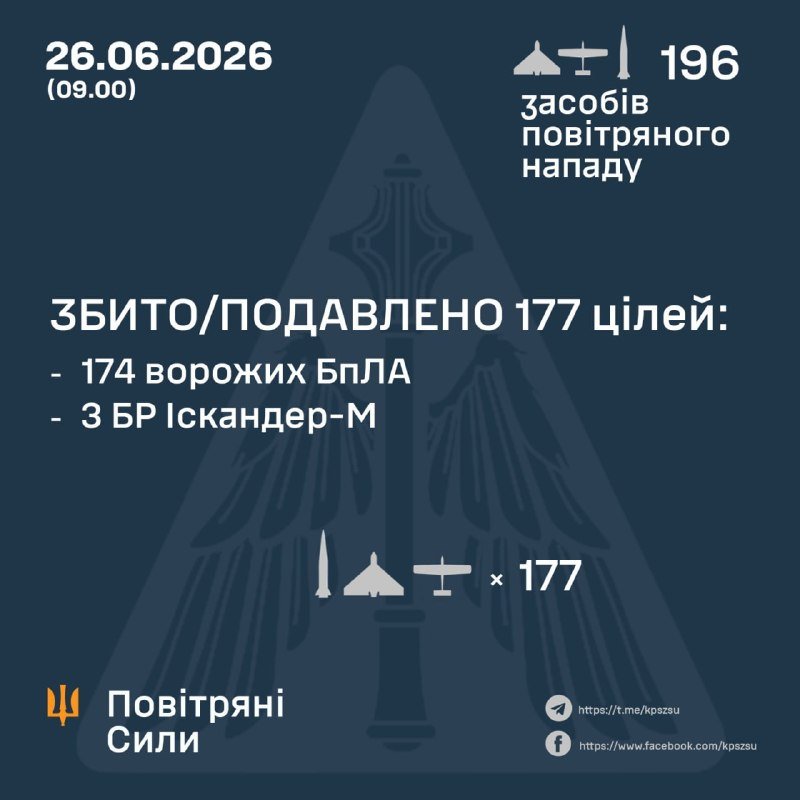
The immediate stakes are diplomatic rather than military. On the ground, the operational picture does not change overnight: Ukrainian units continue to defend positions in the Donbas and Kursk salient; Russian forces continue attritional assaults; long-range strikes continue in both directions. What changes is the negotiating posture. A United States that has declared itself a party to the conflict cannot credibly convene a balanced summit, and Moscow knows it. The Minsk-style architecture — great-power guarantors, neutral venue, monitored ceasefire — depends on the convener being something more than a co-belligerent.
What remains genuinely uncertain is the scope of the change. Macron described one text; he did not describe a doctrinal shift. Whether the Trump administration treats the new framing as a fixed commitment or as another negotiable position is a question the next several weeks of diplomacy will answer. The Russian response, too, is not yet visible in the public record. Kremlin spokespeople will need to decide whether to treat the announcement as a provocation that ends the negotiating track, or as a clarifying moment that at least removes one source of confusion about where Washington stands.
What is no longer plausible, however, is the posture of evenhandedness itself. The mediator, in this telling, has chosen a side. The only question is how soon the other actors in the room adjust their language to match.
This publication treats the Macron announcement as a framing event rather than a policy break; the underlying aid flows and intelligence cooperation have not changed. The Russian foreign ministry and the US State Department had not published a formal response at the time of writing.
Wire provenance
This editorial synthesis draws on the following public wire/social posts:
- https://t.me/BellumActaNews
Follow the event.
These dated source records provide context. They do not retrospectively verify this archive article.
A dated voting record is evidence of one decision. Use the original UN record before turning it into an alignment label.
Visual explainer · historical vote of 2022-03-02 →