Brooklyn loads up late, Knicks add Nickel at 47: a second-round read of the 2026 NBA Draft's Eastern swing
The Brooklyn Nets spent picks 33 and 43 on perimeter and frontcourt depth; Orlando grabbed Felix Okpara at 46; the Knicks closed the New York angle at 47 with Tyler Nickel.
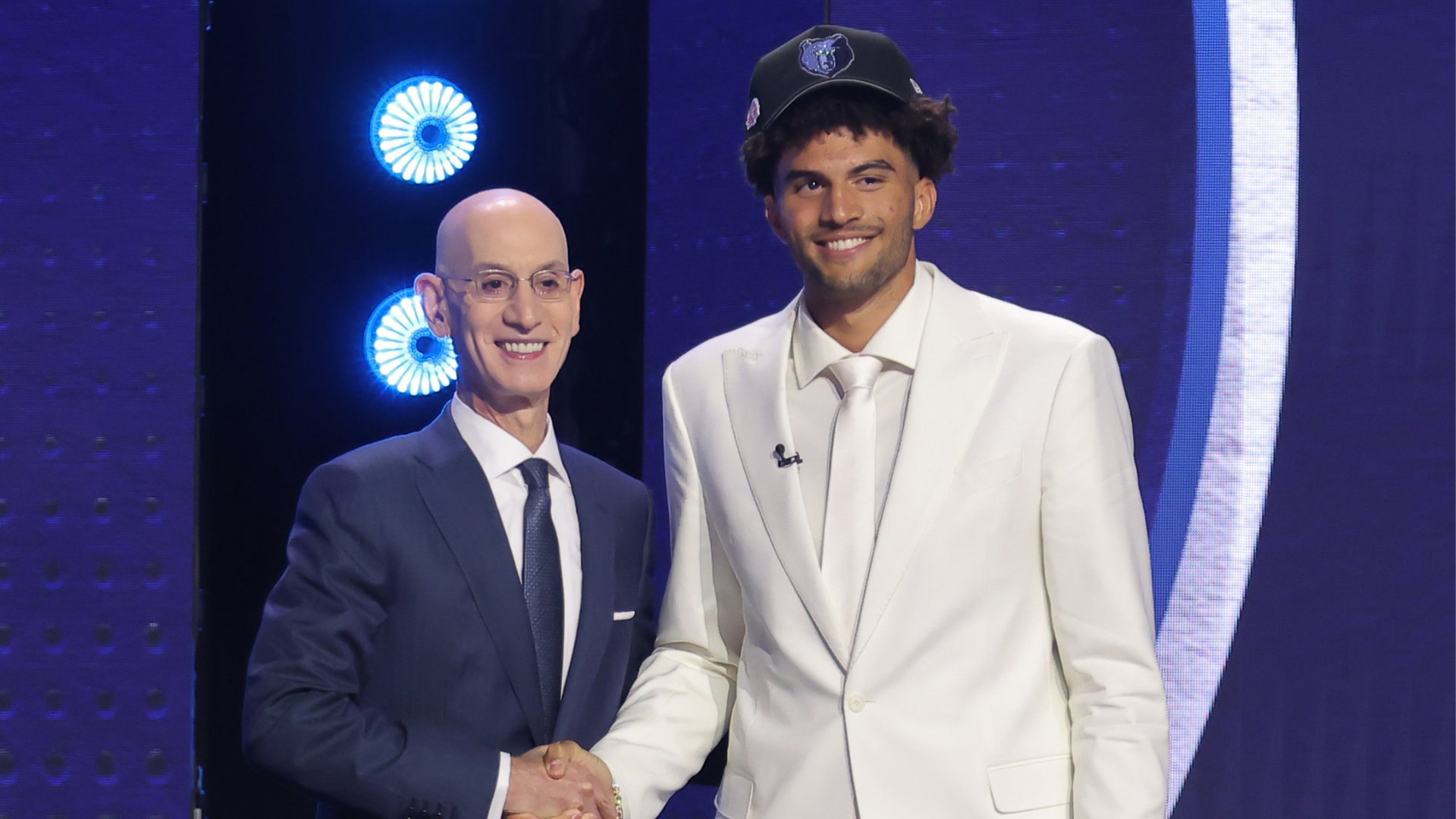
The 2026 NBA Draft's middle rounds tilted hard toward the Eastern Conference's two New York franchises and a quietly aggressive Orlando front office. Between 00:36 UTC and 01:42 UTC on 25 June 2026, the Brooklyn Nets used picks 33 and 43, the Orlando Magic took Felix Okpara at 46, and the New York Knicks closed the New York angle by taking Tyler Nickel at 47. The wire moved fast; the second round is where teams either load up on rotational depth or cash in on upside swings, and four picks in roughly an hour told four different stories about how each front office reads its roster.
The structural read is straightforward. A team selecting twice inside a 14-pick window is signalling either a roster reset in progress, or a deliberate stockpile of cost-controlled assets on rookie-scale contracts. For a Nets organisation still working through the long aftermath of its 2023 trade-deadline teardown, the second reading fits the public evidence better than the first. For Orlando, taking a frontcourt piece at 46 reads as the kind of late-first, early-second move the Magic have made their staple under their current front office — collect a big, develop quietly, and either integrate or flip.
Brooklyn's hour: Evans at 33, Bilodeau at 43
The Nets were the night's clearest second-round story. They opened the run at 00:36 UTC with Isaiah Evans at pick 33, then came back at 01:24 UTC for Tyler Bilodeau at 43. Two selections, two different positions, both inside a stretch where draft boards compress and teams either trust their pre-draft work or reach. Brooklyn's behaviour across the two picks is consistent with an organisation that came into the night with a board and worked it, rather than a team chasing the room on the live ticker.
The framing question is whether two seconds amounts to roster construction or roster inventory. The honest answer is that the public wire doesn't yet say — neither pick has been matched, as of the latest Telegram updates cited here, with a corresponding trade that would move a second-rounder's contract off the books. Without that trade, the conservative read is that Brooklyn is simply adding two players it expects to compete for minutes at training camp, which for a team still sorting its rotation is a defensible use of capital.
Orlando's quiet move at 46
The Magic took Felix Okpara at 46, announced at 01:30 UTC. Orlando's draft pattern under president of basketball operations Jeff Weltman has been unusually consistent: use late-first or early-second capital on frontcourt players whose consensus draft slot has slipped, and let the development staff handle the rest. Okpara fits that profile cleanly — a centre prospect whose pre-draft projection sat in the back half of the first round on several public boards before sliding into the 40s on draft night. The Magic have made a habit of drafting where the board breaks against a player, not where the consensus says they should.
The counter-read is that Orlando is now uncomfortably deep at the five, and one of the existing bigs — Jonathan Isaac, Wendell Carter Jr., Goga Bitadze — becomes the obvious candidate to surface in trade talks before training camp. The wire doesn't confirm that; it's the structural inference from a roster that, on paper, was already crowded at the position before the pick was made.
The Knicks close New York's night at 47
At 01:42 UTC, the Knicks took Tyler Nickel at 47. New York entered the second round with limited capital and a roster that, on paper, is closer to a contender than a rebuilder, which is usually when front offices use a late second on a swing-for-the-fences wing rather than a roster-ready piece. The Nickel selection reads exactly that way: a wing whose pre-draft profile leans on athletic upside rather than finished skill, the kind of prospect who either carves out a rotation role by year two or spends most of year one in Westchester.
The alternative framing is that the Knicks were simply taking the best available name on their board, regardless of position, and that any read of motive beyond that is over-reading a single data point. That interpretation is defensible — and the wire offers no evidence either way.
What the night doesn't tell us
The honest caveat is that second-round picks on draft night are, by themselves, thin evidence. Four selections, none yet matched to a trade, none yet attached to a Summer League roster, and none yet paired with a contract number or guarantee structure. The structural readings above — Brooklyn stockpiling, Orlando doing what Orlando does, the Knicks swinging for upside — are the plausible reads, not the confirmed ones. The wire will firm up over the next 48 to 72 hours as agents finalise guarantees, as trades involving these picks surface, and as Summer League invitations get announced. Until then, what the second round gave us is four names, four organisations, and four credible but unconfirmed reads of what each one was trying to do.
This article was compiled from the live NBA Draft wire on 25 June 2026; every selection above is drawn from Telegram-channel NBA Live's rolling coverage of the broadcast. Where structural inference is offered, it is labelled as such rather than presented as confirmed team intent.
Wire provenance
This editorial synthesis draws on the following public wire/social posts:
- https://t.me/NBALive
- https://t.me/NBALive
- https://t.me/NBALive
- https://t.me/NBALive