Warriors close NBA Draft with Jones at 54; Rockets double up at 39 and 53
Golden State wrapped its 2026 class with Lajae Jones at 54, while Houston used picks 39 and 53 on Jack Kayil and Ugonna Onyenso as the second round churned past the 1 a.m. UTC mark.
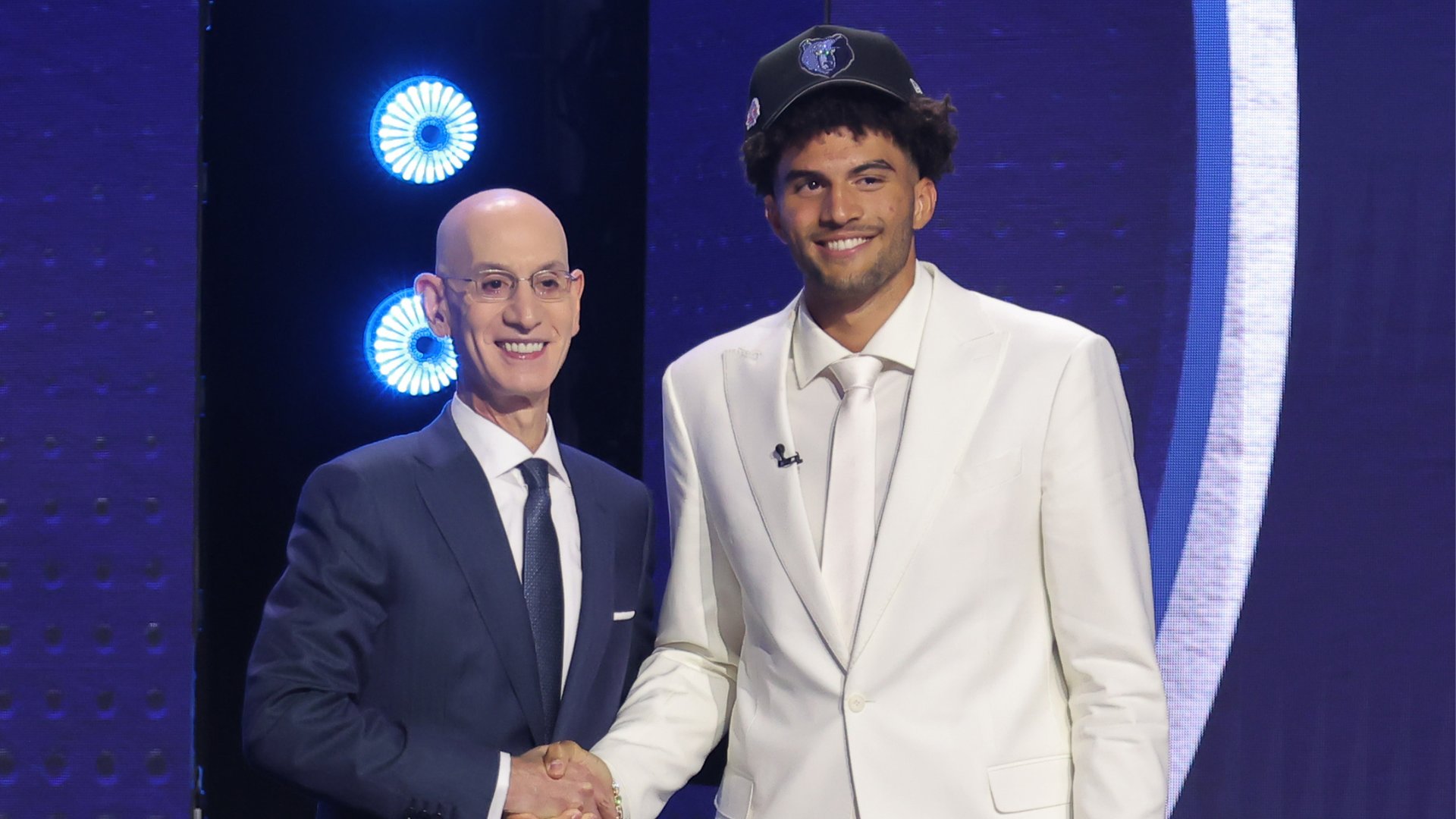
Golden State used the 54th pick of the 2026 NBA Draft on Lajae Jones at 02:12 UTC on 25 June 2026, closing out the early second round for a Warriors front office that has spent the better part of three seasons recalibrating around Steph Curry's championship window. The selection, broadcast live on ESPN and logged by the NBALive wire on Telegram, came six minutes after Houston took Ugonna Onyenso at 53, capping a stretch in which the Rockets had already added Jack Kayil at pick 39 roughly an hour earlier. The cluster of moves turned the back third of the draft into a working night for two front offices with very different timelines: a Warriors team chasing one more run, and a Rockets roster still assembling around a young core.
Taken together, the three picks sketch a familiar draft-night split between contenders and builders. Golden State's move was the smallest possible draft footprint — a single selection in the 50s — while Houston consumed two of the 39 picks called by the time the night reached the midway point. Both choices fit the public template their front offices have signalled all spring: bank young talent, keep the cap sheet flexible, defer judgment until summer league.
What actually happened
The NBALive wire carried the picks in sequence as ESPN's broadcast crossed the Atlantic. Houston opened the team's night at 01:06 UTC, taking Jack Kayil with the 39th overall selection. The Rockets returned at 02:06 UTC for Onyenso at 53, then six minutes later Jones became the final name attached to Golden State's 2026 class. The three announcements were posted as the picks were made on air; NBALive's role is the scoreboard function of draft night — a real-time index of selections, not a scouting service. The wire does not characterise the players; it records them. That distinction matters, because the public-facing read of any late second-round pick is built downstream, in the scouting press, the agent circuit, and the team's own summer communications.
What the record shows is the shape of the decision: two organisations, three picks, all clustered in the second-round band where teams are buying developmental options rather than rotation players. Houston doubled up; Golden State did not.
The counter-narrative
The standard draft-night read treats picks in the 30s and 50s as long-shots — late swings at rotation depth or stash candidates. The counter-narrative worth taking seriously is that the modern NBA has rewritten the value curve in the second round. Second-rounders now sign two-way contracts that did not exist a decade ago; the league has expanded its developmental infrastructure; and the gap between a pick-39 contract and a pick-54 contract is, in pure cap terms, narrower than at any point since the two-way deal was introduced in 2017. Houston's decision to spend two bites at that apple is therefore not a sign of indecision — it is the front office using its full allocation in a band where the marginal cost of a second selection is low.
The structural counter-point is that draft picks are also tradeable assets. Holding two second-rounders gives a rebuilding team currency in the December and February windows that a team with only one pick lacks. The Warriors, by contrast, went into the night with limited second-round capital and came out with one selection — a smaller but cleaner bet.
Structural frame
What the late second round really maps is roster-construction philosophy under the league's current collective bargaining agreement. Title-window teams treat picks 40 to 60 as low-cost flyers, with the implicit understanding that the median outcome is a training-camp invite rather than a rotation role. Rebuilding teams treat the same band as portfolio construction: more picks, lower individual hit rates, higher aggregate expected value. Houston's two-pick night is consistent with the latter. Golden State's single-pick night is consistent with the former.
Neither approach is exotic. The novelty, if any, is that the gap between the two strategies has narrowed as the league has standardised two-way deals, expanded the G League, and tightened the relationship between draft position and rookie-scale money. The economic penalty for missing in the second round is smaller than it was a decade ago; the economic penalty for not having picks at all is also smaller. Front offices are choosing more freely between depth and concentration.
Stakes and what to watch
For Golden State, the question is whether a pick-54 selection in Curry's late-30s window moves the needle on the 2026-27 roster. Historically, pick-54 selections do not. The realistic read is that Jones, like most late-second-rounders, will spend his first year on a two-way deal or in the G League, with a developmental track that runs through summer league in July and training camp in the autumn. Houston's pair — Kayil at 39 and Onyenso at 53 — face a similar trajectory, but with two roster slots rather than one competing for attention.
The bigger structural story to watch is whether Houston continues to convert draft capital into volume in 2027. The Rockets have now used two second-round picks in consecutive windows of a single draft; that is a pattern, not an isolated event. For Golden State, the pattern is the opposite: a single late pick, a clear bet on a single prospect, and a front office content to let the rest of the night go by.
What the record does not show
The wire confirms the picks, the order, and the teams. It does not confirm contract terms, two-way agreements, or any reported trade of the selections themselves. Scouting grades, pre-draft rankings, and the public consensus on Jones, Kayil, and Onyenso sit outside the NBALive feed; they belong to the sports press that will profile the class over the coming week. This publication will revisit the trio once summer-league rosters are announced, when the developmental plans behind each pick become legible.
This publication read the draft-night wire as a scoreboard, not a scouting report. The interesting question is not who was picked but how each front office chose to spend its allocation — and what that spending pattern says about the season ahead.
Wire provenance
This editorial synthesis draws on the following public wire/social posts:
- https://t.me/NBALive
- https://t.me/NBALive
- https://t.me/NBALive