Neymar's return and the 48-team World Cup's first structural test
Brazil's marquee return after 981 days headlines a tournament already exposing the fault lines of FIFA's expanded format, including fixtures that invite mutual non-defeat.
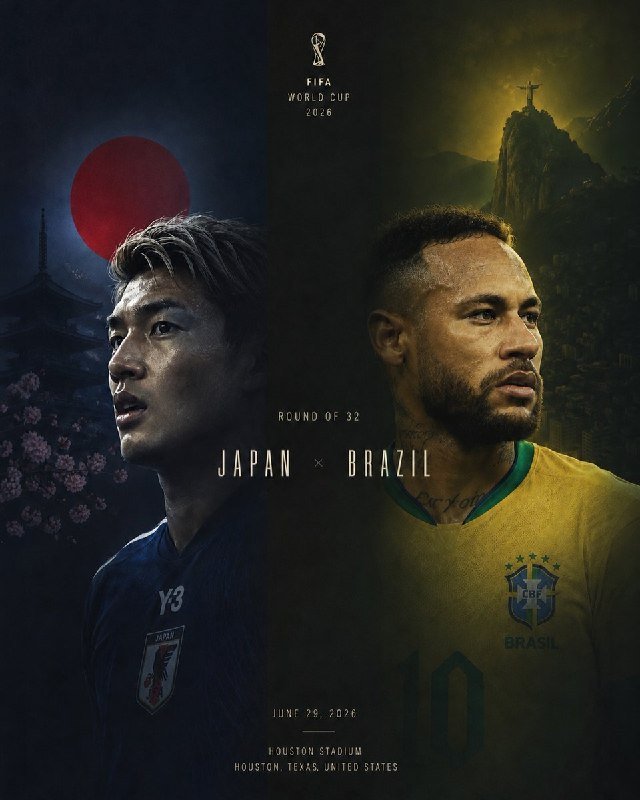
Brazil's headline act is back, and FIFA's most ambitious expansion yet is already showing its seams. On 25 June 2026, the Selecao confirmed that Neymar Jr had ended a 981-day absence from the World Cup stage, returning to the squad sheet with an emotional dressing-room scene that the player himself described in stark terms. "I was crying in the dressing room, yes. I thank God to be able to help my country, I am so happy to be a part of my team," Neymar told reporters, per FIFA's official channel. The Athletic carried the same quote through its matchday wire. The return is the emotional centre of a tournament whose architecture is the real story: 48 teams, 104 matches, and a final round of group fixtures in which arithmetic can quietly override ambition.
That tension between spectacle and structure is the spine of this World Cup. The marquee names are back, the attendances are record-scale, and the format is, for the first time, putting two pairs of finalists into positions where a coordinated draw is the rational result. The defensive records of the early leaders suggest a familiar pattern: tight, low-event football from the teams disciplined enough to treat the group phase as a survival exercise.
Neymar's 981 days, and what a comeback actually costs
The number does the heavy lifting. 981 days is the gap between Neymar's previous World Cup appearance and his return on 25 June 2026, per FIFA's official communications. Recovery from the anterior cruciate ligament injury he suffered in October 2023, combined with the muscular setbacks that followed, had pushed the 34-year-old's international timeline into question. His own framing — gratitude, faith, emotion in the dressing room — is the sort of quote a national federation amplifies when a talisman is being re-introduced rather than re-installed.
The competitive subtext matters more than the sentiment. Brazil have not looked like a settled side in this cycle, and a returning forward operating at somewhere near full capacity alters the front-line calculus. The early defensive numbers — clean sheets tracked by Transfermarkt across the opening matchdays — suggest the back end of the tournament is being organised around containment, with the attacking recovery stories doing the headline work.
The format problem FIFA did not want on Day 12
The structural critique is no longer hypothetical. BBC Sport's reporting on 25 June identified two fixtures in the final round of group games that present a textbook case of mutually-assured qualification: two teams who can advance by playing out a draw, in a format whose third-place qualification pathway makes a single point sufficient. The 48-team field, with eight groups of three feeding into a 32-team knockout bracket and eight best-third-place qualifiers, has multiplied the number of final-day scenarios where the rational play is non-engagement.
This is the predictable cost of expansion. Adding 16 teams from the previous 32-team edition created room for smaller federations and for the broadcast revenue that came with them, but it also created 16 extra group-stage matches and a third-place safety net that did not previously exist. The third-place escape valve is the mechanism that turns dead rubbers into structural incentives to draw. FIFA's marketing pitch — more nations, more stories, more matches — has produced, as a side effect, more matches where neither side has any incentive to win.
The clean-sheet clubs and what they signal
Transfermarkt's tracking on 25 June noted four teams yet to concede a goal in the 2026 World Cup, a small but telling club. Clean sheets at this stage of a tournament usually belong to one of two profiles: a top-tier side sorting its defensive shape early (the boring excellence of a France or a Spain), or a lower-tier side sitting deep, restricting space, and gambling that one set-piece chance is enough. The early returns suggest both profiles are represented.
The implications are tactical rather than moral. A team that concedes nothing through three group games has usually sacrificed attacking territory to do so, and the question becomes whether that trade holds into the knockout rounds, where opponents will be better and the margins thinner. The defensive leaders of the group phase are rarely the defensive leaders of the round of 32.
What the rest of the week forces
Tonight and tomorrow morning bring the schedule that will decide the bracket, per Transfermarkt's fixture post on 25 June. The games to watch are not the glamour ties; they are the final-round group fixtures in which the line between qualification and elimination is one goal, and the line between attacking football and professional caution is also one goal. The 48-team format did not invent match-fixing anxiety, but it has provided more fixtures in which the incentives point the wrong way.
The Neymar storyline will dominate the Brazilian press cycle regardless of the result. The structural critique will dominate the European tactical press. Both are correct, and both are downstream of the same tournament design.
This publication framed the 48-team format around its incentive effects rather than its expansionist rhetoric, and treated Neymar's return as a squad-strength variable rather than a redemption arc.
Wire provenance
This editorial synthesis draws on the following public wire/social posts:
- https://t.me/FIFAcom
- https://t.me/TheAthletic
- https://t.me/FIFAcom
- https://t.me/TheAthletic
- https://t.me/transfermarkt
- https://t.me/transfermarkt