A Projectile off Oman's Coast, and the Pattern No One Wants to Name
A projectile struck the water 7.5 nautical miles off Oman on 25 June. No flag, owner, or cargo has been named, and the silence itself is the story.
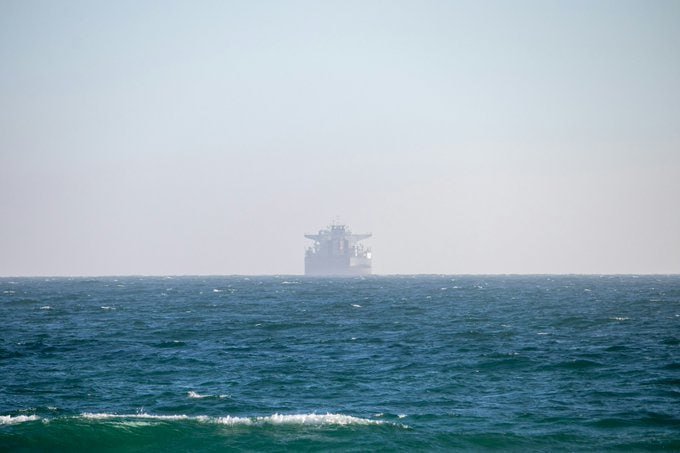
On the morning of 25 June 2026, roughly 7.5 nautical miles off the Omani coast near a fishing village called Dahit, a projectile came down in waters watched by every naval headquarters from Muscat to Manama. Iranian state outlets Tasnim and Fars were first to register the event. Western wires followed within hours, framing it as an unexplained strike on a vessel in one of the most surveilled sea lanes on earth. No flag, owner, or cargo manifest has been published. The silence is the story.
What is now confirmed is narrow but inconvenient. A projectile, not a drone and not a missile, struck the water 7.5 nautical miles off Oman, in the southern approaches to the Strait of Hormuz, at a location identified by Iranian state-aligned reporting as Dahit. That is the verified perimeter. Beyond it sits an attribution gap: no government has claimed the strike, no shipping register has logged a casualty, and no commercial operator has publicly identified the hull.
A projectile off the Omani coast is not a curiosity. It is a stress test for a transit corridor that carries roughly a fifth of global oil shipments, and that sits inside a war whose public-phase is being fought in press releases rather than on the water. Reading the Iranian outlets carefully, the news was not the impact itself but the framing: Tasnim reached for the word "projectile," sidestepping the more politically loaded vocabulary of "drone" or "cruise missile" that previous incidents in the Gulf have used. That lexical choice, deliberate or otherwise, signalled uncertainty about origin. In the Persian Gulf of 2026, uncertainty is itself a fact.
The pattern the major wires are reluctant to name is the multiplication of unattributable kinetic events in the Hormuz maritime theatre. Iranian state media has, over recent months, alternated between silence and confirmation about episodes involving foreign vessels, sea-launched drones, and what officials in Tehran describe as defensive interceptions near its southern coast. Each episode is reported as discrete; together they form a tempo. A tempo that any planner in the US Navy's Fifth Fleet, or in the Iranian Revolutionary Guard Corps Navy, can read as a quiet rehearsal. Neither side wants the word "campaign" applied to what is happening in those waters, because the word carries escalatory weight that both governments are at pains to deny.
The structural frame is older than the current crisis. The Strait of Hormuz is the world's most consequential energy chokepoint, and it sits inside an exclusive economic zone mosaic that gives littoral states, principally Iran and Oman, varying degrees of lawful authority over adjacent waters. Under the United Nations Convention on the Law of the Sea, the right of transit passage through international straits is recognised; under customary maritime law, the waters off Dahit are Omani. A projectile landing there is therefore not a procedural detail. It is a question about whose jurisdiction applies, whose radar tracked the event, and whose investigation, if any, will follow.
The honest answer, as of this writing, is that no investigation has been announced. Shipping insurers have not revised Hormuz transit premia in response to the Dahit incident; that is a market tell. If the Lloyd's market and the Joint Maritime Information Centre, the Royal Navy-run outfit that monitors Persian Gulf traffic, treat Dahit as a single anomaly rather than a systemic risk, the prevailing view is that the corridor remains commercially navigable. That view can change on a single overnight revision.
What to watch in the coming days is procedural, not dramatic. Whether the Omani foreign ministry issues a statement identifying the nationality of any vessel involved, or whether Muscat remains silent and routes the matter through back-channels, will indicate how seriously the sultanate reads the event. Whether CENTCOM or Iran's Regular Navy publishes any track data will indicate whether either side wants the corridor, or the world, to know what happened. And whether the projectiles become plural, with another impact logged off the coast, will indicate whether 25 June was an accident, a warning, or the first frame of a longer film.
The Dahit incident will not be solved by parsing Persian-language state media in isolation, nor by waiting for the wires to be told what to print. The only way the corridor's commercial insurers, the region's navies, and the governments of Oman, Iran, and the United States get a coherent picture is through cooperative maritime domain awareness, the kind of which the Gulf has plenty and which has, so far, been withheld from public view.