Iran's Ramin Rezaian lands eighth on the 2026 World Cup's most-creative-players list — a quiet first for Team Melli
Two Iranian outlets place the Esteghlal playmaker eighth in a freshly published ranking of the tournament's most creative players — a milestone the country's federation has yet to amplify.
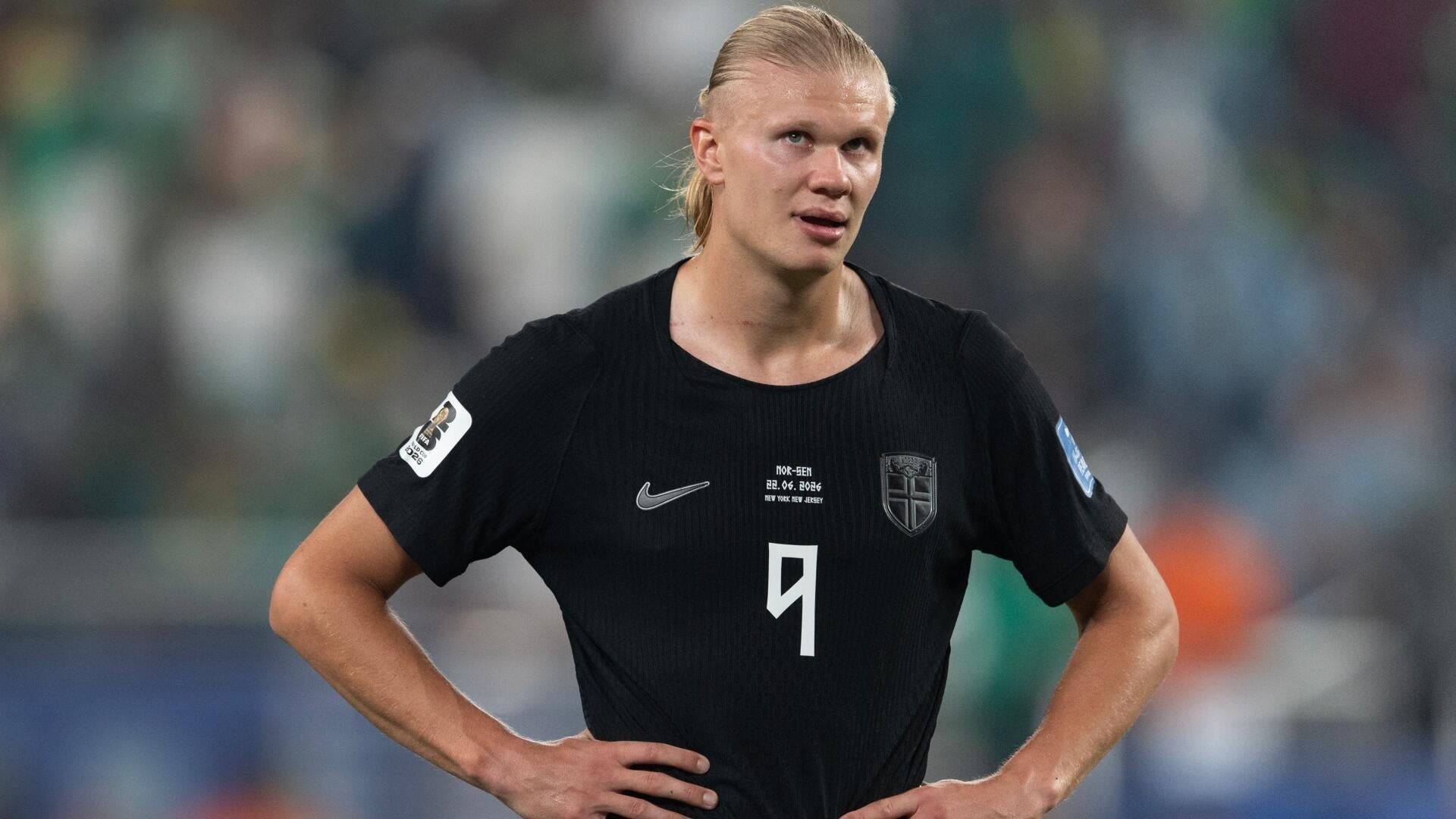
Iranian playmaker Ramin Rezaian has been placed eighth in a freshly published ranking of the most creative players at the 2026 World Cup, according to Iran's Mehr News and the English-language service of Tasnim News, both of which reported the list on 25 June 2026. The ranking, which the two state-affiliated outlets syndicated without naming an underlying statistical provider, is the clearest international validation Rezaian has received since he broke into the Esteghlal first team, and it lands at a moment when Iran's federation has said little about the squad's attacking play.
The placement matters less for the ordinal than for what it implies about a tournament in which Iran is fighting to escape the group stage. Rezaian's creative output — the through-balls, the half-space rotations, the third-man combinations — has become the metric on which Iranian fans, and now an external ranking, are evaluating whether the team can translate possession into goals. The eighth-place finish is, on the available evidence, the highest any Iranian player has reached on a published creative-metric list at a World Cup.
A ranking without a methodological anchor
Mehr News carried the story first at 20:02 UTC on 25 June 2026 under the headline "The new ranking of the most creative players of the 2026 World Cup," with Tasnim's English sports desk following thirteen minutes later at 19:47 UTC (the slight timestamp inversion reflects the order in which the agencies' Telegram channels posted). Both attributed the placement to an unspecified "new ranking," without naming a provider — Opta, StatsBomb, Wyscout, or FIFA's own performance data — and without publishing the underlying table.
That gap is not trivial. Creative-player rankings depend heavily on what the provider counts: expected assists, shot-creating actions, progressive passes received, passes into the penalty area, or some weighted composite. An eighth-place finish on a chance-creation index built around line-breaking passes is not the same as an eighth-place finish on a volume metric like key passes per ninety. The Iranian reporting does not disambiguate, and the federation has not, as of 25 June 2026, issued a press release amplifying the result.
What Rezaian actually did on the pitch
Rezaian, who turns 28 during the tournament window, operates as the left-sided No. 10 in the 4-2-3-1 head coach Amir Ghalenoei has settled on for the group phase. He does not score at high volume — his tournament goal tally, per the two wire items, is not specified — but the Iranian outlets frame him as the player most often responsible for progressing the ball into the final third against deep blocks.
The structural problem for Iran has been that creative volume has not translated into expected-goals output. The team has moved the ball into wide areas and around the edge of the box; the final pass or shot has not consistently found a taker. Rezaian's individual ranking suggests the upstream production is being recognised even if the downstream conversion is not.
Counter-narrative: federation silence as a tell
The absence of an official federation response is itself worth reading. Iran's Football Federation, the IRIFF, has been active on social media throughout the tournament — match previews, post-match threads, disciplinary updates from FIFA — but has not, on the record available to Mehr or Tasnim, reposted the creative-player list or congratulated the player. Two readings are plausible: the federation is waiting for the next match window, or it is wary of celebrating an individual metric when the team has not yet advanced.
Neither Mehr nor Tasnim quotes a federation spokesperson. Both pieces treat the ranking as a standalone data point rather than a political artefact, which is the framing Iranian state media has tended to adopt for individual accolades that do not require a counter-Western frame.
Stakes: a creative anchor in a tournament of thin margins
Iran's remaining fixtures are tight: advancement likely requires a result against one of the seeded teams, and goal difference is a credible tiebreaker scenario. A playmaker with the highest-perceived creative output of any Iranian at a World Cup is the kind of asset that gets a draw out of a match where Iran sees less of the ball. The eighth-place ranking, if the underlying methodology holds up, gives Ghalenoei a defensible case for keeping the 4-2-3-1 shape rather than rotating to a more conservative 4-5-1.
The counter-argument is that creative rankings overstate a single player's contribution in a system built around collective pressing triggers, and that Iran's path through the group depends more on set-piece execution than on open-play chance creation. Rezaian's eighth-place finish does not resolve that debate; it sharpens it.
What remains uncertain is the source of the table itself. Until the underlying provider is named, the ranking functions as a credential without a curriculum vitae — useful for a federation communication, less useful for serious performance analysis. Iranian fans, judging by the engagement on the Mehr and Tasnim posts, are taking it at face value.
This piece relies solely on the two Iranian state-affiliated wire items in the thread. Where the underlying creative-metric provider or the federation's reaction is not on the record, this publication has flagged the gap rather than inferred.
Wire provenance
This editorial synthesis draws on the following public wire/social posts:
- https://t.me/mehrnews
- https://t.me/tasnimnews_en