The Senate's Iran vote and the price of framing a war
A 50-48 Senate vote demanding an end to US operations against Iran is not a foreign-policy defeat. It is a referendum on how a war is being framed before the shooting even stops.
On 24 June 2026, the United States Senate voted 50-48 to pass a resolution directing President Trump to cease military operations against Iran, according to the markets-and-politics outlet Unusual Whales. The two-vote margin tells most of the story: this was not a rebellion, it was a coalition. Two Republicans crossed the aisle, the Democratic caucus closed ranks, and a chamber that has spent eighteen months waving through supplementary defence requests suddenly remembered that the Constitution places the power to declare war with Congress, not the executive.
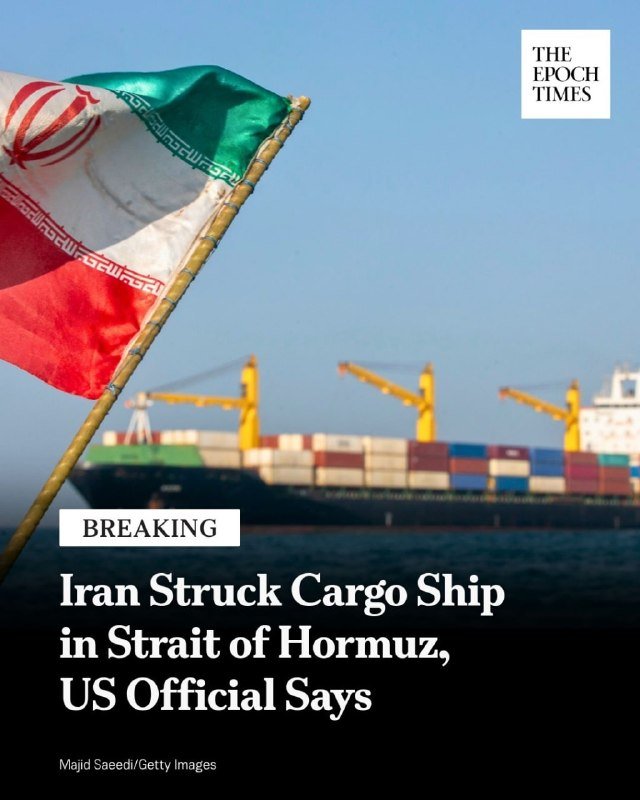
The vote lands in the middle of an argument about what the operation against Iran actually is. Secretary of State Marco Rubio, in remarks circulated the same week by the Telegram channel Clash Report, dismissed Tehran's levies on shipping through the Strait of Hormuz as a matter of "semantics." "You can call it a toll, you can call it a fee, whatever you want to call it," Rubio said. "The reality of it is that no country on earth has a right to charge for the use of international waterways." The clip was framed, by the account that posted it, as a justification for the use of force. The Senate's response the next day suggests the framing did not land where its authors hoped.
The vote is not a defeat, it is a definition
A resolution of this kind does not bind the executive the way a statute does. It expresses the sense of the Senate. Read literally, it is a piece of paper. Read politically, it is a different document: a recorded, public, narrowly-won declaration that a majority of the upper house believes the military campaign against Iran has either gone further than authorised, run ahead of its own justification, or both. Two votes is not a landslide. Two votes, with a wartime president in his second term and an American naval presence in the Gulf, is a referendum.
The arithmetic also tells you who is in charge of the next move. The two Republican defectors are not anti-war ideologues; they are legislators who read the political weather and concluded that distance from this operation is now an asset rather than a liability. That is a market signal, not a moral one, and it is the most important kind for a sitting executive to read.
What Rubio was actually arguing
Rubio's "semantics" line is doing real work. It collapses a distinction that has mattered in maritime law since at least the Corfu Channel case of 1949: the difference between a state's right to charge for services it genuinely provides at a chokepoint — pilotage, salvage, security — and a unilateral extraction from vessels in transit. If Iran's levies are a "fee," they sit inside a long, often ugly history of strait-state taxation that the United States has grudgingly accepted from other partners at other times. If they are a "toll," they are a sovereignty claim over a waterway the rest of the world treats as international, and they are subject to a different and far sterner legal regime.
The Rubio formulation wants to have it both ways: the vocabulary of commerce when pressed on legality, the vocabulary of coercion when justifying a military response. That is not unusual in the rhetoric of great-power confrontation. It is worth naming because the Senate's vote rests on whether the underlying claim is strong enough to sustain a war. "They are charging for something we all agree is free" is a stronger claim than "we do not like the price." The administration has, publicly, used the weaker formulation.
The structural frame
What is happening around the Strait of Hormuz is not really about the Strait of Hormuz. It is about who has standing to set the price of movement through the central nervous system of the global energy trade, and under what legal architecture. For three quarters of a century that standing has rested on a US-led maritime order whose rules Washington wrote, enforces when it chooses, and routinely exempts itself and its closest partners from. Iran is one of a small number of states that has, in recent years, tested that order by acting as if the rules applied to it too — by charging, by detaining, by asserting. The current operation is the reply.
The structural question the Senate is being asked to ratify is whether the United States will continue to enforce a maritime order by force when a regional power insists on a seat at the table, or whether it will treat the moment as a renegotiation. The 50-48 vote reads as a hedge: yes, the order matters; no, this particular operation, in this particular framing, is not the way to defend it.
What remains uncertain
The sources do not specify the operational tempo of US forces in the Gulf, the casualty count on either side, or whether the administration has signalled whether it will treat the resolution as binding. They also do not specify whether the two Republican votes came from senators who object to the legal basis of the operation, to its cost, to its optics in an election year, or to all three. Those are different wars inside the war. The next forty-eight hours will tell which one is being fought.
The deeper uncertainty is whether the resolution changes anything at all. War-power votes in this Congress have, in recent cycles, served more as polling instruments than as legal brakes. The narrower the margin, the louder the signal — but the signal is being sent to a presidency that has spent two years treating congressional signals as advisory rather than binding. That, more than the operation itself, is the fight worth watching.
This publication frames the 24 June vote as a constitutional moment, not a foreign-policy one: the Senate reasserting its claim on a war whose legal scaffolding the administration has so far kept deliberately soft.
Wire provenance
This editorial synthesis draws on the following public wire/social posts:
- https://t.me/ClashReport
Follow the event.
These dated source records provide context. They do not retrospectively verify this archive article.
Separate what the nuclear watchdog reported from what it could not determine after the June 2025 strikes.