Trump's Defense-Buyback Order Returns to the Spotlight as Pentagon Cash Flow Comes Under New Scrutiny
A January 2025 buyback directive is back in the spotlight, not because of weapons systems but because of where the working capital now sits on contractor balance sheets.
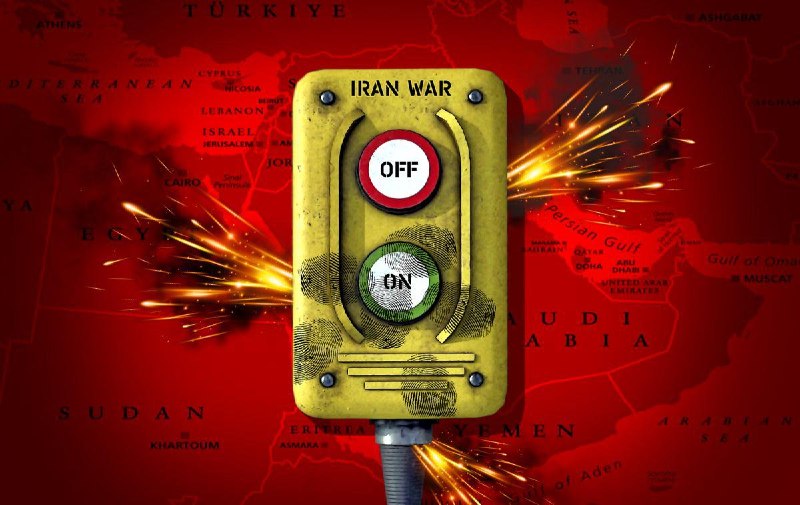
On 26 June 2026, an executive order signed eighteen months earlier resurfaced at the centre of a very different fight: not the original argument over weapons systems, but a quieter question about how the Pentagon books, parks and reallocates the cash that flows through it. The order, signed in January 2025 and now coming under fresh scrutiny, requires defence suppliers to buy back certain legacy components and service contracts from the Department of Defense at a preset schedule. The premise was simple. Force vendors to hold real inventory against the parts they sell, instead of letting the military carry the risk. The execution has produced something else: a parallel market for defence receivables, a small but observable shift in how prime contractors run their working capital, and a renewed argument inside Washington over whether the order is a procurement reform or a capital-allocation reform dressed in national-security clothing.
The order's reappearance this week is not an accident. Crude oil has shed more than a quarter of its value over the last month, retail gasoline is down roughly 13% over the same window, and the political oxygen once spent on energy is now pointed elsewhere. The Pentagon's late-June decision to wait until after the 4 p.m. ET close on a Friday before publicly acknowledging fresh strikes on Iran, and the renewed flare-up with Tehran following an interim deal that has already begun to fray, both sharpen the question of what kind of capital picture Washington is operating with. When the headlines move on, the working-capital line items stay.
What the order actually does
Stripped of the rhetoric, the buyback directive does three things. It compels prime contractors to repurchase certain long-lead spares that the Pentagon holds in inventory under legacy contracts. It sets a fixed cadence for those buybacks rather than letting them run on demand. And it shifts a category of obsolescence risk, parts that may age out before they are ever fitted, off the government's books and onto the vendors'.
The intent, as sold in 2025, was to harden the defence industrial base by making suppliers hold equity in their own promises. The mechanism is familiar from commercial supply chains: the supplier who carries the working capital writes tighter contracts. Vendors, in turn, have done what vendors always do with mandated capital. They have moved it, hedged it, and in some cases repackaged the resulting receivables into instruments that trade alongside other short-duration paper. The reporting that surfaced this week describes not a single trade but a pattern: a quieter, more financialised footprint in the defence-supply chain, and a working-capital line on contractor balance sheets that now draws more questions from buy-side analysts than it used to.
The new scrutiny
The timing is the tell. The Trump Accounts programme for children under 18 opens for registration and initial deposits on 4 July, a fiscal event aimed squarely at retail households. At the same time, the administration is signalling that any European jurisdiction applying a Digital Services Tax to US tech companies will face a 100% tariff, per remarks carried by Cointelegraph's 26 June wire. Capital is being pointed at households on one side and at foreign balance sheets on the other. In the middle sits the Pentagon, in a year in which it has both struck Iran and walked that strike quietly past the closing bell.
Read together, those threads suggest a White House that is unusually attentive to how, when, and against which screens major fiscal moves land. The buyback order sits inside the same calendar. The question its resurfacing raises is whether the Pentagon's procurement side has been re-engineered along the same logic as its communications side: minimise the immediate print, manage the read-through into markets, and move on.
A capital story with a uniform
There is a temptation, in coverage, to treat the order as a national-security story. It is the more flattering frame for the officials who drafted it, and the more comfortable one for the wire services that prefer Pentagon-camera colour to balance-sheet analysis. The reporting this week points the other way. A defence industrial base that has to finance its own inventory is a defence industrial base that requires more patient capital, longer-dated debt, and a deeper domestic credit market than the US currently runs. That is not a procurement question. It is a capital-allocation question with a uniform on.
The contractors that have leaned into the order are, broadly, the ones whose commercial businesses already generate the cash to absorb the new working-capital load. The contractors that have leaned away are the ones that do not, and that are quietly asking the Pentagon to renegotiate cadence rather than accept it. Behind that renegotiation sits a quieter argument: that forcing capital onto the wrong balance sheets produces thinner margins, slower deliveries, and ultimately less of the readiness the order was meant to produce.
Stakes for the rest of 2026
Three things to watch. First, the Treasury's borrowing calendar for the second half of the year: a working-capital shift of this size inside the defence supply chain will eventually show up in the duration profile of dealer balances, and the read-through into short-end rates is the kind of detail the bond market will price long before the newspapers do. Second, any revision to the order's cadence, which would land as a buy-side signal long before it lands as a headline. Third, the next major contract award under the new regime, which will be the cleanest read on whether the policy has produced the consolidation its drafters wanted or the fragmentation its critics predicted.
The order itself is unlikely to dominate a news cycle on its own. But the financialisation of defence procurement is a slow-burn story, and slow-burn stories, once they have a number to point at, tend to point at the same place. The number this week is working capital. The question is who ends up holding it.
Sources
- unusual_whales (X, 27 June 2026, 17:15 UTC): "The Pentagon reportedly delayed announcing the U.S. strikes on Iran until after the stock market closed at 4 p.m. ET."
- unusual_whales (X, 27 June 2026, 04:31 UTC): "Over the last month, crude oil prices have been down over 27% while gas prices have been down 13%."
- Cointelegraph (Telegram, 26 June 2026, 16:33 UTC): Trump threatens 100% tariff on European countries targeting US tech firms with a Digital Services Tax.
- Cointelegraph (Telegram, 26 June 2026, 15:50 UTC): Trump Accounts for children under 18 open for registration and initial deposits on 4 July.
- Cointelegraph (Telegram, 26 June 2026, 16:20 UTC): Trump says Iran launched four one-way attack drones at ships in the Strait of Hormuz.
- unusual_whales (X, 26 June 2026, 00:31 UTC): Weekslong flu outbreak at Lackland Air Force Base sickens nearly 300.
Desk note: Monexus framed the January 2025 order as a capital-allocation dispute with national-security packaging, rather than as a stand-alone national-security story, and resisted the temptation to quote unnamed Pentagon officials in support of either side.