Ten reactors and a $17.5 billion question: how the US is repricing nuclear power
Washington has lined up $17.5 billion in loan authority for ten new reactors, the largest state-backed nuclear push in two decades. The price tag is just the start of the argument.
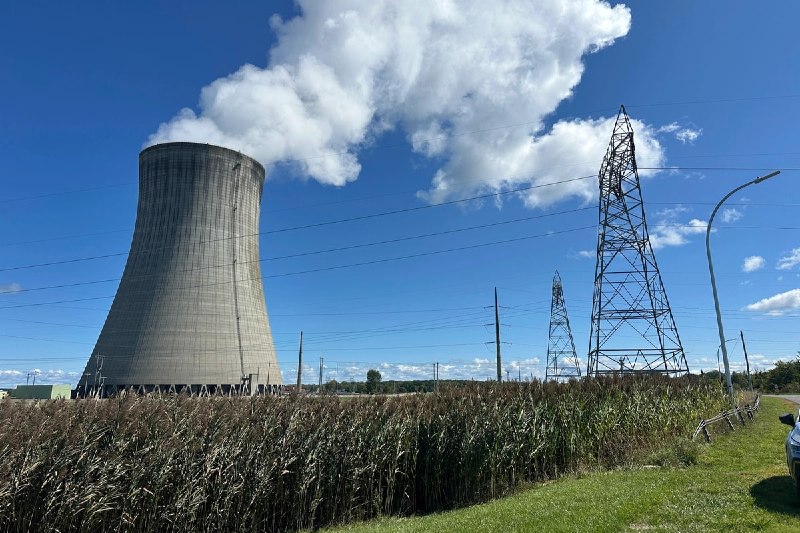
On 25 June 2026, US officials confirmed a $17.5 billion loan package to finance ten new nuclear reactors, framed as a direct intervention into the cost structure of large-scale atomic power. The funds, administered through federal lending authorities, are earmarked to reduce construction costs, cover the purchase of heavy long-lead equipment, and accelerate a reactor pipeline that has, for most of the past fifteen years, broken ground at a crawl. It is the most aggressive deployment of public credit behind US nuclear build-out since the loan-guarantee programme of the early Obama years, and the first time Washington has signalled, in dollar terms, that it intends to underwrite the industry's capital stack rather than merely regulate it.
The numbers are doing the talking. Ten reactors, $17.5 billion, and a federal bet that the bottleneck in American nuclear is no longer demand or licensing but the up-front cost of forging reactor vessels, pressure systems and turbine halls. Read the announcement as an industrial-policy signal: the state is back inside the balance sheet of baseload power.
What the package actually does
The loan envelope is structured to attack the specific cost drivers that have killed US reactor projects for two decades. According to a 25 June 2026 Telegram summary of the official announcement by Epoch Times, the financing is intended to "reduce construction costs, cover large equipment purchases, and accelerate the rollout of new nuclear reactors." That is a deliberately narrow mandate: it does not subsidise operating power, does not pay for fuel, and does not touch retail rates. It targets the front of the project finance curve, where overruns historically compound.
The political logic is straightforward. Each large reactor in the United States has, over the last twenty years, run between 50% and 200% over its original budget before completion — the legacy of Vogtle in Georgia, the abandoned V.C. Summer expansion in South Carolina, and the cancelled Levy project in Florida. Lenders price that risk. By absorbing the equipment-purchase line on its own balance sheet, the federal government is, in effect, offering a take-out to private capital that would otherwise demand a higher risk premium, or walk away. The ten-reactor target implies an average of $1.75 billion per unit, well below the all-in cost of recent Western builds but consistent with a programme that expects learning-curve compression once the first few units are under construction in parallel.
The counter-narrative: why the market is sceptical
The bear case is older than the programme. For two decades, the dominant Wall Street and consultancy view — repeated in research notes from Wood Mackenzie, S&P Global, and the major US utilities' investor days — has been that nuclear new-build in the United States is unfinanceable without persistent, large-scale federal support. The argument is not that reactors don't work; it is that the combination of long construction timelines, regulated cost recovery, and the political volatility of rate-base approvals makes the asset class structurally unattractive to private capital. The 2023 collapse of the NuScale-UAMPS project in Idaho, after costs for a small modular design ballooned past $9 billion for a six-reactor, 462 MW campus, is the most cited recent data point.
The counter-narrative in Washington is that the previous failures were products of one-off designs, fragmented procurement, and utility-led risk allocation, not of the technology itself. Officials point to South Korea's APR-1400, four units of which have been built in the United Arab Emirates on time and on budget, and to China's domestic reactor fleet, which has added more than thirty large units in the past decade. Both reference projects are state-coordinated in ways the US programme has not historically been. The $17.5 billion package is, in that reading, an attempt to import a degree of central coordination onto a market structure that has, until now, refused it.
The structural frame: state credit, industrial policy, and the new electricity equation
What sits behind the announcement is a recognition that electricity demand is no longer flat. The same week, US inflation data released for the prior month showed consumer spending and income beating forecasts, with the headline CPI print climbing to its highest level since 2023, per a 25 June 2026 summary by Crypto Briefing. Sticky services inflation has, in turn, hardened the political case for the Federal Reserve to keep policy restrictive, which raises the cost of capital for every long-duration infrastructure project. A loan programme that prices reactor construction below the prevailing private rate is, in that sense, a fiscal offset to monetary tightness.
The deeper shift is in the load curve itself. Data-centre build-out for AI training and inference, the reshoring of energy-intensive manufacturing, and electrification of heavy transport have collectively inverted a fifteen-year assumption that US electricity demand would grow at roughly 0.5% per year. Current utility-integrated resource plans now project 2% to 4% annual growth through 2035. Solar and wind can carry part of that load, but intermittency, interconnection queue backlogs, and the geographic mismatch between data-centre demand and renewable supply have reopened the case for firm, dispatchable, low-carbon baseload — which, in practice, means nuclear.
This is also where the politics of the package meets the politics of housing. A separate proposal circulating in the US Senate, summarised on 25 June 2026 by Unusual Whales, would prohibit institutional investors from owning more than 350 single-family homes. The two stories are not formally connected, but they sit in the same policy week: a federal government that is willing to use its balance sheet to bend the cost of long-duration capital assets — whether reactors or residential property — away from a private-market equilibrium that the political centre no longer accepts as legitimate. The pattern is the same: the state is re-entering the patient-capital business.
A global frame: who else is building, and what they have learned
The US push is not happening in a vacuum. China, South Korea, Russia, and France all maintain active nuclear export programmes, and the geopolitical weight of a reactor contract is now treated as equivalent to a defence agreement in many of the recipient capitals. The US has historically ceded that market to competitors that finance on concessional terms with state-backed export credit agencies. The $17.5 billion announcement is, in part, a recognition that if Washington wants to remain a credible counter-party in the global reactor trade — particularly in Central and Eastern Europe, the Gulf, and Southeast Asia — it has to be able to put concessional debt on the table in matching volumes.
The competing models are not equivalent. The Chinese state-financed reactor programme pairs low-cost debt with a domestic supply chain that produces roughly seventy percent of the bill of materials inside the country. The South Korean model exports a standardised design with disciplined cost controls, but on commercial rather than concessional terms. The US model, as the $17.5 billion announcement sketches it, sits between the two: state-backed credit for the front end of construction, with a privately operated asset and a regulated rate-of-return back end. The bet is that this hybrid can be made to work where the previous purely private version did not.
Stakes: who wins, who loses, and what changes if it works
The winners, if the programme clears its first two projects without the kind of overruns that killed V.C. Summer, are the utilities that have reactor sites already licensed and ready to break ground, the heavy-fabrication supply chain in the Ohio River and Gulf Coast corridors, and the broader US industrial-base narrative that has been searching for a flagship project since the 2022 CHIPS Act. The losers, in the near term, are the renewable-plus-storage developers whose interconnection windows may now be deprioritised in grid-operator planning, and the ratepayers in any state public-utility commission that approves cost recovery for a project that runs over budget.
The time horizon matters. Two completed reactors in the United States, on time and on budget, by 2032 would constitute proof of concept. Two more cancelled mid-construction would end the political viability of the model for a generation. The $17.5 billion is, in that sense, an option purchase on a particular theory of state capacity: that Washington can run a project-finance operation that the private sector, left to itself, will not. The market's view of that bet is, as of the announcement date, ambiguous. The political view is that the cost of not trying — a grid unable to absorb the coming load growth — is now higher than the cost of another round of state-backed nuclear construction.
What remains uncertain
The announcement does not, on the public record, name the specific utilities, sites, or reactor designs that will receive allocations. The $1.75 billion average per unit is an implied figure, not a contracted price. The federal loan authority has, in past cycles, moved more slowly than its announcements — a gap that the industry is now experienced enough to price in. And the broader question of whether the US can replicate the construction discipline of the Korean or Chinese programmes, without the centralised procurement that makes those models work, is genuinely open. What the sources confirm is the headline: $17.5 billion, ten reactors, a federal credit backstop. What the sources do not specify is whether that is the start of a working programme or another entry in a long ledger of ambitious US nuclear announcements that did not survive contact with the construction site.
This publication reads the announcement as an industrial-policy event first and an energy-policy event second. The dollars are doing the work of a strategic signal — to the supply chain, to the utilities, to foreign buyers of US reactor exports, and to the ratepayers who will, in the end, pay the bill. Whether the signal is also a forecast is the question the next five years will answer.
Wire provenance
This editorial synthesis draws on the following public wire/social posts:
- https://t.me/epochtimes/12000
- https://t.me/TSN_ua/24000
- https://t.me/TSN_ua/24001
- https://t.me/CryptoBriefing/15000