Venezuela earthquake kills at least 164 as Caracas reaches for foreign help
A powerful earthquake struck western Venezuela on 24 June 2026, killing at least 164 people and injuring nearly a thousand. Caracas has begun mobilising foreign assistance even as its diplomatic isolation deepens.
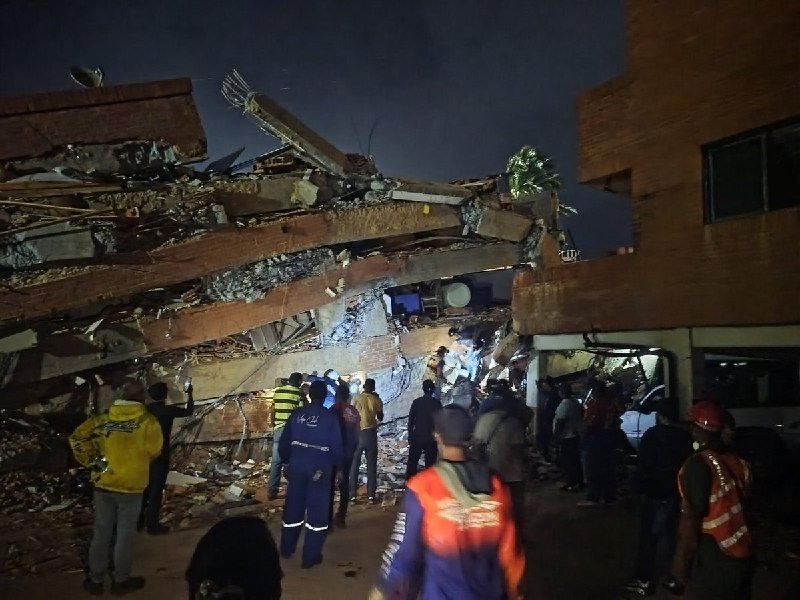
A magnitude earthquake struck western Venezuela late on 24 June 2026, leaving at least 164 people dead and 971 injured, according to figures released on 25 June by Venezuela's interim president Delsey Rodríguez and carried by Iranian outlets including Fars News and Tasnim. The toll, disclosed in the immediate aftermath, is widely treated as preliminary; the final count is expected to climb as search-and-rescue teams reach remote municipalities in the country's Andean fringe. Caracas has opened a formal channel for international assistance, and the first sympathies from outside the hemisphere arrived within hours.
The disaster lands on a country already strained by economic contraction, US secondary sanctions, and a contested political transition. The response — both the speed of foreign offers and the limits on who is willing to coordinate with Caracas — is itself a measure of Venezuela's diminished position in the diplomatic order.
What is known about the tremor
The first consolidated casualty figures emerged in the Caracas morning of 25 June. Interim president Rodríguez put the death toll at 164 and the number of injured at 971, a figure reported by Fars News citing the Venezuelan government directly. The epicentre, based on the geographic pattern of the damage, lies in the western states bordering Colombia, where the Mérida Andes and the Maracaibo basin meet — a region of mountain towns and informal settlements built on steep slopes.
Damage assessments remain in their earliest phase. Rodríguez's statement, the only one available in the first hours, focused on the human toll; structural damage to housing, hospitals, and roads will take days to enumerate. The Venezuelan opposition, which disputes Rodríguez's claim to the interim presidency following the contested 2024–25 succession crisis, has not yet issued a parallel count, and the limited independent press operating inside the country makes verification difficult.
The diplomatic response, and who is on the line
The first foreign government to formally extend condolences was Iran, whose foreign ministry spokesman Ismail Baqaei conveyed "sympathy and solidarity" in a statement carried by both the state-affiliated Al-Alam network and Tasnim on 25 June. Iran's positioning is consistent with the diplomatic alignment Caracas has cultivated since 2019 — the two governments share an interest in circumventing US financial pressure and have signed cooperation agreements across the energy and defence sectors. The Iranian message, for all its brevity, is the first indicator of which governments will coordinate with Caracas in the response.
The question is who else will join. The United States, which does not recognise the Rodríguez interim administration, faces a familiar dilemma: humanitarian relief for a sanctioned country is legally permissible under US Treasury general licences, but the political optics of coordination with Caracas — even on a disaster — are unfavourable. Colombia, whose president Gustavo Petro has kept channels open, is the more likely operational partner from the immediate neighbourhood, given shared border infrastructure and the deep Andean connection to the affected zone. The sources available do not yet specify a Colombian government response.
The structural frame
Earthquakes are not political. But the response to them is, and the pattern that emerges from this one is already legible. Venezuela's humanitarian diplomacy over the last decade has trended toward partners outside the US-led financial architecture — China, Russia, Iran, and a smaller set of Latin American governments willing to bypass the OFAC regime. When disaster strikes Caracas, the offer of help that arrives first is often from that same constellation, not from Washington or Brussels. The pattern does not imply ideological lock-in; it reflects a permissive environment in which some governments are simply more able than others to send a plane, a field hospital, or a check without triggering a domestic political fight.
There is a countervailing read. The Petro government in Bogotá has kept its own distance from Caracas ideologically while maintaining commercial and consular ties, and Spain's interim Socialist administration has historically coordinated with the Maduro-era government on consular evacuations regardless of the broader EU posture. Disaster relief, in other words, can cut across the lines drawn in normal diplomacy. Whether that pattern holds this time — whether Bogotá or Madrid moves quickly, or whether the response stays narrow — will be a useful empirical test of how durable the alignment gap has become.
Stakes and what to watch
The immediate stakes are operational: getting medical teams, heavy equipment for road clearance, and shelter into the affected municipalities before the onset of the rainy season complicates access. Rodríguez's interim government has narrow political capital and will be judged on visible delivery. The opposition, even if it does not formally recognise the interim authority, will be measuring the response for its own political utility.
Over the medium term, the disaster is a stress test for the diplomatic architecture around Caracas. If the response channels widen beyond the Iran–Russia–China axis to include Colombia, Brazil, and at least one European government, the working assumption that Caracas is diplomatically isolated will need softening. If they do not, the pattern holds, and Venezuela's recovery — and the longer political transition — will proceed under tighter external constraints than its neighbours'. The first 72 hours of formal offers and on-the-ground arrivals will tell us which it is.
Desk note: Monexus is reporting this story from Iranian state-affiliated wires as the first consolidated foreign-language sources on the casualty figures. The Iranian framing favours a sympathetic read of Caracas's humanitarian diplomacy; readers should expect the diplomatic response list to broaden as Western and Latin American wires file. We will update the source ledger as those reports land.
Wire provenance
This editorial synthesis draws on the following public wire/social posts:
- https://t.me/FarsNewsInt
- https://t.me/alalamfa
- https://t.me/JahanTasnim