Airstrike on Al-Maghazi vehicle adds to a Gaza ceasefire already fraying at the edges
An Israeli airstrike on a vehicle in the central Gaza refugee camp killed at least three Palestinians on 26 June 2026, according to Iranian-aligned outlets, the latest reported breach of a ceasefire that has held more in name than in practice.
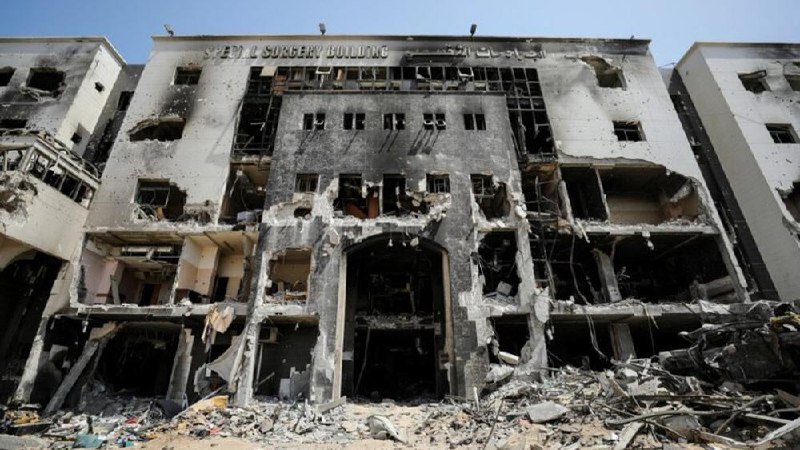
An Israeli airstrike struck a vehicle in the Al-Maghazi refugee camp in the central Gaza Strip on the afternoon of 26 June 2026, according to footage and reporting circulated by Gaza-based journalist Alan Pa on Telegram at 15:26 UTC. Within minutes, Iran's Tasnim news agency, in both its English and Persian-language feeds, framed the strike as a renewed "violation of the ceasefire" and said three Palestinians had been killed. The reports converge on the location and timing of the strike; the surrounding diplomatic and political picture is less clear.
The incident lands on a ceasefire that has been described, in shorthand, as holding since earlier in the year — a description that increasingly looks aspirational. Each side reads the other's moves through a different ledger of compliance, and incidents like the Al-Maghazi strike become small, contested datapoints in a much larger argument about who is honouring the deal and who is eroding it.
What is actually being reported
The Gaza-Alan-Pa feed posted first-person footage from the strike site at 15:26 UTC, characterising the strike as targeting a vehicle inside the camp. The Tasnim English-language channel carried the same essential claim at 15:19 UTC, adding the casualty figure — three Palestinians killed — and the political framing that "the aggressor Zionists once again violated the ceasefire." The Persian-language Tasnim feed repeated the formulation seven minutes later, again at 15:17 UTC, with the same martyrdom count and the same ceasefire-violation framing. None of the three posts name the individuals in the vehicle, specify the weapon used, or identify a military target; the reports describe a strike on a vehicle, civilian casualties, and a violated ceasefire.
The framing matters as much as the footage. Alan Pa is a Gaza-based stringer whose work has been widely republished in regional outlets; Tasnim is an Iranian state news agency whose coverage of Palestinian issues reliably uses maximalist language and tends to attribute Israeli military action to deliberate ceasefire-breaking rather than operational necessity. Both sources are useful here for what they describe on the ground. Neither, on its own, is sufficient to settle the political question of whether the strike was a targeted operation against a specific militant, a response to a prior violation, or an unauthorised act by a field commander.
The ceasefire in name, the ceasefire in practice
Ceasefires in long-running conflicts rarely break in a single dramatic moment. They fray. A strike on a vehicle in a refugee camp, even a small one, becomes the kind of incident each side can press into a wider narrative: that the other side never intended to honour the agreement; that the agreement was structurally unworkable; that mediators have lost control. Iranian state media's instinct to call the strike a "violation" within minutes of the footage appearing is itself part of that pattern — pre-packaged framing applied to an event whose full operational context is not yet public.
Israeli security concerns in the central Gaza Strip are well-documented and, from Tel Aviv's perspective, ongoing. The refugee camps of central Gaza — Maghazi, Bureij, Nuseirat, Deir al-Balah — have been repeatedly described in Israeli military briefings as staging grounds for attempted regrouping by armed factions. Western wire reporting throughout the war has cited Israeli officials characterising strikes on specific vehicles as targeted operations against identifiable militants; Palestinian and regional outlets have, with equal consistency, characterised those same strikes as attacks on civilians in densely populated areas. The two framings are not always reconcilable from open-source reporting alone.
What mediators and the regional press are likely to ask
The Qatari-, Egyptian-, and US-brokered architecture that produced the earlier ceasefire has been described in successive rounds of regional reporting as a layered arrangement: hostage-for-prisoner exchanges, phased Israeli withdrawals, sustained humanitarian access, and a quiet understanding that residual Israeli strike activity would be tolerated only against clearly defined targets. Each reported breach tests one of those layers.
The Al-Maghazi strike will surface three immediate questions for any mediator still engaged. First, was the vehicle in question a target on a pre-cleared list, and was the strike conducted under the residual-strike understanding that has kept the wider deal alive? Second, if the strike was outside that understanding, does it reflect a deliberate Israeli policy shift toward looser compliance, or a localised field-level decision not coordinated with the political echelon? Third, on the Palestinian side, does the incident produce a unified response across the factions, or does it harden factional splits about whether the ceasefire has been worth holding?
Iran's interest in the framing is structural. Tehran's regional position depends in part on presenting itself as the indispensable defender of Palestinian and axis-aligned interests; maximalist coverage of Israeli ceasefire violations is part of that posture. The framing does not have to be factually wrong to be politically motivated.
What the sources do not settle
The three Telegram posts that drive this account are sufficient to establish that an airstrike occurred, that it struck a vehicle in Al-Maghazi, and that Iranian-aligned outlets characterised it as a ceasefire violation killing three Palestinians. They do not establish the identity of those killed, the target's alleged military affiliation, whether the strike was coordinated with mediators, or how Israeli authorities characterised the operation in the hours that followed. Independent confirmation of the casualty figure from a wire service or a UN agency operating on the ground has not appeared in the materials available at time of writing. Readers should treat the death toll as reported by Iranian state media, not as independently verified.
The structural picture is clearer than the operational one. A ceasefire described as holding is, by the standard applied to it, no longer holding. Whether that means the agreement is collapsing or simply entering a more contested phase is the question that the next 72 hours of reporting — from Israeli military briefings, from mediators in Doha and Cairo, and from wire services on the ground — will need to answer.
Desk note: Monexus leads this story with the field footage and the Iranian-aligned framing both available, and reads them against the broader structural context of a ceasefire that the region has been describing as intact even as incidents like this one accumulate. Where the three source items converge on facts, those facts are reported as facts; where they converge only on a political interpretation, that interpretation is attributed rather than adopted.
Wire provenance
This editorial synthesis draws on the following public wire/social posts:
- https://t.me/gazaalanpa
- https://t.me/tasnimnews_en
- https://t.me/JahanTasnim