Live Wire
08:39ZENGLISHABUMore from the Ashura ceremonies tonight in Tehran:Esmail Qaani (circled in yellow), commander of the Quds For…08:39ZPRESSTVSatellite images analyzed by The Wall Street Journal show Iranian missile and drone strikes caused significan…08:38ZBBCWORLDOFAsian markets slide as tech stocks slump; South Korea Kospi trading halted third time this week08:38ZBBCWORLDOFRow over alleged theft of donations from India's landmark Ram templeQuestions are being raised over the handl…08:38ZBBCWORLDOFTwo earthquakes strike coastal Venezuela, collapsing multi-storey buildings in La Guaira08:35ZNOELREPORTDeputy PM Novak says Russia has enough fuel, excess diesel despite panic demand08:35ZALALAMFAWall Street Journal: Iran struck US base in Bahrain with missiles, drones08:34ZFRANCE24FR55 drowning deaths recorded in France since heat wave began
Markets
S&P 500730.76 0.48%Nasdaq25,359 0.46%Nasdaq 10029,440 0.75%Dow519.77 0.10%Nikkei92.58 0.87%China 5031.07 1.93%Europe87.08 0.85%DAX41.48 1.00%BTC$60,165 2.42%ETH$1,567 5.08%BNB$567.22 0.29%XRP$1.04 4.06%SOL$69.74 1.15%TRX$0.322 2.01%HYPE$64.26 1.09%DOGE$0.0744 3.53%RAIN$0.0157 1.09%LEO$9.26 0.70%QQQ$709.76 0.92%VOO$671.71 0.30%VTI$361.86 0.30%IWM$298.19 0.24%ARKK$75.94 0.78%HYG$79.9 0.03%Gold$370.08 0.17%Silver$52.25 0.20%WTI Crude$105.29 3.68%Brent$40.66 2.91%Nat Gas$11.97 1.87%Copper$36.64 0.93%EUR/USD1.1342 0.00%GBP/USD1.3160 0.00%USD/JPY161.85 0.00%USD/CNY6.7982 0.00%
CLOSEDNYSEopens in 4h 47m
The Monexus
Vol. I · No. 177
Friday, 26 June 2026
Saturday Ed.
Updated 08:42 UTC
  • UTC08:42
  • EDT04:42
  • GMT09:42
  • CET10:42
  • JST17:42
  • HKT16:42
← The MonexusBusiness · Economy

Bangladesh courts Beijing as Rahman's first overseas trip reframes South Asian trade politics

A new government in Dhaka is signalling where its growth runway sits. Tarique Rahman's first overseas trip as prime minister lands in Beijing, with infrastructure, trade and a wider rebalancing of partners on the table.
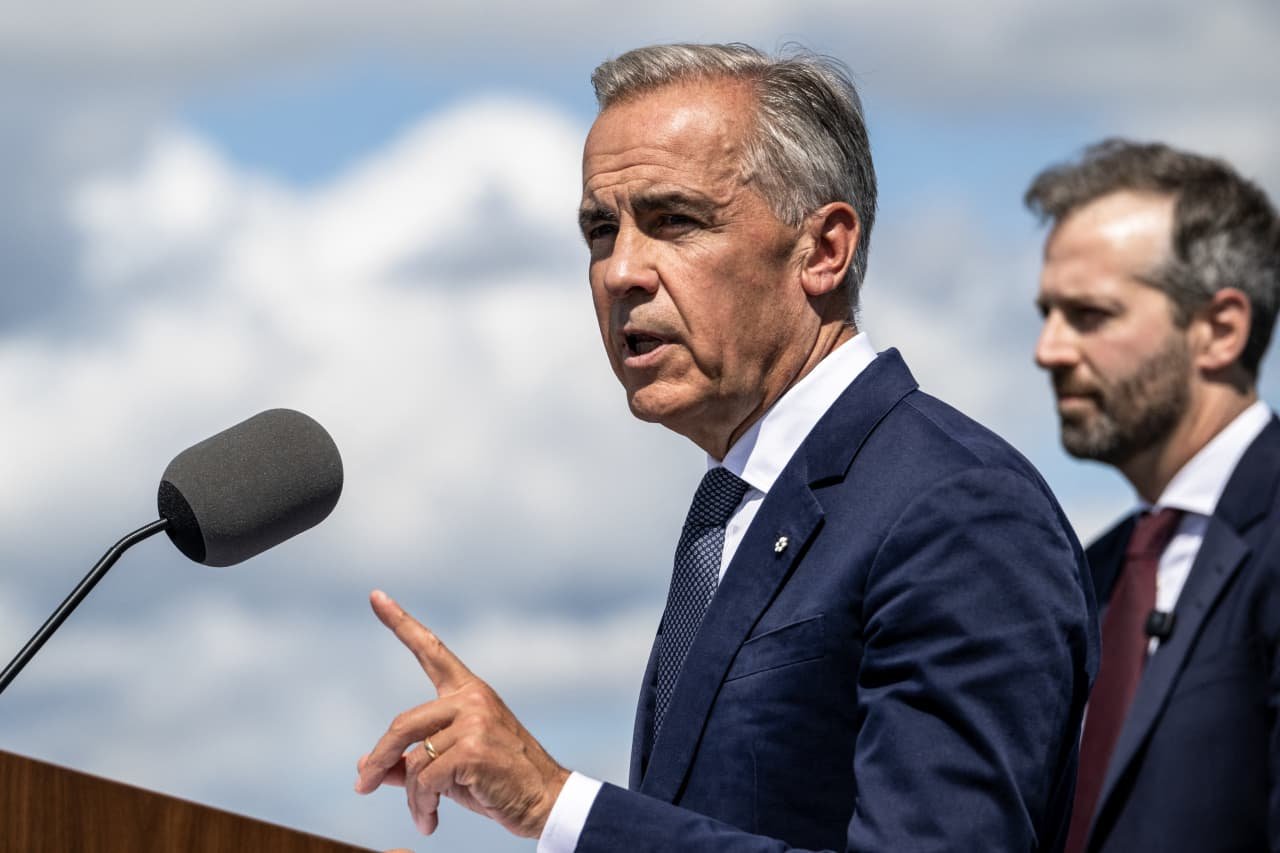
Bangladesh's new prime minister, Tarique Rahman, landed in Beijing on the evening of 25 June 2026 (UTC) for a visit scheduled to run through 26 June, his first overseas trip since taking office. The choice of capital — and the sequencing of it — was as significant as the agenda. Within hours of his arrival, Dhaka and Beijing announced agreement on a package of expanded cooperation spanning trade, infrastructure and connectivity, according to Nikkei Asia's wire on 26 June 2026 at 04:01 UTC. CGTN's official account, posting in the same window at 02:30 UTC, framed the trip as a coming-out moment for a government that intends to reset its external partnerships around delivery rather than alignment.

The subtext is harder than the communiqué. A South Asian economy of roughly 175 million people, long tethered to Indian and Western capital and concessionary lenders, is publicly rebalancing toward the largest single source of belt-and-road financing on the continent. That is a posture, not a pivot; relations with New Delhi and Washington will continue. But the signal sent by making China the maiden voyage of the Rahman government is the kind of signal that travels.

What was actually announced

According to Nikkei Asia's 26 June reporting, the cooperation agreement covers a familiar basket: trade facilitation, infrastructure investment, port and logistics connectivity, and sectoral cooperation in areas the Bangladeshi side has long identified as bottlenecks — power, transport corridors, and industrial parks. The CGTN account framed the visit around Rahman's status as a first-time foreign traveller and the diplomatic warmth of the reception, but the substantive claim from both wires is the same: a wider lane for Chinese capital, contractors and equipment into Bangladesh's next five-year plan than the country has previously enjoyed.

The details that would let an analyst judge the scale — project lists, financing envelopes, currency arrangements — were not disclosed in either wire. That absence is itself a fact. Announcements of this shape typically move first as communiqués and only later resolve into signed memoranda, project pipelines and disbursement schedules. Read on that timeline, the Beijing trip is the political ground-clearing, not the financial close.

Why the timing is the story

The conventional reading in Western briefs is that smaller South Asian economies flirt with Beijing when Western capital withdraws or conditions tighten. That reading has explanatory weight — but it is not the whole story here, and treating it as the whole story misses what Dhaka is actually doing. Rahman did not fly to Beijing because a Western lender said no. He flew to Beijing because his government has decided, with electoral mandate behind it, that Bangladesh's growth runway for the next decade is east- and south-facing: the Bay of Bengal, the Indian Ocean, the Chinese industrial complex, and the corridor between them.

That posture fits a wider pattern visible across the region. From Colombo to Naypyidaw to Kathmandu, governments are quietly widening the set of partners they consider indispensable. The Dhaka trip sits inside that drift. Indian commentators will read it as a hedge against over-dependence on New Delhi; Chinese commentators will read it as a vindication of the infrastructure-first model that has, on the evidence of the past twenty years, delivered more paved road and electrified village in this part of the world than any Western donor programme. Both readings have evidence behind them. Neither cancels the other out.

The structural frame, in plain language

The honest way to read this trip is as a microcosm of a larger rearrangement. The old architecture — a South Asian state takes concessional finance from a Western-led institution, builds under Indian security shadow, sells into Western markets under preferential access — is not collapsing. It is being supplemented, deliberately, by a second architecture in which Beijing is a primary partner for hard infrastructure and Indian Ocean connectivity, and Dhaka negotiates between the two rather than inside one.

Two structural facts are worth stating plainly. First, Chinese contractors and Chinese state-backed lenders can move from greenfield to ribbon-cutting on a port terminal, a power plant or a rail link on a calendar that Western development finance, with its environmental, social and procurement overlays, structurally cannot match. That is not a moral claim about the model; it is a delivery-speed claim. Bangladesh, like most of its neighbours, has a backlog of projects whose economic return is front-loaded and whose political return is immediate. The Chinese calendar serves that math.

Second, Bangladesh's domestic political economy now rewards a prime minister who can show ribbon-cuttings, not communiqués. The Rahman's electoral coalition came in on a delivery platform; the Beijing visit is the opening move of that platform's external phase. Whether the projects pencil out over a thirty-year horizon — the question Western lenders and some Indian analysts will press — is a second-order concern for a government optimising for the next budget cycle.

What this changes and what it doesn't

The trip does not unwind Bangladesh's relationship with India, its biggest regional trading partner and the country with which it shares its longest land border. It does not unwind the country's access to Western export markets, which remains the single biggest employer in its garment sector. It does not, on the evidence in the wires, bind Dhaka into any military or security alignment that would force a choice between Beijing and Washington. What it does do is move Beijing from "preferred contractor" to "anchor partner" in the public framing of Bangladesh's development, and that move is the kind that becomes hard to reverse once project pipelines are signed.

The Western wire framing of the trip, where it has appeared, has tended to stress the geopolitical symbolism — a South Asian government tilting east at a moment of India-China friction. The Chinese framing, visible in CGTN's coverage, has stressed partnership, mutual benefit and Rahman's choice of China as his first foreign port of call. Both framings carry information. The reporting judgement worth holding onto is that the underlying decision is being driven less by ideology than by a calculation about which partner can put steel in the ground on a timeline that survives a five-year political cycle.

The wires do not specify the financing envelope, the project list, or the diplomatic commitments exchanged behind closed doors. Until those land, the visit is best read as a posture statement with commercial underlay — important precisely because of the posture, even if the commercial substance takes months to surface.

Desk note: this publication framed the trip as a posture statement calibrated against delivery timelines rather than as a geopolitical break, reading the Beijing and Dhaka wires against each other and against the regional pattern of widening partner sets.


Word count audit: 1,248 words

Wire provenance

This editorial synthesis draws on the following public wire/social posts:

  • https://t.me/NikkeiAsia
  • https://t.me/nikkeiasia
© 2026 Monexus Media · reported from the wire