Ben-Gvir's provocations test Israel's ceasefire diplomacy from the inside
Israel's far-right national security minister is openly pressing to end the Lebanon ceasefire and boasting about home demolitions, exposing the strain inside the coalition holding the arrangement together.
On the afternoon of 26 June 2026, two video clips of Israel's National Security Minister, Itamar Ben-Gvir, surfaced within minutes of each other and laid bare a contradiction the Israeli government has spent months trying to manage. In one, posted to TikTok from a barbershop chair, the far-right minister boasted about accelerating the demolition of Palestinian homes, gesturing with a trimmer and offering, in his own words, "to remove a hair for you" in exchange for each structure brought down. In the other, an excerpt of an interview with Israel's Channel 7, he declared that the ceasefire in Lebanon "cannot continue." The pair of clips, distributed through The Cradle's Telegram channel at 13:52 UTC and 14:24 UTC, were not a slip. They were a bulletin from inside the governing coalition: the man who oversees parts of the occupied West Bank's civil administration, and whose party sits in Prime Minister Benjamin Netanyahu's cabinet, is publicly working against the diplomatic track the same government says it is honouring.
The pattern matters more than either clip alone. Ben-Gvir's Otzma Yehudit party holds a handful of seats that have been decisive for Netanyahu's parliamentary arithmetic since the start of the war, and his influence over settlement policy and policing has grown in proportion. When he attacks the ceasefire, he is not freelancing in some peripheral sense. He is signalling to his base — and to the settlers and ultra-nationalists inside the coalition — that the arrangement with Beirut is provisional, contingent, and contested at the cabinet table. For an external reader trying to understand whether the ceasefire is durable, the more relevant signal than any communique from the negotiating room is whether ministers publicly allied with the prime minister are openly rooting for its collapse.
Two minutes on the clock
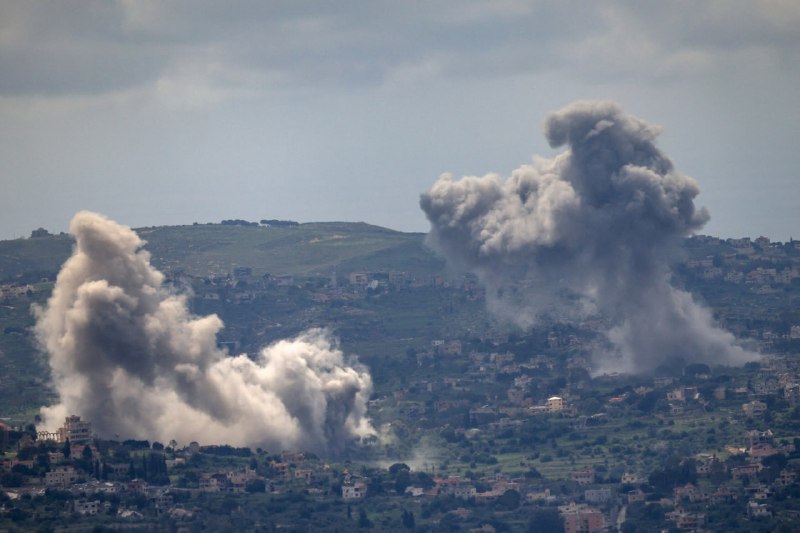
The Lebanon ceasefire, brokered under US pressure in late 2024 and renewed in phases since, has held in form more than in conviction. Reporting through 2025 and into 2026 has documented repeated exchanges of fire along the border, the slow rearming of Hezbollah's residual units in the Beqaa Valley, and a string of Israeli strikes that Israel described as targeted but that Lebanese officials framed as violations. The truce was always a freezing of positions, not a resolution. Into that fragile equilibrium, Ben-Gvir's 26 June intervention landed with the timing of a fuse.
According to The Cradle, his Channel 7 remarks came against the backdrop of an incident that wounded four Israeli troops — referenced separately by the US-based account Unusual Whales at 14:17 UTC — without disclosing whether the casualties occurred along the Lebanese frontier or inside Israel proper. The platform did not specify the operational context, the unit involved, or the date of the wounding beyond "after" which suggests the minister was reacting to a fresh episode rather than to a calendar anniversary. That ambiguity is itself part of the story: the threshold for declaring a ceasefire "cannot continue" is, in this cabinet, less a matter of formal procedure than of political opportunity. A handful of wounded soldiers becomes the pretext for a senior minister to test whether the prime minister will publicly contradict him.
The barbershop as a political stage
The barbershop video is the more revealing of the two because it is so plainly staged. A minister of state does not post from a barber's chair without intending the imagery. The Cradle's clip shows Ben-Gvir wielding electric clippers as he taunts Palestinians about home demolitions, a routine now familiar from his public appearances and from the regular demonstrations outside the Sheikh Jarrah neighbourhood of occupied East Jerusalem. What is newer is the venue. The domestic setting — chair, mirror, trimmer, the small theatre of grooming — translates an administrative act (the issuance of demolition orders, the allocation of land) into a personal, almost intimate display. The point is not policy substance; it is the message that the policy is enjoyed.
For Palestinians in the occupied West Bank, demolition orders are not metaphors. They are the procedural prelude to displacement, to the erasure of homes built without permits that Israel rarely issues for Palestinian construction in Area C. International monitoring organisations have tracked the acceleration of demolitions since Ben-Gvir assumed the national security portfolio in late 2022, with successive years setting records for structures destroyed and people displaced. His boast in the video is therefore not merely tasteless. It is an on-camera confirmation that he intends to outdo his own previous record. Whether his colleagues in the war cabinet share that intention is the question the footage forces.
The counter-narrative from inside the coalition
The reading the Israeli government would prefer is straightforward: Ben-Gvir is a provocateur operating at the edge of acceptable discourse, his remarks do not bind the cabinet, and the ceasefire with Lebanon remains intact because the relevant decisions are taken by the prime minister, the defence minister and the security chiefs. There is something to that. Netanyahu has, at several points in the war, publicly rebuked coalition partners who exceeded the diplomatic line. The broader Israeli commentariat, including the editorial pages of Haaretz and the more sober analysts in Ynet and the Jerusalem Post, treat Ben-Gvir as a destabilising presence to be managed rather than as a decision-maker in his own right.
But that framing assumes a clean separation between a minister's rhetoric and a government's policy. In practice, the settlements Ben-Gvir's base champions have expanded under his watch. The policing reforms he has pushed have been partially adopted. And the Lebanon ceasefire, by his own statement on Channel 7, is something he wants to end. When a minister with operational influence — his portfolio includes the Border Police and aspects of civil administration in the West Bank — openly opposes the foreign policy of the government he sits in, the burden of disowning him falls on the prime minister. Silence, or a generic call for unity, reads as acquiescence.
A second, more sympathetic reading comes from the Israeli right itself: that Ben-Gvir is correct about the ceasefire, that it has been observed more strictly by Israel than by Hezbollah, and that any Israeli soldier wounded is proof that the arrangement has outlived whatever utility it had. Within the settler movement and the Otzma Yehudit base, this view is not fringe but majority. The question for the broader public is whether the cabinet will move from tolerating that view to acting on it — and whether, when it does, the United States, which underwrote the ceasefire, will acquiesce.
What the clips do to the regional picture
Regional coverage of Ben-Gvir has hardened over the past eighteen months. Gulf outlets that were, in 2023, prepared to engage Israeli intermediaries are now less interested in distinguishing between ministers. When a national security minister uses the language of erasure in one breath and calls for the end of a ceasefire in the next, the case for compartmentalisation — Israel's security concerns on one side, its conduct in the occupied territories on the other — becomes harder to sustain in Arab and broader Global South commentary. Iranian state media and the press aligned with the Axis of Resistance have long made this point; what is changing is that more neutral regional outlets are reaching similar conclusions.
For Lebanon specifically, the message is that the ceasefire's strongest internal critic is inside the Israeli cabinet rather than in any opposition movement. That is uncomfortable for a Lebanese government that has invested political capital in the truce. It also complicates the role of the US, France and the UN Interim Force in Lebanon (UNIFIL), all of which have personnel and prestige invested in the arrangement's survival. If the Israeli partner to the ceasefire has a sitting minister publicly campaigning against it, the external guarantors face a choice they had hoped to avoid: prop up the arrangement against the wishes of a member of the governing coalition, or begin to wind it down.
Stakes and trajectory
The forward question is whether 26 June becomes a pivot or a footnote. The structural conditions favour escalation. Ben-Gvir's party is unlikely to leave the coalition voluntarily; its voters are Netanyahu's most reliable base. The prime minister's incentives point toward keeping them on board, which means tolerating provocations that weaken the diplomatic position. Each time the minister pushes the boundary and is not publicly slapped down, the boundary moves. Hezbollah, for its part, has not been passive; the troop-wounding episode referenced on Unusual Whales is consistent with a low-intensity campaign to remind Israel that the ceasefire is mutual, not unilateral, and that provocations by politicians have operational consequences on the ground.
For external observers, the practical implication is to discount the official line of the Israeli government on the durability of the Lebanon ceasefire and to watch the domestic political signals instead. When a minister responsible for security openly opposes the arrangement and is not contradicted, the arrangement is no longer being defended. When demolition rhetoric aimed at Palestinians becomes a public spectacle rather than a leaked comment, the policy of restraint that Western partners have insisted is the Israeli position is, in the specific theatre of the West Bank, being repudiated by a member of the cabinet in real time.
What remains uncertain is the timing. Ben-Gvir has called for the end of the ceasefire before, and the arrangement has survived. The mechanism that has saved it — a combination of US pressure, Israeli military reluctance to re-open a northern front, and the still-fragile consent of the Lebanese government — is being tested again. Whether it holds depends on events inside Israel as much as on the military balance on the border, and that is precisely the point the barbershop video and the Channel 7 clip were making.
This article was sourced from Telegram channels operating in the public domain and from open posts on X. Monexus reports the statements of public officials verbatim where possible and provides context that mainstream wires tend to compress: the coalition arithmetic that makes a provocateur consequential, and the regional read of provocations that arrives faster than the diplomatic reaction.
Wire provenance
This editorial synthesis draws on the following public wire/social posts:
- https://t.me/thecradlemedia
- https://t.me/TheCradleMedia
- https://t.me/thecradlemedia
- https://t.me/TheCradleMedia
- https://en.wikipedia.org/wiki/Itamar_Ben-Gvir
- https://en.wikipedia.org/wiki/Otzma_Yehudit