China's nursing-care gamble and the IPO that almost wasn't
Within 24 hours, Beijing signalled an elder-care build-out and Shanghai Aier Trading filed a CNY 1.1bn Beijing Stock Exchange IPO. Read together, they look like one bet.
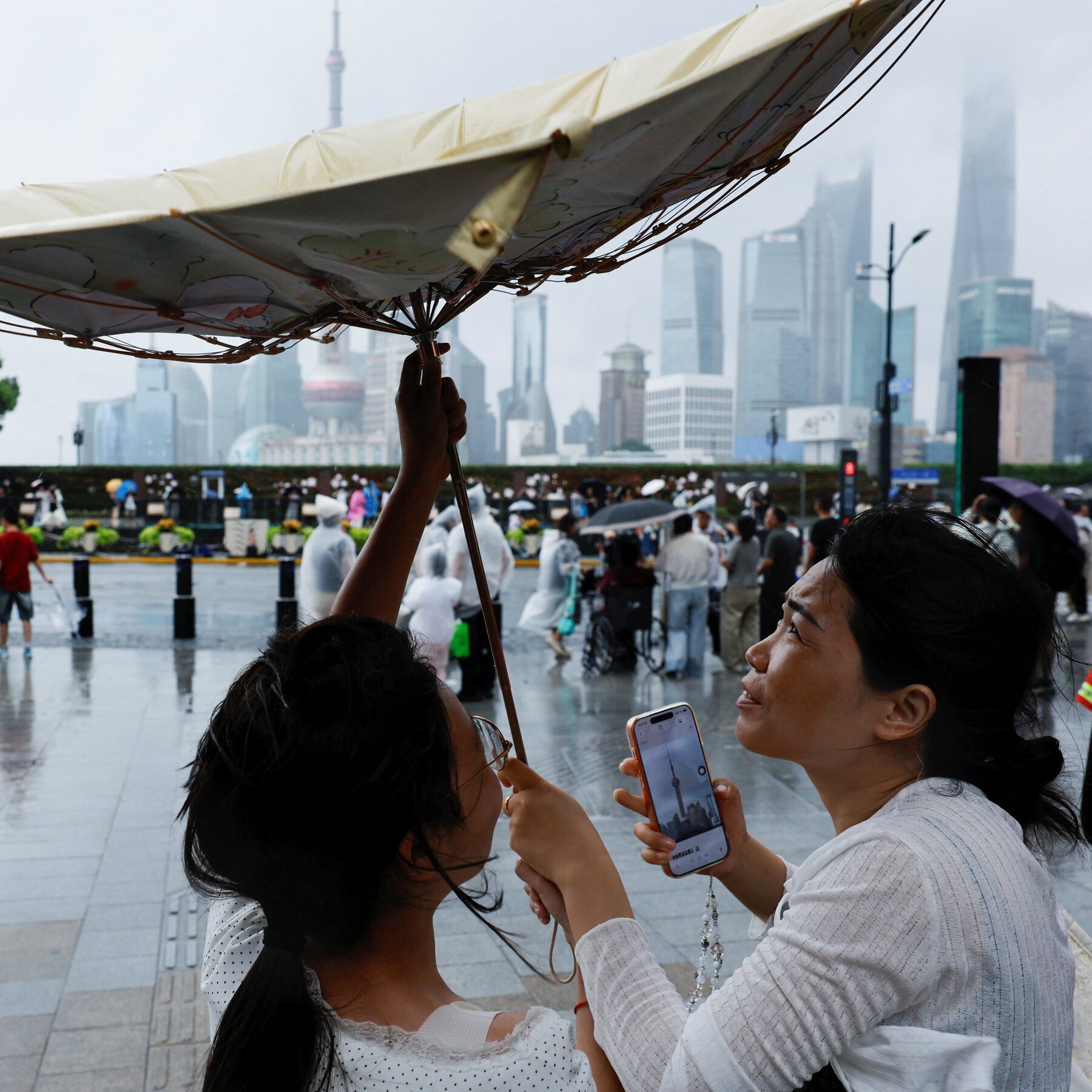
On 24 June 2026, two announcements landed within hours of each other and, in the way Chinese economic statecraft now routinely works, pointed in opposite directions at the same problem. The State Council's General Office released an opinion on building a nursing-care service network suited to an ageing society. A day later, Shanghai Aier Trading, trading as Angel Nursing, filed for an initial public offering on the Beijing Stock Exchange, a CNY 1.1 billion (roughly US$153 million) placement that would test whether the country's private elder-care operators can survive as listed businesses. Read together, the pair sketches a coordinated attempt to massage both the demand and the supply sides of China's demographic transition. The wire coverage so far has filed them separately.
The policy that will not wait
The State Council document frames elder care as a public service the government intends to deliver rather than a market it intends to leave alone. It calls for expanding bed supply, training more professional care workers, tightening regulation of nursing institutions, and routing more long-term-care insurance products into the system. The arithmetic is unforgiving. China is on track to add roughly 30 million people over the age of 60 every five years through the rest of this decade. By 2035, projections treat roughly 400 million citizens, more than the population of the United States plus Canada, as over 60. Building that takes bricks, payrolls, and pension money, and Beijing is signalling that the apparatus to do it will be directed rather than emergent.
Nor is the announcement new in spirit. China formally adopted a national strategy to respond to population ageing in 2021, and a specific elder-care service plan covering 2021-2025. What the June 2026 document adds is a sense of pace: with the five-year plan expiring, Beijing wants the next phase installed before the demographic window tightens further. The elderly care workforce itself is shrinking in relative terms; the working-age population declined for the third consecutive year in the 2025 census release. Without an imported or automated fix, more hands have to come from somewhere inside China.
Angel's almost-there
The Angel Nursing prospectus is, in its own way, a parallel attempt. Shanghai Aier Trading runs an integrated platform that pairs home visits, institutional beds, training, and equipment supply. Revenues are tilted toward institutional care and medical-adjacent services. The CNY 1.1 billion float would be among the larger elder-care IPOs the Beijing Stock Exchange has hosted since its founding. The deal is being pitched as both an exit for early private backers and an inflection point for a sector that has spent a decade losing money on beds.
The wheel has come close to turning before. Two previous attempts to list, in 2023 and 2024, were pulled. Sources close to the company cited profitability thresholds tightening at the venue, alongside weak institutional demand for elder-care paper during the broader consumer-discretionary correction of 2024-2025. Angel Nursing's co-founder and chairwoman, Cheryl Ng, has framed the 2026 attempt to private backers as the last realistic window before tighter cross-border audit rules and a slow-growth listing window tighten further. Domestic institutional investors have tentatively indicated demand, with allocations reportedly oversubscribed at the institutional book-build level, a positive signal for a sector still treated by much of the market as too political and too thin-margined to underwrite.
The supply-side squeeze
A listed operator matters because state policy does not, in China's mixed model, build every bed. The dossier of operating elder-care institutions in China is dominated by private operators of varying scale, plus state-owned hospital adjuncts run by municipal SASACs. Private operators control the bulk of premium urban beds, the segment paying families will tolerate as a chargeable expense rather than a public entitlement. Without listed platforms to consolidate that long tail, training pipelines stay fragmented and bed quality audits stay dependent on local enforcement that stretches all the way from tier-one cities out to county seat. The prospectus argues the chain model scales training and standardises audits in a way government diktat cannot.
The size of the prize, though, is constrained by who pays. Long-term-care insurance, the Chinese pilot product covering institutional and home-based care for severely disabled elderly, has rolled out in 49 cities since 2016 but covers less than 200 million people. Out-of-pocket payments by families still dominate private institutional revenue. Until the insurance density rises, demand-side revenue will trail demographics, and the IPO market will treat elder-care operators like a capital-intensive utility: slow growth, long payback, and margin pressure from a workforce that has to be paid enough to stay.
Why the two together
Read apart, the State Council opinion is a plan and the Angel Nursing filing is a market event. Read together, they describe the same strategy pitched at two audiences. Beijing tells its provinces and ministries that elder care is a directed priority; the prospectus tells its institutional investors that private capital has a sanctioned role at the operational layer, and a credible route to it. Whether the rest of the listing class follows depends on Angel Nursing's post-IPO print. A clean debut rerates the sector, which can pull half a dozen wannabe issuers forward; a flat or broken debut tells the next private operator to wait another year.
The State Council's timeline is the harder constraint. The next five-year elder-care plan is being drafted now, and provincial targets, bed counts, and workforce thresholds are expected inside the year. A working capital market is necessary, in the government's calculus, to convert the paper plan into functioning capacity. That is why a near-cancelled IPO from a single Shanghai operator matters more than its number suggests.
What to watch next
Three dates will tell the story. Angel Nursing's price-discovery window on the Beijing Stock Exchange, expected in the next four to six weeks, will set the template for the next cohort of filings. The State Council's circulation of the next five-year elder-care plan will lock in the provincial operating envelope. And the household disposable-income data in the third-quarter economic census release will indicate whether families can absorb the higher out-of-pocket share of elder-care spending the model assumes they can. If even one of these slips against expectations, the pairing announced in late June reverts to two unrelated filings.
Sources: https://t.me/NikkeiAsia · https://t.me/nikkeiasia · https://t.me/NikkeiAsia · https://t.me/nikkeiasia
Desk note: Monexus framed the two announcements as one story, a coordinated attempt to balance the demand and supply sides of China's demographic transition, rather than as unrelated dispatches. The wire coverage has, so far, kept them in separate files.