Rainbow flags in Seattle: a small FIFA decision, a much larger fault line
FIFA has cleared rainbow flags for Egypt v Iran in Seattle. Iran wanted them banned. The row is bigger than one stadium.
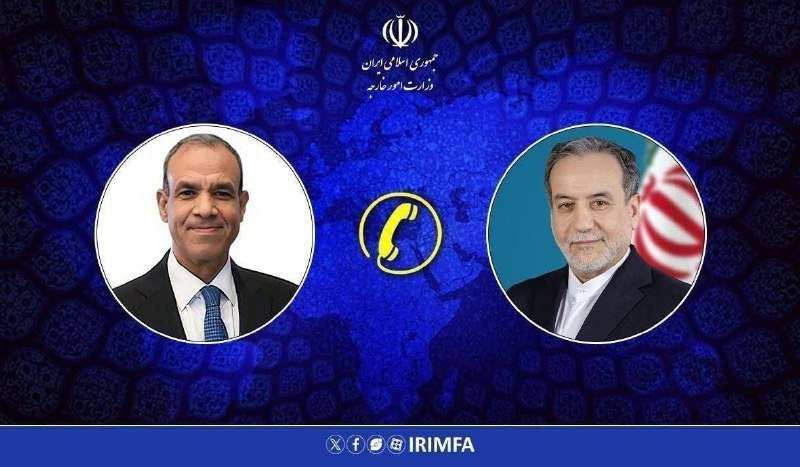
At 15:20 UTC on 26 June 2026, Reuters reported that FIFA will allow fans to bring rainbow flags into Seattle's designated Pride Match — the Group G fixture between Egypt and Iran at the 2026 World Cup. Iran, which filed a formal objection through the Islamic Republic's football federation, had asked the governing body to block any Pride-related ceremonies and rainbow symbols at the match. FIFA declined. The decision is narrow, almost bureaucratic. The reaction around it is anything but.
A flag policy is not a foreign-policy event. But when an authoritarian theocracy and the world's most-watched football tournament clash over a single piece of cloth, the clash travels well past the stadium turnstile. What FIFA confirmed on Friday is the simplest version of the point: its tournament is a tournament with its own rules, and those rules will not bend to a member federation's domestic censorship code. What the Iranian complaint reveals is the inverse: that even soft forms of visibility — a flag, a ceremony, a gesture — register as a political threat inside a state whose domestic compact cannot afford them.
A stadium, a flag, and a federation
The match itself is routine. Egypt and Iran meet in Seattle in the group stage of a World Cup hosted across the United States, Canada and Mexico. FIFA's Pride Match designation, applied to a handful of fixtures across the tournament, has been one of the quieter human-rights gestures inside a tournament that has otherwise been stripped of the kind of corporate-rights messaging common in European leagues. According to Reuters, the federation confirmed that rainbow flags will be permitted inside the venue, with the usual restrictions on size, materials and the use of poles.
The Iranian counter-move is less routine. Per a 25 June wire carried by LiveMint, Iran's federation demanded FIFA block Pride ceremonies and rainbow symbols at the fixture. Polymarket's news desk flagged the demand the same day. The framing inside Iranian state media — to the extent it engages the story at all — is that the request is a defence of public morality, not a fight with FIFA. The framing outside Iran is closer to the opposite: a theocratic federation demanding the right to export its censorship into a host country's stadium.
The fault line runs through the dressing room, not the stands
This is where the row begins to look like something other than a flag dispute. The 2026 tournament is the first World Cup played under FIFA's updated anti-discrimination protocol, which obligates referees to halt matches where homophobic or racist chanting persists. The Iranian men's team is not, on paper, a problem case inside that protocol — its on-pitch record is cleaner than some European peers. The problem sits at federation level: Iran has criminalised same-sex relations. The federation is, in effect, asking the world game to honour the criminal code of its capital.
That is why FIFA's answer matters more than the answer itself. Hosting a Pride Match in a US city, against an Iranian opponent, on US soil, with rainbow flags permitted, is the federation drawing a line it has spent years refusing to draw. The line is procedural — flags of any kind have long been permitted inside stadiums, with restrictions — but its symbolic weight is real. The federation is choosing visibility over deference.
The counter-read: a stadium is not a parliament
There is a plausible defence of the Iranian position that does not begin and end with homophobia. It runs like this: international federations are voluntary associations of national bodies, and each member state carries its own legal and cultural settlement. A flag at a match is not a vote in the UN General Assembly; it is a piece of fabric inside a stadium. If the Egyptian federation objects to symbols offensive to its own public, or the Saudi federation objects to symbols offensive to its own, the principled answer is the same as the answer FIFA has now given Iran: the tournament's rules apply inside the tournament.
That defence concedes the point it tries to resist. The Iranian demand was not for tolerance of Egyptian norms; it was for the suppression of a symbol inside another country's stadium. Once you accept the principle that the tournament's rules apply inside the tournament, you have conceded that FIFA's rules — which permit the flag — govern. The interesting question is what happens when a federation's domestic code collides with the federation's contractual obligations to the tournament, and which obligation gives way. FIFA has now said: the tournament's.
What it signals
The structural read is not subtle. Authoritarian states have spent a decade trying to convert their domestic moral codes into exportable norms inside international sporting bodies — most visibly in attempts to suppress athlete activism and Pride visibility around the Qatar 2022 men's tournament and the 2023 Women's World Cup in Australia and New Zealand. The arc has bent the other way. FIFA's host cities for 2026 are North American, the federation's commercial base is overwhelmingly in liberal-democratic markets, and the federation's legal exposure under US municipal anti-discrimination statutes is non-trivial. The economic and legal gravity has, for now, lined up behind the flag.
That gravity is not permanent. The Iranian complaint is a small public marker of a much larger resistance inside several football federations to the direction the world game has taken on LGBTI visibility. The fault line at Seattle will not be the last; the question is whether it is the high-water mark of the counter-movement, or just the first visible ripple of a longer fight. What the sources do not tell us is whether any further Iranian escalation is planned — a walkout, a formal complaint to the Court of Arbitration for Sport, or simply a quiet refusal to play the post-match ceremonies. Those moves, if they come, will set the next round.
For the Monexus desk: wire reporting on Friday framed this as a tolerance story. The structural reading is closer to a federative one — which set of rules governs inside a stadium owned by a municipal authority in a liberal-democratic state, when one of the teams represents a state with a different settlement. The flag is the surface; the question of jurisdiction is underneath.
Wire provenance
This editorial synthesis draws on the following public wire/social posts:
- https://reut.rs/3StYGJS
- https://x.com/Polymarket/status/