France's 17-pass move and Dembélé hat-trick expose a Norwegian side missing its linchpin
A first-half hat-trick from Ousmane Dembélé, capped by a 17-pass team goal involving all eleven starters, gave France a 4-1 win over a Haaland-less Norway and top spot in Group I.
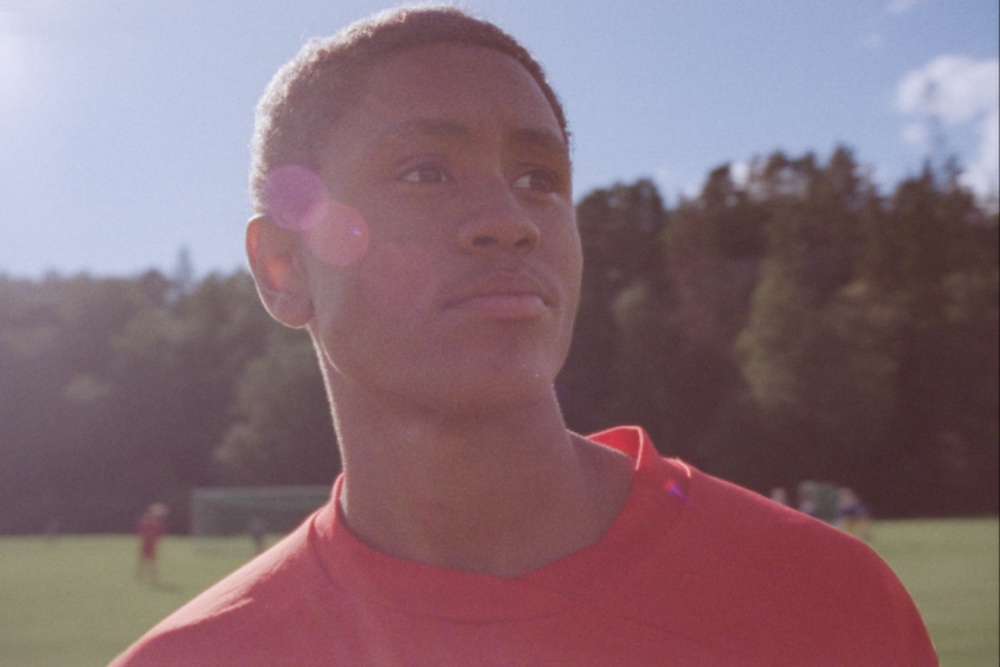
At 21:34 UTC on 26 June 2026, Ousmane Dembélé finished a move that had begun with a France goalkeeper's distribution, travelled through every one of France's starting outfield players, and ended with the Paris-born winger sliding the ball into the Norway net. The BBC's live description of the sequence — 17 passes, all 11 players — understated how unusual the construction was. France's fourth goal in a 4-1 victory was less a counter-attack than a possession statement, the kind of goal designed in training to demonstrate a squad's footballing IQ rather than its raw speed.
The match, France's final Group I fixture at the FIFA World Cup, confirmed the defending champions' first place in the section. It also offered an early measure of how vulnerable the tournament's heavyweights may look when stripped of a single elite talent. Norway, without Erling Haaland, were the first top-ten ranked side forced to ask that question. The answer, for one evening at least, was unflattering.
A first half that settled the group
France struck three times before the interval. Dembélé took all three, completing a hat-trick in 45 minutes and turning a cagey group finale into a procession. According to BBC Sport's 21:34 UTC match report, the PSG forward's movement across the front line repeatedly dragged Norway's centre-backs out of shape, and his finishing was varied — a poacher's effort, a low drive from outside the box, and the sweeping 17-pass move in which every starter touched the ball.
Norway's consolation came after the restart, with France content to manage tempo rather than extend the lead. The 4-1 scoreline reflected both the chasm between the two sides on the night and the structural fact that France had already qualified and Norway had not.
What Norway looked like without Haaland
Haaland's absence was the match's unspoken variable. Norway manager Ståle Solbakken arrived at the tournament built around a forward who, at full fitness, is among the three or four most decisive centre-forwards in the world. Without him, the Norwegian attack lost its reference point: balls played into the channels went uncollected, second balls were contested without conviction, and the midfield was forced to recycle possession sideways.
The Football article filed at 21:10 UTC described Norway as "second-string" and questioned whether any defence at this tournament could contain a "hyper-mobile, supremely varied" French attack. The framing is generous to Norway in one sense — they were not second-string in selection so much as missing their only irreplaceable player. France did not so much dismantle Norway as expose the difference between a side built around a single talent and one built around a system.
A squad, not a frontline
The deeper story of the evening was not Dembélé but the supply lines around him. The 17-pass goal — the BBC's live report at 22:09 UTC took care to enumerate every player involved — illustrated the tactical premise France have carried into this tournament: a deep-lying playmaker orchestrating, full-backs inverting, and a front line of four or five interchangeable attackers who can all finish. Kylian Mbappé's gravitational pull remains, but Dembélé's hat-trick suggested the dependency is less monolithic than it looked at Euro 2024.
For Didier Deschamps, the selectorial challenge of a long tournament is preserving that fluidity across seven matches. France's bench is unusually deep for a World Cup holder; the question is rotation, not talent.
Stakes and what remains uncertain
Top spot in Group I delivers a knockout-round path that, on paper, avoids the heaviest hitters from the other side of the draw until the latter stages. France have bought themselves that runway.
Two caveats temper the reading. First, Haaland-less Norway are not a proxy for the sides France will meet from the round of 16 onwards — Brazil, England, Argentina, Spain, and the rising Germany all carry the kind of elite No. 9 that demands a different defensive brief. Second, hat-tricks in group games can flatter; France have lost knockout matches in recent tournaments despite group-stage dominance, and the squad's biggest failures have come against low blocks, not open expanses. The sources do not specify the round-of-16 opponent or the wider bracket picture; that information will be set by results still to be played.
What can be said with confidence is that France, on 26 June 2026, looked like the side most likely to defend the trophy. The 17-pass goal was the headline, but the structural finding was simpler: a squad with depth, a system that does not depend on one man, and a forward in Dembélé who appears to have entered the tournament in his sharpest form.
Monexus framed this as a structural story about squad depth and dependency on a single elite striker, rather than a match report centred on the scoreline alone.