Israel and Hezbollah trade denials over Ali al-Tahir hill, hours after IDF admits Nabatieh strike
Iranian-aligned outlets carried both the Israeli announcement of strikes in Nabatieh's outskirts and Hezbollah's 'categorical denial' of any action at Ali al-Tahr hill within the same hour, exposing how the same newsroom infrastructure holds an adversary's claim and a proxy's rebuttal side by side.
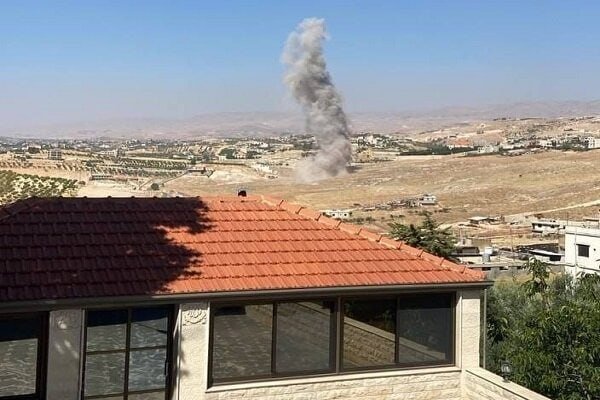
On the night of 28 June 2026, two statements crossed in the dark over a hill neither side could agree they had. Tasnim News English carried an Israeli-aligned announcement of an air operation in southern Lebanon; within minutes, Al Alam Arabic, also an Iranian-state outlet, published what it called a "categorical denial" from Hezbollah over Ali al-Tahr. The exchange happened so fast, and on channels with overlapping editorial lines, that by midnight UTC the same constellation of outlets was publishing both the strike admission and the rebuttal as if they were different chapters of the same bulletin.
What actually happened on the hilltop, and what happened to the civilians around it, remains harder to read than the messaging war suggests. The IDF Spokesman's unit on Sunday evening reported that soldiers dismantled a Hezbollah underground complex near the village of Majdal Zon, recovering hundreds of munitions and destroying four launch shafts the unit said were directed at Israeli territory. Prime Minister Benjamin Netanyahu and Defence Minister Israel Katz followed with a joint statement claiming that, as part of Operation "Final Verse," the IDF had destroyed a network of Hezbollah tunnels in southern Lebanon. Fars News International and Tasnim Plus both reported the announcement with the framing that the strikes had been carried out "with the information of the United States," a notable phrasing that recurs across Iranian-aligned coverage of the evening.
The hill at the centre of the denial
Al Alam Arabic's initial thread on Ali al-Tahr framed the location as "Ali al-Tahir resistance" territory, language that echoes Hezbollah's domestic framing of southern Lebanese positions as sites of armed resistance rather than military infrastructure. A second Al Alam post carried what it called a Hezbollah "categorical denial" of any Israeli presence or action at the hill. Tasnim's English channel and Jahan Tasnim simultaneously carried claims that Israeli strikes had hit "the western suburbs of Daraa," in Syria's southern governorate, around the town of Abdin, a geography that does not match the Lebanese hill but that has appeared in the same burst of regional reporting.
The dispute on the ground has a more concrete backdrop. The OSINT aggregator RN-Intel reported in the hours before midnight that Israeli forces had struck Nabatieh's al-Fawqa and al-Musallah districts, as well as the town of Maifadoun, with civilians still filmed fleeing southern Lebanese streets despite a U.S.-mediated ceasefire that nominally remains in force. The 55th Brigade's exposure of the Majdal Zon tunnel complex, as relayed through Hezbollah-aligned channels, sits within the same operational picture. What is missing is a single, wire-corroborated location for "Ali al-Tahr hill" itself. Neither Reuters, AFP, nor any major Western wire has published coordinates. Lebanese state media have not, as of this writing, issued a casualty toll from the Nabatieh strikes. The hill's existence as a named site is, for now, a feature of the messaging, not of the verified map.
Who is publishing what, and on whose behalf
It is worth pausing on the structure of the information chain, because the structure is the story. Tasnim News English, Al Alam Arabic, Jahan Tasnim, and Fars News International are not independent operators; they are the English- and Arabic-language outlets of the Iranian state, and they have spent the evening publishing both the Israeli announcement and the Hezbollah denial in close sequence. The same outlets that carried Netanyahu and Katz's statement as news also carried the Hezbollah "categorical denial" of the Ali al-Tahr operation. A reader depending on these channels alone would have seen, in the span of an hour, Israel claim a successful strike and Hezbollah deny that anything happened at the named location at all.
Hezbollah's own statement, as relayed through Tasnim, listed "violations of the ceasefire by the Zionist regime" on Sunday 28 June. The statement did not, in the version circulated through these channels, directly address the Ali al-Tahr denial by name; the explicit denial appears to be an Al Alam Arabic item rather than a Hezbollah English-language release. That distinction matters: it tells the reader which outlet is willing to publish a flat contradiction, and which is content to catalogue alleged ceasefire breaches in more general terms.
Reading the framing honestly
Coverage of southern Lebanon in this register routinely operates in a layered way. The Israeli announcement is republished, often with the qualifier that the strikes occurred "with the information of the United States," a phrase that locates the operation inside an American permissive envelope without Washington having to put that envelope in writing. The Hezbollah-aligned response, when it comes, arrives either as a denial of a specific named site (Ali al-Tahr) or as a broader catalogue of "violations," depending on which outlet is publishing and which audience it is writing for. Both can be true inside the same evening's bulletin run.
The reader is left with a problem the wire has not solved. There is no confirmed casualty figure from the Nabatieh strikes. There is no confirmed location for Ali al-Tahr hill in any wire-corroborated mapping product. There is a Hezbollah underground complex dismantled near Majdal Zon, attested by the IDF Spokesman and reported across both Israeli and Iranian-aligned channels. There is a Hezbollah denial, carried by Al Alam, of any Israeli action at the hill by that name. The gap between those two facts is where the next 24 hours of reporting will be written.
What to watch before the next bulletin
The operational record is thin enough that three developments would meaningfully shift the picture. First, a Lebanese state or U.N. Interim Force in Lebanon (UNIFIL) sit-rep that names the strikes' coordinates and civilian impact; second, an Israeli military after-action release that places Ali al-Tahr on a map; third, a Hezbollah statement in its own English-language channels, as distinct from Al Alam's Arabic relay, that either confirms or walks back the "categorical denial." None of those three have appeared as of midnight UTC on 28 June. Until they do, the Ali al-Tahr exchange is best read as a case study in how Iranian-aligned regional outlets can simultaneously carry an adversary's battlefield announcement and a proxy's denial of it, and how, on a slow-news night, the same newsroom infrastructure ends up holding both halves of a contradiction on its front page.
Sources
- https://t.me/tasnimnews_en/, Tasnim News English (Iranian state, English), coverage of IDF Nabatieh-area announcement and Hezbollah ceasefire-violations statement, 28 June 2026.
- https://t.me/alalamarabic/, Al Alam Arabic (Iranian state, Arabic), Hezbollah "Ali al-Tahir resistance" framing and subsequent "categorical denial," 28 June 2026.
- https://t.me/JahanTasnim/, Jahan Tasnim (Iranian state, Persian), coverage of "Ali al-Tahr heights," 28 June 2026.
- https://t.me/FarsNewsInt/, Fars News International (Iranian state, English), Netanyahu/Katz statement on tunnel network, framed with U.S. "information" caveat, 28 June 2026.
- https://t.me/rnintel/, RN-Intel (OSINT aggregator), strikes on Nabatieh al-Fawqa, al-Musallah, and Maifadoun; civilian flight footage, 28 June 2026.
- https://t.me/englishabuali/, Abu Ali Express (Hezbollah-aligned), IDF Spokesman readout on Majdal Zon underground complex and 55th Brigade operation, 28 June 2026.
- https://t.me/tasnimplus/, Tasnim Plus (Iranian state, Persian), Netanyahu/Katz statement with U.S. "information" framing, 28 June 2026.
Desk note: Monexus leads with the contested Ali al-Tahr claim as published by the source thread, identifies Tasnim, Al Alam, Jahan Tasnim and Fars News International as the carriers of both the Israeli announcement and the Hezbollah-aligned denial, and frames the Iranian outlets' reporting of the IDF Nabatieh strike admission as a Hezbollah-aligned reading rather than as an Israeli-issued statement. Where the wire is silent on coordinates, casualties, and unit designations for Ali al-Tahr specifically, the article says so rather than infer.
Follow the event.
These dated source records provide context. They do not retrospectively verify this archive article.
Separate what the nuclear watchdog reported from what it could not determine after the June 2025 strikes.