Hezbollah's Qassem frames a 'crushing defeat' as Lebanon's army plan moves forward
On the eve of Ashura, Hezbollah's secretary-general declared Israel had no choice but to withdraw from Lebanese territory, while signalling openness to a US-backed plan to rebuild the Lebanese army.
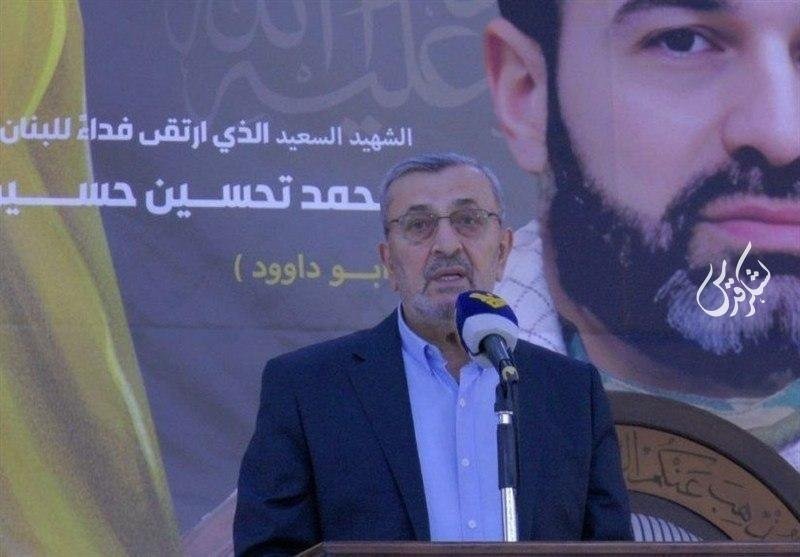
Hezbollah Secretary-General Sheikh Naim Qassem used an Ashura commemoration on 26 June 2026 to declare that Israel had suffered "a crushing defeat" and had "no choice but to completely withdraw from Lebanon and cease its land, sea, and air incursions," while simultaneously welcoming international plans to rebuild and strengthen the Lebanese armed forces. The twin messages — maximalist on the war's outcome, conciliatory on the army question — were delivered from the party's southern Beirut stronghold and broadcast live by Iranian state outlets and pro-Hezbollah channels, framing the moment as one of political consolidation rather than open confrontation.
The address matters because it puts Hezbollah on the record, in one speech, accepting a framework it has historically treated with suspicion: external support for a state army that, in a fully sovereign Lebanon, would eventually hold a monopoly on armed force inside the country's borders. Read against months of US and Gulf-led diplomacy aimed at stabilising post-war Lebanon, the speech is a calibrated signal that the party intends to negotiate from a posture of claimed victory — not from a posture of retreat.
What Qassem actually said
The secretary-general's core claim, repeated across Iranian state-aligned channels, was that "the enemies sought to destroy us, but they suffered a crushing defeat," a line carried verbatim by Tasnim News and PressTV within minutes of the speech, and echoed by Hezbollah's own media apparatus through Clash Report. He framed the conflict in existential terms — the sacrifices of Gaza "will be the headline for the freedom and dignity of Palestine" — before pivoting to the Lebanese file. On that file, his message was unusually specific: Israel must fully withdraw from Lebanese territory, end all "land, sea, and air incursions," and recognise that continued pressure on the movement would extract further costs.
The pivot to the army came in a single, telling passage, reported by Jahan Tasnim and Tasnim News: Lebanon, Qassem said, "welcomes plans to rebuild and strengthen the army." The phrasing — welcome, not endorse — left the door open to caveats on timing, scope, and the composition of any international monitoring mechanism, but it broke with years of party rhetoric that treated the Lebanese Armed Forces (LAF) as an instrument of foreign donors rather than as a national institution.
The counter-narrative from Beirut and Washington
The framing of "crushing defeat" does not survive contact with the map. Israeli forces remained in positions along the southern border as of the speech, and Israeli officials have publicly insisted that any withdrawal is contingent on demilitarisation south of the Litani — a condition Hezbollah has not publicly accepted. Western reporting in recent months has characterised the conflict's outcome as a strategic degradation of Hezbollah's external operations network, the killing of senior commanders including long-time leader Hassan Nasrallah in 2024, and a sharp contraction of the party's Iranian-supplied missile and drone arsenal, rather than a Hezbollah victory in any conventional sense.
The army-rebuild question sits inside that tension. US and Gulf-brokered proposals circulating in early 2026 envision an expanded LAF deployment in the south, equipped and paid for by external donors, as the principal guarantor of security along the border. Hezbollah's benefit from such an arrangement is obvious: it would relieve the party of the burden of being the visible armed force confronting Israel on the frontier, shifting that role to a state institution and reducing the political cost of any future flare-up. The risk, from the perspective of Israeli and Western negotiators, is that a hollowed-out or co-opted LAF would offer the international community a sovereignty theatre while the party retains its independent capability — the precise outcome the 2024 cessation-of-hostilities framework was designed to prevent.
What the speech tells us about Iran's posture
The synchronisation between Hezbollah's messaging and Iranian state media is the most operationally significant detail. Within a seven-minute window on the morning of 26 June, Tasnim, PressTV, Jahan Tasnim, and Hezbollah-aligned channels pushed the same three lines: defeat for Israel, total withdrawal as the only acceptable outcome, and openness to a strengthened Lebanese army. The tempo is consistent with prior Iranian coordination playbooks, in which the party's senior leader is used to project a foreign-policy position with maximum resonance across Arabic-language and Farsi-language media simultaneously.
The Ashura setting — the annual commemoration of the martyrdom of Imam Hussein at Karbala — gives the speech an internal legitimacy it would not otherwise carry. Qassem's framing of Hezbollah's recent losses as sacrifice rather than defeat draws on the Karbala narrative directly, recasting a year of military setbacks inside a theology of redemptive suffering. For the movement's base, this is a stable and recognisable script. For external audiences, it is harder to read: it can be heard as genuine reconciliation with a state-actor role for the LAF, or as a delay-and-rebuild posture, with the army question parked rather than resolved.
What remains uncertain
Three questions will determine whether the speech marks a genuine inflection point or a tactical pause. First, whether "welcome" translates into active cooperation with the US-led monitoring mechanism: the sources do not specify what concessions, if any, Hezbollah has offered in private. Second, whether Israel reads the address as a negotiating opening or as confirmation that the party intends to re-arm behind the cover of an expanded LAF; Israeli responses in the days after the speech will be the leading indicator. Third, whether the Lebanese state itself accepts the role being written for it. The LAF has spent two decades balancing its donor relationships with its domestic political reality, and an expanded southern deployment funded from abroad will draw the same objections it always has — that sovereignty cannot be outsourced without becoming something else.
The honest read of 26 June 2026 is that Hezbollah chose to project confidence and flexibility at the same time. Whether that combination is a posture or a strategy is a question the next round of negotiations, not this speech, will answer.
Desk note: The wire coverage of this address has been dominated by Iranian and Hezbollah-aligned channels, which frame the outcome in maximalist terms. Monexus has carried those claims verbatim where they are directly attributable, and read them against the structural fact that Israeli forces remain deployed in southern Lebanon, that the LAF's southern role is being externally financed, and that the army plan itself is a US- and Gulf-led initiative whose terms Hezbollah has only just acknowledged in public.
Wire provenance
This editorial synthesis draws on the following public wire/social posts:
- https://t.me/JahanTasnim
- https://t.me/ClashReport
- https://t.me/presstv
- https://t.me/tasnimnews_en
- https://t.me/tasnimnews_en
Follow the event.
These dated source records provide context. They do not retrospectively verify this archive article.
Separate what the nuclear watchdog reported from what it could not determine after the June 2025 strikes.