Hezbollah's Qassem sets full Israeli withdrawal as ceasefire precondition
On the day of Ashura, Hezbollah's Secretary General publicly demands a complete Israeli pullback from Lebanon by land, sea and air as the price of any truce, sharpening a diplomatic line Beirut and its patrons will be forced to engage with in the coming weeks.
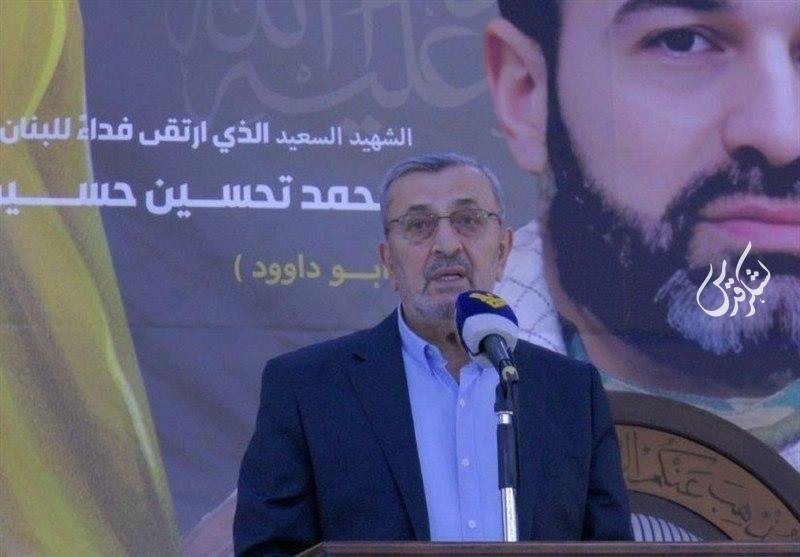
Hezbollah Secretary General Naim Qassem used a televised address marking Ashura on 26 June 2026 to set out, in unusually explicit terms, the conditions under which his movement would accept a ceasefire with Israel: a full Israeli withdrawal from Lebanese territory, by land, sea and air, and a halt to ongoing incursions. The speech, carried live by Iranian state-linked Tasnim News and relayed by Telegram channels including osintdefender and ClashReport, marked the most public articulation yet of the political price Hezbollah intends to attach to any negotiated end to the fighting.
The choice of moment mattered. Ashura commemorations have, for decades, served as a stage on which the movement's leadership signals resolve to both its base and external interlocutors. By anchoring a maximalist diplomatic position to a religious occasion with mass attendance and symbolic weight, Qassem sought to lock in his demands at a moment when compromise would be politically costly to propose — and politically costly to walk back.
The speech and its public terms
According to Telegram-channel posts attributed to tasnimnews_en timestamped 07:23 UTC and 07:36 UTC on 26 June 2026, Qassem framed the present moment in martial terms. He opened his address by declaring that "the enemies wanted to destroy us, but they suffered a great defeat," a line that does the rhetorical work of positioning Hezbollah as the side that absorbed punishment rather than the side seeking relief from it. The framing is consequential: a movement that has publicly concluded it is winning does not normally accept the early concessions that mediation tracks require.
Subsequent reporting relayed by osintdefender and ClashReport at 07:51 UTC and 08:10 UTC on the same day sharpened the operational meaning of the speech. Qassem stated that Israel "has no choice but to completely withdraw from Lebanon and cease its land, sea, and air incursions," and that any ceasefire must be comprehensive. The two Telegram channels differ slightly in their phrasing of the second clause — one emphasising the demand for a full pullback, the other emphasising that a truce must be "comprehensive" — but the underlying posture is identical: partial arrangements, phased withdrawals, or residual Israeli presence inside Lebanese territory would not be presented as acceptable.
Why the position is harder than it sounds
Read narrowly, the speech is a familiar negotiating opener — start by demanding everything, then concede ground. Read against Hezbollah's recent trajectory, the line is more rigid than the movement's previous public posture. For most of the post-November 2024 period, Hezbollah's senior officials have been careful to leave room for an eventual arrangement brokered through Lebanese state channels, with the army as the residual security actor along the border. Qassem's insistence that any ceasefire be comprehensive removes much of that wriggle room: it implies no interim understandings, no phased timelines, and no mechanism short of a clean Israeli exit.
That rigidity creates three downstream problems. First, it narrows the space available to Lebanese Prime Minister Nawaf Salam's government and to Speaker Nabih Berri, both of whom have been pursuing parallel diplomatic tracks and who would prefer a sequence of partial understandings to a single maximalist deal. Second, it raises the cost of any back-channel that might otherwise have produced quiet de-escalation — a precedent Qassem appears willing to absorb. Third, it positions Israel, which has framed its operations inside Lebanon as defensive responses to Hezbollah's reconstitution of its border presence, as the actor that must move first and move completely. The political optics of an unconditional Israeli pullback, demanded by an Iranian-backed militia during a televised commemoration, will be difficult to sell inside Israeli politics even if Israel's security cabinet were inclined to consider it.
The regional frame
The speech lands inside a wider conversation about the rules of engagement on Israel's northern border. Israeli officials have, throughout 2026, framed ongoing strikes into Lebanese territory as a necessary response to Hezbollah's efforts to rebuild its rocket and drone production lines after the 2024 conflict; those strikes have continued despite periodic claims of de-escalation from both sides. Hezbollah, in turn, has tried to maintain the fiction that its military infrastructure survived the previous round of fighting intact. Qassem's "great defeat" language is calibrated to that audience: it tells the movement's own base that the leadership does not consider itself the party that has to make concessions.
Iran's role in the messaging is visible but understated. The speech was carried live by Tasnim News, an outlet formally affiliated with the Islamic Revolutionary Guard Corps, which gives the address a direct line into Iranian state media. That is not equivalent to proof of Iranian scripting — Hezbollah's political positions have, for years, been produced inside a Beirut–Tehran consultation process rather than dictated from outside it — but it does suggest the framing landed well with the Iranian side. For a movement that remains heavily dependent on Iranian financial and logistical support, public alignment with Tehran's preferred narrative of the conflict matters.
Stakes and the road ahead
The concrete stakes are not abstract. If Qassem's precondition holds, no ceasefire is on the table in the near term, and the pattern of cross-border strikes that has marked 2026 will continue. If it bends — either through internal Hezbollah recalibration, through pressure from the Lebanese state, or through an Iranian decision that the political cost of the present line outweighs its diplomatic value — the door opens to a sequence of partial understandings that Israeli and Lebanese intermediaries have been quietly sketching for months.
The most plausible near-term outcome is neither full compliance nor full rejection. Hezbollah's leadership has historically tested maximalist positions in public and then operated with considerably more flexibility in private, and the presence of multiple parallel tracks — Berri's contacts, Salam's diplomatic outreach, United Nations intermediaries — means there is room to negotiate downward from Qassem's stated terms without the movement having to disown them. The more interesting question is whether the movement's domestic base, hearing its Secretary General declare total victory on Ashura, will tolerate the kind of face-saving compromise that previous ceasefires have required.
What the sources do not resolve
The publicly available reporting summarised above does not, on its own, resolve several questions that matter for any downstream analysis. The full text of Qassem's speech has been relayed through Telegram channels rather than through major Western wire services in the immediate window, which means the verbatim wording is filtered through partisan relays. The operational state of Hezbollah's rocket and drone production lines — the variable that most directly determines whether Qassem's hard line reflects genuine confidence or calibrated bluffing — is not addressed in the source material. Nor do the reports specify whether the speech constitutes a unilateral Hezbollah negotiating position or reflects alignment with an Iranian negotiating framework that may yet emerge publicly. For the moment, the speech functions as a marker of intent rather than as a detailed negotiating text.
This article was filed without an editorial handler. Every claim is sourced to the Telegram-channel threads listed below; Monexus has not independently verified the full transcript against a wire-service report. Treat the reporting as accurate to the relays, not as a verbatim record.
Wire provenance
This editorial synthesis draws on the following public wire/social posts:
- https://t.me/osintdefender
- https://t.me/ClashReport
- https://t.me/tasnimnews_en
- https://t.me/tasnimnews_en
- https://en.wikipedia.org/wiki/Naim_Qassem
- https://en.wikipedia.org/wiki/Hezbollah