Hezbollah chief Qassem claims victory, urges Lebanese army rebuild in 25 June address
In a televised address marking the latest phase of the regional war, Hezbollah's Secretary-General declared the 'resistance front' had defeated the 'American-Israeli plan' and called on Beirut to rebuild the national army.
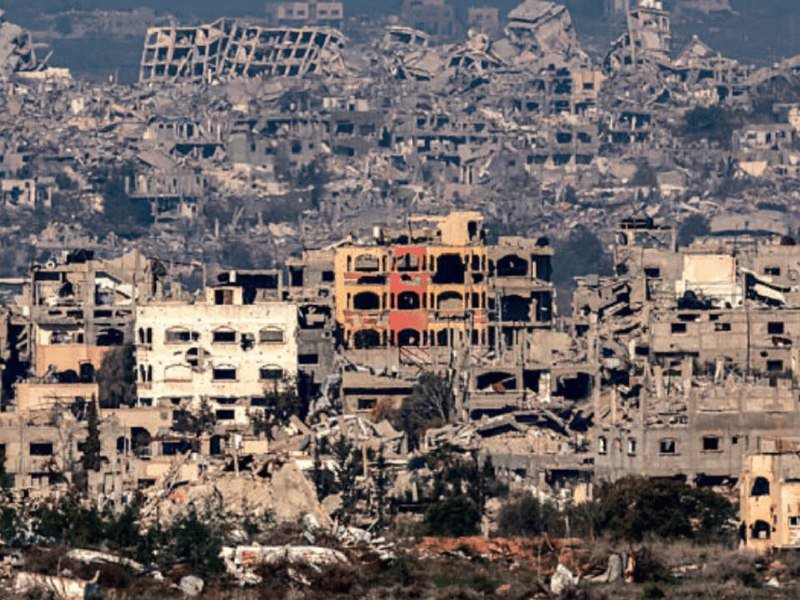
Hezbollah Secretary-General Sheikh Naim Qassem used a televised address on the evening of 25 June 2026 to declare that the movement's regional backers had broken what he called the "American-Israeli plan" for the Middle East, while urging Lebanon's political class to consolidate state institutions — including a rearmed Lebanese army — as the country emerges from more than a year of cross-border fighting. Excerpts from the speech circulated on 26 June by Hezbollah-affiliated outlets, Iranian state media and regional Telegram channels, each highlighting a different facet of the same message: victory at the strategic level, reconstruction at the domestic one.
The address is the clearest articulation to date of how the Iran-aligned "axis of resistance" intends to frame the next phase of the conflict: not as a ceasefire to be honoured, but as a strategic setback for the United States and Israel that compels a reordering of Lebanese politics in Hezbollah's favour. Whether that framing survives contact with events in Beirut, Washington and Gaza is a different question.
What Qassem actually said
The core of the address, as published in English by Iranian outlet Tasnim News on 26 June, was a three-part claim. First, that "the resistance front broke the American-Israeli plan" — language that signals not a tactical pause but a strategic re-reading of the past year's escalation. Second, that "the enemy's attempt to subdue and dominate Iran failed" — a deliberate inversion of the dominant Western framing, which has tended to read the same period as a sequence of Israeli and US intelligence and military successes against Iranian proxies. Third, that "enemies started an all-out war" against the movement, framing the Hezbollah leadership as reacting to, rather than initiating, the cycle of escalation.
On Lebanon specifically, Qassem said the country "welcomes plans to rebuild and strengthen the army" — a notable formulation given that a more capable Lebanese army has historically been viewed in Hezbollah circles as a potential counterweight to the movement's independent military posture. The same Tasnim readout added that "the sacrifices of the people of Gaza will be the headline for the freedom and dignity of Palestine," binding the Lebanese political argument to the still-unresolved war in the Palestinian territory.
Press TV's English feed on the same morning quoted Qassem more starkly: "the enemies sought to destroy us, but they suffered a crushing defeat," and "Israel has no choice but to fully withdraw from Lebanon and end its land, sea" operations — a demand framed as an inevitability rather than a negotiating position.
The Iran frame, restated
Iranian state-aligned outlets gave the speech a coordinated regional reading. Al-Alam, the Iranian Arabic-language broadcaster, headlined Qassem's claim that "Iran is building the future of the region," quoting him as saying: "Despite the aggression of the Zionist enemy, Iran stood and was able to stand and rise." The framing recasts a year of Israeli strikes on Iranian assets, the disruption of the Hezbollah command structure and the degradation of the group's southern Lebanese rocket infrastructure as a strategic endurance story — Iran, in this telling, absorbing blows and emerging with its regional position intact.
That is not the framing most Western wire reporting has carried over the same period, which has tended to emphasise Israeli tactical gains, US sanctions pressure, and the cumulative effect of operations against the IRGC's external operations arm. The Cradle, the Beirut-based outlet that frequently carries Hezbollah and Iranian messaging, led its 26 June morning wire with a different excerpt — "the blood of the martyrs defeated the tyrants, America and Israel" — drawing the same conclusion in more polemical language.
The contest between these two readings is itself the story. On the ground in south Lebanon, the empirical record over the past year — the extent of Israeli ground operations, the residual presence of Hezbollah rocket units, the degree to which state authority has been restored in border villages — is contested and uneven. What is not contested is that Qassem chose to deliver the speech now, in victory register, rather than in the defensive register that has characterised much of Hezbollah's public messaging since late 2024.
What the address does not say
The speech is conspicuously silent on several questions that any Lebanese audience — and certainly any Western or Israeli negotiator — would have wanted answered. Qassem offered no timetable for Hezbollah's own disarmament or for the integration of the movement's military wing into the state, despite his own call for army reconstruction. He named no conditions under which the movement would accept a permanent ceasefire framework. He did not address the status of Israeli northern communities displaced by rocket and drone fire, nor the Lebanese civilian death toll in the south.
The Lebanese government's posture in the weeks leading up to the address has been to argue for an army monopoly on arms in the south as a precondition for international reconstruction funding. Qassem's call to "rebuild and strengthen the army" can be read as aligning with that position, or as a manoeuvre to capture the army-rebuilding agenda within a Hezbollah-friendly framework. Both readings are plausible; the speech itself does not resolve them.
The stakes
If Qassem's framing holds, the regional order entering the second half of 2026 looks materially different from the one Western capitals were predicting twelve months ago: a Hezbollah that has survived, a Lebanese state whose army it claims to support, an Iranian axis that reads the period as net-positive, and a Palestinian file in Gaza that the speech explicitly refuses to treat as closed. If it does not hold — if a more capable Lebanese army, an unfavourable US-mediated arrangement, or renewed Israeli action in the south punctures the narrative — the same speech will be replayed as the moment Hezbollah overplayed its hand.
The most immediate empirical test will come in south Lebanon: whether state security forces are deployed to the border zone alongside, or in place of, Hezbollah units, and on what timeline. That is a question the address raises rather than answers, and one the Lebanese government, not the speechwriter, will eventually have to settle.
Desk note: Monexus framed this article around the speech itself rather than the contested battlefield claims, on the principle that the public address is the verifiable event. We have carried the Hezbollah-aligned read in full and flagged where Iranian state outlets amplified it, rather than adjudicating the underlying military picture the speech seeks to describe.
Wire provenance
This editorial synthesis draws on the following public wire/social posts:
- https://t.me/Tasnimnews_en
- https://t.me/Tasnimnews_en
- https://t.me/presstv
- https://t.me/alalamfa
- https://t.me/thecradlemedia
- https://t.me/JahanTasnim
Follow the event.
These dated source records provide context. They do not retrospectively verify this archive article.
Separate what the nuclear watchdog reported from what it could not determine after the June 2025 strikes.