Tehran pushes back on US claim of Strait of Hormuz 'hot line' as IRGC rejects American framing
Hours after Iranian state media reported a direct military-to-military channel with Washington, the IRGC publicly contradicted the framing — a rare split that says as much about internal messaging as about diplomacy.
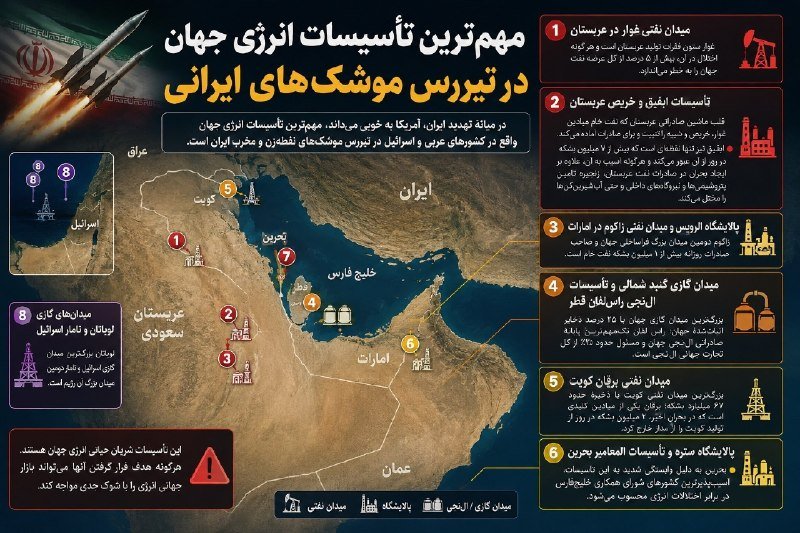
By the time the first cables ran on 26 June 2026, Iran's messaging on the Strait of Hormuz had already contradicted itself twice in four hours. PressTV, the English-language arm of Iranian state television, reported at 16:58 UTC that Tehran and Washington had opened a direct military communication line aimed at avoiding accidental confrontation in the waterway. Twenty-eight minutes later, Brigadier General Hossein Mohebi, spokesperson for the Islamic Revolutionary Guard Corps, took to Al Alam Arabic to deny the same arrangement outright, calling the Strait "Iranian territory" in which the United States "has nothing to do with it" — a phrasing the IRGC's Tasnim News agency republished in English minutes after.
The split is not a typo or a translation slip. Two organs of the Iranian state, each speaking with apparent authority, advanced incompatible stories within the span of half an hour. That alone is the story.
Two Iranian voices, one disputed claim
The original American assertion, as filtered through PressTV's 16:58 UTC bulletin, described a direct military-to-military channel designed to deconflict naval activity in the Strait — the narrow corridor through which roughly a fifth of the world's seaborne oil passes. PressTV framed the arrangement as a confidence-building measure, a way for two fleets operating in close quarters to avoid the kind of miscalculation that has pushed the relationship toward open conflict in past cycles.
Mohebi's rebuttal, published in parallel across Al Alam and Tasnim between 16:50 and 16:54 UTC, drew a sharper line. The IRGC spokesperson characterised the American claim as an attempt to manufacture consent for a presence the Corps considers unlawful. "The Strait of Hormuz is the territory of Iran," Mohebi said, "and has nothing to do with America." The same denial was carried on the Abu Ali Express channel, which framed the dispute as the IRGC rejecting a "hot line" entirely rather than negotiating its terms.
The pattern is familiar to anyone who watches Iranian state communications. PressTV, oriented toward English-language and foreign audiences, often carries softer, more diplomatic framings. Tasnim and Al Alam, which speak to Iranian and Arabic-speaking regional audiences, more reliably echo the security establishment's harder line. When those two tracks run in the same direction, the policy is settled. When they diverge within minutes, as they did on Thursday, the policy is still being negotiated — and the disagreement has been allowed to leak.
Why a communications channel matters
Deconfliction lines between rival militaries are not new. Washington and Moscow have run hot lines of various kinds since at least the 1960s, including a dedicated maritime communication channel established after Cold War incidents at sea. The premise is unglamorous: when two navies operate in the same narrow waters, the worst outcomes usually come from a junior officer on one side misreading a radar contact and a junior officer on the other misreading the response. A direct channel compresses the time between alarm and clarification, raising the cost of accidental escalation without requiring either side to recognise the other's legitimacy in any larger sense.
For Iran, such a channel carries specific political weight. The IRGC Navy, not the regular Artesh navy, has primary responsibility for the Strait. A US–Iran deconfliction line, in practice, would route through IRGC counterparts — a fact that gives the Corps an institutional seat at the table the regular armed forces do not enjoy. That is part of why the IRGC, rather than the Foreign Ministry, is the entity denying the arrangement.
It is also why the American framing matters. If Washington described the arrangement as a US–Iran channel, the Corps reads that as an attempt to subsume the IRGC into a state-to-state framework in which Tehran — and not the security establishment — would be the principal interlocutor. The denial is, in part, an institutional rebuttal: the Strait belongs to the Corps' chain of command, and any communication about it must acknowledge that chain.
What the sources do — and do not — establish
The 26 June exchanges leave three things reasonably well established and one important thing unclear.
Reasonably clear: senior American officials made public claims of a direct channel, and Iranian state media initially carried those claims without contradiction. Also clear: the IRGC, within minutes, publicly rejected that framing, and at least three Iranian outlets — Tasnim, Al Alam, and Abu Ali Express — carried the denial in parallel. Also clear: the language used by the IRGC positions the Strait as Iranian sovereign territory rather than an international waterway subject to multilateral management.
Unclear: whether a channel of some kind nevertheless exists, agreed in principle but not yet public, and whether Mohebi's denial refers to the substance of the arrangement or only to its description. Iranian state communications have previously used public denials to manage the political cost of agreements that are then quietly implemented. The opposite is also possible: the IRGC may be signalling to a domestic audience that any deconfliction with the US is being conducted under Iranian, not American, terms.
The available reporting does not resolve that ambiguity. What it does show is that the disagreement is being aired publicly rather than resolved behind closed doors — a choice that itself carries information.
Stakes on both sides of the Gulf
If the American account holds, the practical effect is modest: a phone line, a shared protocol, a marginal reduction in the probability of a single incident tipping into open confrontation. The political effect is larger. It concedes, in a small way, that the US and Iran share an interest in not colliding in a corridor neither side can afford to close — an interest that survives sanctions, sanctions enforcement, and the broader contest over regional alignment.
If the IRGC account holds, the practical effect is similar but the politics run in the opposite direction. The Corps asserts ownership of the Strait and treats any communication with the United States as a tactical concession rather than a structural arrangement. Either way, the underlying geometry — a chokepoint through which a fifth of seaborne oil transits, flanked by a US Fifth Fleet presence on one side and an IRGC fast-boat fleet on the other — does not change. What changes is who gets credit, and who gets blamed, when the next close pass occurs.
For oil markets, the difference is small. For the institutional balance inside the Iranian state, it is not small at all. The IRGC's public denial, delivered while PressTV's report was still circulating, is the kind of move that gets made when one part of the system wants another part of the system to know that the final word has not been spoken.
— Monexus framed this against Iranian state-aligned channels and Al Alam / Tasnim's parallel denials, rather than against Western wire paraphrases of the same dispute, to preserve the texture of the disagreement inside Tehran rather than smoothing it into a single official line.
Wire provenance
This editorial synthesis draws on the following public wire/social posts:
- https://t.me/FotrosResistancee
- https://t.me/alalamarabic
- https://t.me/alalamarabic
- https://t.me/abualiexpress
- https://t.me/tasnimnews_en