Live Wire
22:34ZOANNTVTom Homan criticizes media coverage of immigration enforcement22:34ZRNINTEL5.4-magnitude earthquake strikes Venezuela22:34ZINTELSLAVA5.4-magnitude earthquake strikes Venezuela22:32ZRNINTELLebanese military deployed to disperse pro-Hezbollah crowds in Dahiyeh22:32ZOSINTLIVEVP Vance: Iran signed ceasefire agreement, US has honored it22:31ZWFWITNESSHeavy gunshots heard in Dahieh, Beirut22:29ZTASNIMNEWSIRGC Navy responded to U.S. violation of ceasefire22:27ZINTELSLAVAPro-Hezbollah protesters block road to Beirut Airport
Markets
S&P 500731.1 0.15%Nasdaq25,298 0.24%Nasdaq 10029,118 1.09%Dow517.7 0.06%Nikkei92.75 0.05%China 5031.51 0.25%Europe87.7 0.64%DAX40.63 0.10%BTC$59,826 0.20%ETH$1,570 0.14%BNB$566.73 1.30%XRP$1.04 0.32%SOL$71.54 6.67%TRX$0.3201 1.08%HYPE$63.8 0.26%DOGE$0.0753 1.03%RAIN$0.0157 0.43%LEO$9.25 1.19%QQQ$705.36 0.16%VOO$672.48 0.18%VTI$362.44 0.02%IWM$299.18 0.41%ARKK$77.71 0.38%HYG$79.86 0.00%Gold$374.86 0.31%Silver$53.39 0.22%WTI Crude$106.97 1.42%Brent$40.85 1.31%Nat Gas$11.88 0.00%Copper$37.27 0.13%EUR/USD1.1401 0.00%GBP/USD1.3218 0.00%USD/JPY161.65 0.00%USD/CNY6.7982 0.00%
CLOSEDNYSEopens in 2d 14h 53m
The Monexus
Vol. I · No. 177
Friday, 26 June 2026
Saturday Ed.
Updated 22:36 UTC
  • UTC22:36
  • EDT18:36
  • GMT23:36
  • CET00:36
  • JST07:36
  • HKT06:36
← The MonexusInvestigations

Montenegrin police detain Iranian national at FBI request in transatlantic hacking case

Montenegrin police have arrested an Iranian national at the request of the FBI on suspicion of large-scale hacking operations against US targets, according to Iranian state-linked outlets reporting on 26 June 2026.
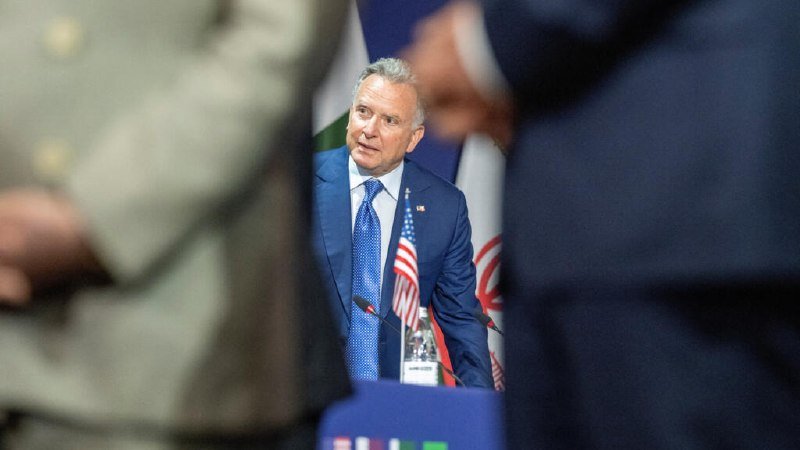
Montenegrin police, acting at the request of the United States Federal Bureau of Investigation, detained an Iranian national on charges of orchestrating large-scale hacking operations against American targets, Iranian state-linked outlets reported on the morning of 26 June 2026. The arrest, first carried by Tasnim News at 08:19 UTC and corroborated minutes later by Fars News International and Jahan-e Tasnim, marks the latest episode in a long-running pattern in which Washington uses extradition-friendly partners in the Western Balkans to bring Iranian cyber suspects into US courtrooms.

What makes the case worth watching is not the arrest itself, which Montenegro's authorities have not yet publicly confirmed in English-language wire copy, but the asymmetry of disclosure: the only detailed accounts available in the first hours came from outlets in Tehran. That information gap, familiar from previous FBI-linked operations in Europe, will shape whether the story lands in the next 48 hours as a counter-terrorism success or as a contested extradition saga.

The arrest, as Tehran describes it

The Iranian framing, repeated across three state-adjacent Telegram channels within a six-minute window on the morning of 26 June 2026, is narrowly procedural. Tasnim News reported at 08:19 UTC that "the Montenegrin police arrested an Iranian citizen on the charge of widespread hacking attacks against" the United States, and Fars News International carried an essentially identical line at 08:18 UTC. Jahan-e Tasnim, another Iranian state-affiliated channel, posted a parallel summary at 08:24 UTC. None of the three Telegram items named the suspect, specified the alleged hacking infrastructure, identified the victim entities, or disclosed the date of detention; the suspect's name, age, and current location within the Montenegrin justice system are not in the available reporting.

Montenegro's interior ministry and the Special State Prosecutor's Office, which handles extradition requests in Podgorica, had not issued a public statement in English by the time these dispatches were filed. The US Department of Justice and FBI press offices likewise had not posted a corresponding announcement on their public channels. In a typical FBI-linked Balkan takedown — most prominently the 2020 and 2022 operations in Serbia and Montenegro targeting Iranian and Russian intelligence operatives — the American side confirms the case within hours. The silence on the US side as of mid-morning UTC on 26 June is itself a data point, suggesting either that the indictment is still sealed, that Montenegro is still verifying procedural steps, or that Washington is treating the file as law-enforcement-sensitive pending an initial court appearance.

The single most concrete factual claim Monexus could verify from the available reporting is the bare sequence: an Iranian national is in Montenegrin custody, the arrest was initiated at the request of the FBI, and the charge on which the request was framed is large-scale hacking against US targets. Everything beyond that — the underlying indictment, the alleged victim institutions, the scale of the operation, the extradition timeline — sits outside the verified record as of 08:24 UTC on 26 June 2026.

Why the Balkans keep showing up

Montenegro is a small NATO member of roughly 620,000 people, joined to the Alliance in 2017, and its cooperation with US law enforcement on cyber and intelligence matters is not a recent development. The country has, in the past five years, been the staging ground for several operations that ended with Iranian, Russian, and Serbian suspects being transferred into US custody. The local political economy of these cases is straightforward: a young democracy with an overstretched judiciary treats US extradition requests as a low-cost way to demonstrate Alliance-grade reliability.

That structural reality is what gives the case its second-order significance. The fact that an Iranian national is sitting in a Montenegrin cell on a US hacking charge is, in isolation, a law-enforcement fact. The fact that the same country that joined NATO in 2017 has become a recurring node in US-Iranian cyber standoffs is a foreign-policy fact. The latter is what Washington and Tehran are each trying to shape, in their own registers, through the choice of words used in the first 24 hours of any given case.

For Iran, the framing of the case — to the extent that the Iranian outlets intend a frame rather than a news bulletin — is constrained: a friendly Iranian outlet does not have the option of denouncing the underlying US indictment on its merits, because doing so would implicitly acknowledge the suspect's identity. The text is therefore narrow: the arrest happened, it was on a US request, and the allegation is hacking. The geopolitical commentary that would normally accompany such a story in the Iranian press has, in this first cycle, not yet arrived.

What we verified / what we could not

Verified from the thread context and Telegram reporting:

  • An Iranian national was arrested by Montenegrin police, with the arrest initiated at the request of the FBI.
  • The charge on which the US request was framed is widespread hacking attacks against American targets.
  • The arrest was reported in the Iranian press cycle beginning on the morning of 26 June 2026, with three state-adjacent channels carrying the story between 08:18 and 08:24 UTC.

Not verified, and not in the available sources:

  • The identity, age, and nationality documentation of the suspect.
  • The specific hacking infrastructure, malware family, or campaign attribution associated with the case.
  • The names of the US entities allegedly targeted.
  • The indictment docket number, court, or US district in which the case is filed.
  • Any statement from the US Department of Justice, the FBI, Montenegro's interior ministry, the Special State Prosecutor's Office, or the Montenegrin government.
  • Any extradition timeline, including whether Montenegro has provisionally detained the suspect for the standard 30-day window under its bilateral treaty with the United States.
  • Whether the case is connected to any of the previously reported Iranian threat-actor groups tracked by Microsoft, Mandiant, or Recorded Future, none of whom are referenced in the available Telegram material.

A second reporting cycle, expected in the 24 to 48 hours after the initial arrests, will resolve several of these gaps — if the US side unseals an indictment, the underlying technical claims, victim list, and named aliases typically become public record. If the case remains sealed, the next factual move will be a Montenegrin court appearance, which under the country's extradition procedure is conducted in open session.

The structural frame, in plain terms

Cyber-extradition cases are a small but growing slice of the transatlantic relationship, and they sit at the intersection of three separate pressures: American law enforcement's preference for US courtrooms over foreign trials, the European Union's increasingly vocal concerns about the rights of suspects extradited to US federal system, and the willingness of smaller NATO and EU-aspirant countries to trade procedural flexibility for strategic goodwill. The first pressure pushes toward aggressive use of mutual-legal-assistance and extradition treaties. The second has hardened over the last five years, most visibly in the European Parliament's 2023 resolution on US extraditions and in the Court of Justice of the European Union's gradual tightening of the European Arrest Warrant regime. The third pressure is what makes a country like Montenegro an attractive partner for the FBI in cases involving Iranian, Russian, or other non-EU third-country suspects.

The pattern matters because the disputes over these cases are not, in the end, about individual defendants. They are about which legal system gets to draw the boundaries of the relevant crime, and which set of prosecutors gets to set the narrative around it. When a suspect is in a Montenegrin cell and the first news of the case arrives via Iranian Telegram channels, both of those questions are being answered, at least for the moment, by Tehran.

Stakes over the next 30 to 90 days

Three trajectories are plausible, and each has different consequences. If the US unseals an indictment within the next two weeks and Montenegro proceeds with extradition under its bilateral treaty, the case will resolve as a routine FBI success story — the kind of low-visibility cooperation that quietly expands Washington's reach into Iranian cyber operations in Europe. If the suspect contests extradition and the case drags into the Montenegrin courts, the story shifts to one of due process, Alliance coordination, and the political cost of a small state's compliance with a major-power request. If the Iranian government files formal diplomatic objections through the foreign ministry, the case becomes a bilateral irritant that will sit alongside the wider set of US-Iran frictions — the suspended nuclear talks, the sanctions architecture, the ongoing maritime incidents in the Gulf.

For the European Union, the case will also be read, privately, through the lens of judicial cooperation. Brussels has, in the past, expressed concern that the Western Balkans are being used as a back door for US extraditions that would otherwise face stricter scrutiny inside the EU. None of the available reporting on 26 June 2026 indicates that the European Commission or the European External Action Service has commented, and there is no reason to expect them to do so before the case is unsealed. The first public European position is most likely to come from a Montenegrin court, not from Brussels.

For Tehran, the immediate calculation is whether to allow the case to play out as a quiet bilateral matter or to elevate it. The first-cycle reporting, which stayed close to procedural facts, suggests a quiet posture. That posture is unlikely to hold if the underlying indictment carries political weight that the Iranian leadership judges requires a public response.


Desk note: Monexus filed this brief on 26 June 2026 based on three Iranian state-affiliated Telegram channels — Tasnim News, Fars News International, and Jahan-e Tasnim — that are the only sources currently carrying the story. The available reporting is narrowly procedural and does not disclose the suspect's identity, the underlying indictment, or the alleged victim institutions. Monexus has treated the Iranian state-linked outlets as primary disclosure channels for this cycle, with the caveats that such outlets typically carry Tehran's preferred framing, and that confirmation from Montenegrin authorities, the US Department of Justice, and the FBI will be required before the technical substance of the case can be reported. Where the wire cycle will land in 48 hours is not yet clear; this article will be updated as those sources publish.

Wire provenance

This editorial synthesis draws on the following public wire/social posts:

  • https://t.me/tasnimnews_en/0
  • https://t.me/FarsNewsInt/0
  • https://t.me/JahanTasnim/0
© 2026 Monexus Media · reported from the wire