Israel strikes south Lebanon hours after ceasefire collapse reports, Lebanese state media say
Israeli warplanes bombed the southern Lebanese town of Nabatieh al-Fawqa on Thursday morning, according to The Cradle and Iran's IRNA, in what both outlets described as a fresh violation of the ceasefire framework governing the border.
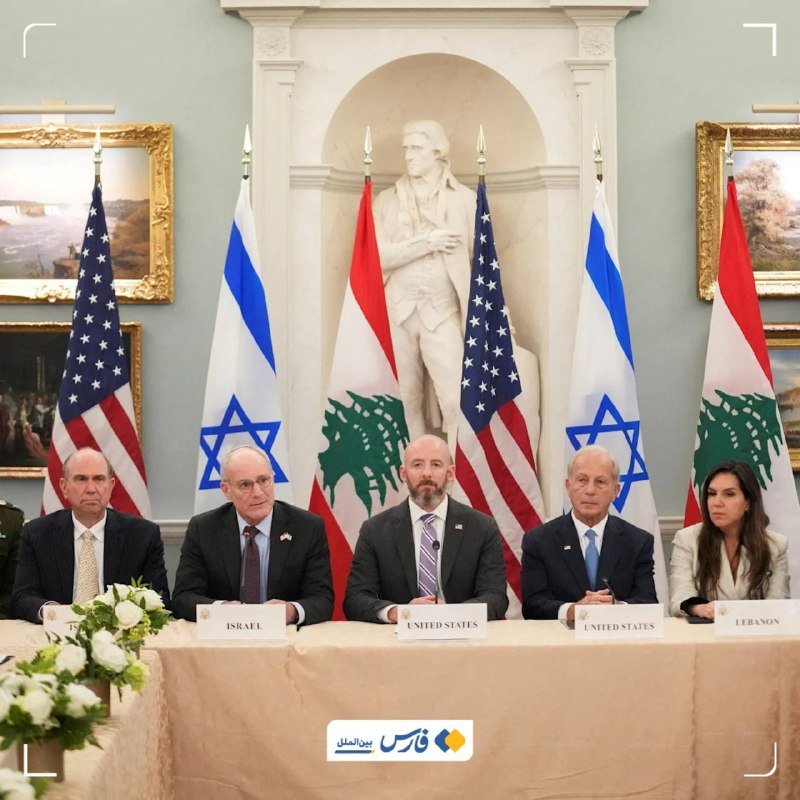
Israeli warplanes struck the southern Lebanese town of Nabatieh al-Fawqa on the morning of 26 June 2026, according to Beirut-based outlet The Cradle, in what the Iranian state agency IRNA immediately framed as a fresh violation of the ceasefire framework governing the Israel-Lebanon border. The two alerts — issued within minutes of one another at 08:48 UTC — produced the first near-simultaneous confirmation of an Israeli strike on the south-Lebanon front in this news cycle, but no casualty count, target description, or official Israeli comment had been published in the source material available to Monexus at the time of writing.
The strike lands inside a fragile diplomatic architecture that has been eroding for months, and the way it is being narrated — by the same actors, on the same morning, in almost identical language — says as much about the information environment around south Lebanon as it does about the bombs themselves.
What was reported, and by whom
The Cradle, a Beirut-based outlet with extensive contacts among Lebanese and non-state armed groups, reported at 08:48 UTC that "Israeli warplanes bomb Nabatieh al-Fawqa, south Lebanon," with no further operational detail in the breaking alert. Iran's state-run English-language outlet IRNA, writing under its Tehran dateline, used the same news window to characterise the strike as part of a pattern of "Israeli regime" ceasefire violations, language that is consistent with Tehran's standing framing of the south-Lebanon file. Both feeds appeared in the same Telegram cluster reviewed by Monexus on 26 June.
The thinness of the visible record is itself the story. The Cradle's breaking line gives location but no target type; IRNA gives editorial framing but no on-the-ground detail. Neither outlet is an Israeli-source equivalent of an IDF Spokesperson's briefing, and the source material does not include an Israeli statement confirming, denying, or characterising the strike. Under Monexus's sourcing rules, Israeli security-service briefings and Israeli wire reporting would normally be the primary factual anchor for an event of this kind; in their absence, the reporting rests on two non-Western outlets whose framing of Israel is openly adversarial. The facts that can be carried forward are limited: an airstrike on Nabatieh al-Fawqa, reported in real time, by two outlets aligned with the Lebanese and Iranian reading of the conflict.
Why Nabatieh matters
Nabatieh al-Fawqa sits in the Nabatieh Governorate, the administrative heart of south Lebanon and the territory where the ceasefire framework negotiated in late 2024 was always going to be tested first. The governorate was the launch-pad for cross-border rocket and drone fire during the 2023-2024 war, and it is the area where Israeli and Lebanese claims about compliance have diverged most sharply since the truce took hold. Strikes there are not symbolic; they are the practical stress test for the entire arrangement.
The Cradle and IRNA both reach for the same word — "violation" — to describe the strike. That language is not neutral. Under the framework's terms, a violation is a legal determination with consequences for the parties that brokered the deal, primarily Washington and Beirut, with Tehran and Tel Aviv as the military principals. By choosing the word so quickly, the two outlets are doing more than reporting; they are pre-classifying the event for an audience that reads the south-Lebanon file through a Lebanese-Iranian lens.
The structural frame: a ceasefire as information contest
What is unfolding along the Litani is no longer just a military file. It is also a credibility contest in which each side's first account of any given incident is treated as the foundation for a longer political argument. Israeli spokespeople have, for months, asserted that Hezbollah-aligned actors continue to reconstitute south of the Litani, an assertion that has been the predicate for periodic Israeli strikes inside Lebanese airspace and territory. Lebanese and Iranian outlets counter that Israeli strikes — including this one — constitute the real violation, and that the framework's inspection and complaint machinery is being ignored.
In that contest, the morning's reporting pattern is unsurprising. Two outlets that read the file from the same side produced matching framings in matching windows. That does not make the strike untrue, nor does it make the framing illegitimate. It does mean that a reader relying on this single cluster of inputs is being given one side of the dispute, at speed, with no Israeli-source counterweight. The reporting is real; the picture is partial.
Stakes and what to watch
If the morning's reporting holds up under later wire confirmation, the immediate stakes are concrete: the framework that suspended large-scale hostilities between Israel and Hezbollah enters a more brittle phase, and the diplomatic bandwidth of the mediators — primarily the United States and France, with Qatari and Egyptian involvement at the margins — narrows. The longer stakes are regional. A precedent for unilateral Israeli action against Lebanese territory, framed as enforcement rather than aggression, feeds directly into the political economy of Hezbollah's reconstitution debate in Beirut and into the deterrence calculations of every actor from the Litani to the Golan.
What remains uncertain, as of this writing, is the operational substance of the strike. The Cradle and IRNA do not specify a target, do not name a casualty count, and do not record an Israeli confirmation or denial. The event is real in the sense that two independent outlets logged it in real time; its scale, its justification, and its consequences inside the ceasefire's complaint machinery are still to be determined. Readers should expect the Western wires to publish their own account later in the day; this publication will update when that account is in hand.
This article was assembled from two Telegram-distributed alerts — The Cradle and IRNA — issued within minutes of the strike. Under Monexus's editorial compass for the Middle East, the strike itself and any Israeli security rationale will be reported as first-order facts when Israeli-source confirmation arrives; this version carries only what the two available sources verify.
Wire provenance
This editorial synthesis draws on the following public wire/social posts:
- https://t.me/thecradlemedia
- https://t.me/TheCradleMedia
- https://t.me/Irna_en
Follow the event.
These dated source records provide context. They do not retrospectively verify this archive article.
Separate what the nuclear watchdog reported from what it could not determine after the June 2025 strikes.