Israel's Lebanon calculus: when Gaza becomes the template
Israeli officials are openly discussing displacement operations in Lebanon while their own press puts the multi-front war bill near $205bn — and the absence of consequences is doing the talking.
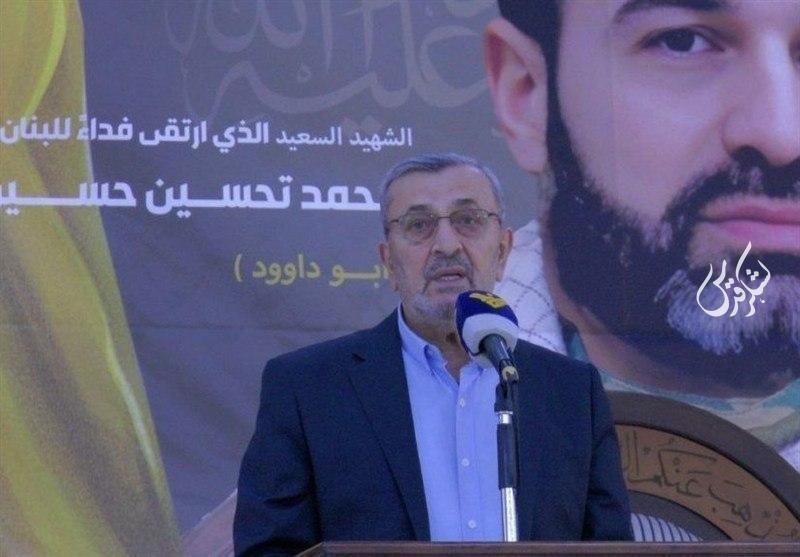
Israel's campaign in Lebanon is being talked about, inside Israel, in language that would have been unprintable two years ago. Officials are openly discussing displacement operations against whole towns and villages along the southern border, on the assumption that the international reaction this time will track the reaction last time — which is to say, not enough to matter. The premise is grimly empirical: Gaza was the testing ground, and the test was passed.
That premise is now backed by a number. Israeli media, as reported by Middle East Eye on 26 June 2026, have put the cost of Israel's wars in Gaza, Lebanon, Syria and Iran since 7 October 2023 at nearly $205 billion. That is the bill for a multi-front campaign whose Lebanon phase is being designed in real time by people who have watched the Gaza phase reshape the diplomatic grammar of the region. The cost figure is a tell. Wars that cost this much, prosecuted this openly, against this many fronts, do not happen because leaders believe they will be stopped. They happen because leaders believe they will not.
A doctrine that travelled
What is unfolding in southern Lebanon is not a discrete operation. It is the export of a doctrine. The playbook is recognisable from Gaza: heavy aerial bombardment of urban areas, mass civilian displacement ordered or induced, repeated declarations that military targets are being hit and that civilians are being warned, and a steady drumbeat of official framing that treats the population of an entire swathe of territory as a security problem to be moved rather than a civilian population to be protected.
The Israeli media ecosystem that reports these operations is not a fringe outlet ecosystem. Mainstream Israeli commentators have, over the course of the Gaza campaign, normalised a vocabulary in which "evacuation," "buffer zone," and "clearing" describe operations whose civilian toll is not in serious dispute. When that vocabulary is then applied to Lebanon — a country with its own state, its own army, and a more delicate sectarian balance than Gaza ever had — the slippage is the story. The same words do not mean the same thing in Lebanon. They mean worse.
The $205bn ledger
The cost figure matters because it disciplines the political conversation inside Israel. Roughly $205 billion across four fronts since October 2023 is not a number a government absorbs quietly; it is a number that lands in treasury forecasts, in credit-rating conversations, in the price of shekel-denominated debt, and in the trade-off between guns and the social contract at home. Israeli voters who will never set foot in south Lebanon are paying for the campaign in tax and in deferred spending. That trade-off is not being made reluctantly. It is being made in the open.
Middle East Eye's live coverage for 26 June 2026, citing Israeli reporting, also notes that Israel intends to maintain a military presence in Lebanon, Gaza and Syria — a tripartite occupation footprint that is unprecedented in the country's history outside of the occupied territories and the Golan. The simultaneity is the point. Holding ground in three theatres at once, while continuing strikes on a fourth (Iran), is a posture that requires either a working theory of how the wars end, or a working theory of how they do not have to.
What the absence of consequences looks like
The international reaction to the Gaza campaign has set the price. Sanctions have not landed. Arms flows have, if anything, accelerated. The diplomatic grammar of "concern" has replaced the diplomatic grammar of "cost." Israeli officials have read the data. When a senior Israeli figure speaks about ethnic cleansing in Lebanon, as the 26 June social-media record shows, they are not confessing a secret. They are advertising a hypothesis: that the threshold of action the outside world set during Gaza is the threshold that will hold for Lebanon too.
That hypothesis is not yet proven wrong. The Iran file complicates it — the 119-day war on Iran that Middle East Eye is tracking in its live blog has produced, per the same reporting, a US-Iran peace accord and the unusual arrangement of released Iranian funds being earmarked for US agricultural purchases. A deal on Iran, if it holds, would shrink the coalition arrayed against Israel at the diplomatic table, not expand it. The Lebanon operation is being prosecuted inside that window.
The counter-read, and why it fails
The standard counter-narrative is that Israel is fighting a defensive war against Iranian axis forces embedded in Lebanon and Gaza, and that the civilian harm is the regrettable by-product of legitimate counter-terrorism. That argument has purchase in the abstract and none in the specific. Israel's own media is reporting a $205bn four-front war that includes maintaining military presences in three sovereign or semi-sovereign territories. That is not counter-terrorism. That is a long occupation being built in real time, and the price tag is the admission.
A second counter-read holds that international pressure is being applied behind the scenes and will eventually bite. There is no public evidence for this and considerable evidence against it, including the structure of the US-Iran deal currently taking shape, which funnels released Iranian funds into US crop purchases rather than into any Lebanon- or Gaza-linked enforcement mechanism. Behind-the-scenes pressure is the hypothesis of last resort among defenders of the current trajectory. It does not survive contact with the budget.
Stakes
If the Lebanon operation proceeds on the Gaza template, the consequences are not abstract. South Lebanon will lose a generation of civic infrastructure. The Lebanese state, already hollowed by its 2019-2020 collapse and the 2020 port disaster, will not reconstitute the way it did after the 2006 war. The regional balance tilts further against any arrangement that depends on a functioning Lebanese army to police its own border. And the precedent — that a state can run a multi-front war at $205bn-plus, openly discuss population transfer, and face no operational cost — is a precedent that will be studied by every capital that has watched Gaza and wondered what the new floor is.
What remains genuinely uncertain is the duration. The Israeli treasury can carry $205bn; it cannot carry $205bn forever, and the domestic political coalition behind the war is narrower than the parliamentary arithmetic suggests. The window in which displacement operations can be executed at acceptable political cost is finite. That window is what is closing, and what is being used.
This publication framed Israel's Lebanon operation as a continuation of the Gaza doctrine, not a separate conflict, because the Israeli media's own cost reporting and the official statements on military presence support that reading. Mainstream wire coverage continues to treat the fronts as discrete stories.
Wire provenance
This editorial synthesis draws on the following public wire/social posts:
- https://x.com/sprinterpress/status/
Follow the event.
These dated source records provide context. They do not retrospectively verify this archive article.
Separate what the nuclear watchdog reported from what it could not determine after the June 2025 strikes.