Israel and Lebanon move to a written framework, with Hezbollah disarmament at the centre
Negotiators in Washington have signed a tripartite framework between Israel and Lebanon, with Israeli and Lebanese sources confirming the disarmament of Hezbollah as the central condition. The text is short. The politics around it are not.
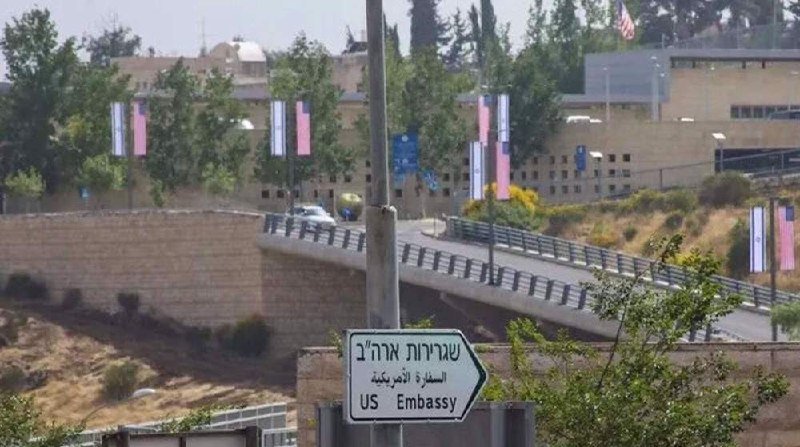
Negotiators from Israel, Lebanon and the United States signed a tripartite framework agreement in Washington on 26 June 2026 after a fifth round of diplomatic talks, according to Al Jazeera reporting circulated by Ukrainian military-affiliated Telegram channel operativnoZSU at 18:23 UTC. The text, described as a general framework rather than a final settlement, commits the parties to a written document that Lebanese officials said would be signed "soon." Its central exchange is the one the parties have circled for months: Israeli withdrawal from Lebanese territory on the condition that Hezbollah be disarmed.
The arithmetic of the deal, such as it can be reconstructed from the day's dispatches, is straightforward on the Israeli side and politically explosive on the Lebanese one. Israeli television's Channel 12, cited by Iran's Fars News International at 17:49 UTC, reported that Israel's understanding with Lebanon links any withdrawal to Hezbollah's disarmament. Al Alam, an Iranian-aligned Arabic-language channel, cited an official Lebanese source at 17:29 UTC saying the two sides had agreed on "two occupation points," an allusion to the disputed territories along the Blue Line that have been the pretext for Israel's continuing operations in southern Lebanon. The framework is therefore less a peace agreement than a sequencing instrument: it tells each side what the other must do, and in what order, before anything resembling normalisation can follow.
What the framework actually does
Three things, on the evidence available at the time of writing. First, it converts a year of informal understandings — brokered largely through Amos Hochstein and successive US envoys — into a written, trilateral document. That alone is a structural shift: until now, every arrangement between Israel and Lebanon has rested on UN Security Council Resolution 1701 and ad hoc back-channels, not on a text signed by all three governments plus the United States. Second, it commits Israel to a withdrawal conditional on Hezbollah disarmament, rather than on the more familiar UNIFIL-led security architecture. Third, it sets up an implementation mechanism whose shape is not yet public — Al Alam's source speaks of "two occupation points" on which agreement has been reached, leaving open the question of whether these are the sites of the original 2024 ground incursion or a longer list of positions.
Israeli Prime Minister Benjamin Netanyahu's office has not, as of the dispatch time of this article, published the text. Lebanese caretaker Prime Minister Najib Mikati's government has acknowledged that talks are ongoing but has not released a binding communiqué. The Hezbollah leadership, through its media arm Al-Manar, has not confirmed the framework's content. That asymmetry of disclosure — Israeli media speaking at length, the Lebanese state partially, and the non-state armed actor in silence — is itself the most informative signal of where each side calculates its leverage to lie.
Why Hezbollah disarmament is the fulcrum
Israeli demands for Hezbollah's disarmament are not new; they have been the consistent stated position of every Israeli government since 2006. What is new is the explicit, written linkage of Israeli withdrawal to that demand in a document signed by a US administration. That linkage does two things at once. It gives Beirut a defensible political cover — "we did not surrender ground, we negotiated it" — while giving Washington a verifiable metric by which to judge Lebanese compliance. It also imports a condition that Hezbollah, as a non-signatory, has no formal obligation to accept, but which its host government would be committing it to.
Channel 12's reporting, as carried by Fars News, frames the arrangement as an Israeli win: withdrawal conditional on disarmament, with the disarmament obligation borne by Lebanon rather than by Israel. Lebanese sources quoted by Al Alam frame the same arrangement as a managed face-saver: agreement on two specific points, with the broader political dispute deferred. Both framings can be true simultaneously, which is usually the tell of a deal that has been struck but not yet implemented.
The structural read
The deeper pattern is the one that has defined Israeli-Lebanese diplomacy for two decades: a state-to-state track running in parallel with, and constantly interfered by, a state-to-non-state-armed-actor track. Every previous iteration — 1996, 2006, 2024 — has produced either a ceasefire that the non-state actor ignores or a UN resolution that the non-state actor treats as addressed to someone else. The framework announced on 26 June attempts to resolve this by tying the formal obligations of two sovereign states to the disarmament of a third party that is not at the table.
That is, on paper, the cleanest version of the problem Washington has been trying to solve. Whether it works depends on three variables that are not in the text. First, whether Hezbollah's political wing in the Lebanese government — which holds cabinet seats and parliamentary blocs — treats a written commitment as binding on the military wing, which it historically has not. Second, whether the Israeli defence establishment accepts any sequencing at all, or insists on disarmament as a precondition rather than a parallel track. Third, whether the United States is willing to enforce, or merely to witness.
Stakes and what to watch next
If the framework holds, the immediate winners are the border villages of southern Lebanon, whose residents have lived under periodic bombardment and displacement since October 2023, and the Israeli communities of the Galilee panhandle, whose evacuation orders have shaped two national elections. The intermediate winner is the Biden administration's successor, which will be able to claim a Middle East portfolio item completed before the next electoral cycle. The intermediate loser is UNIFIL, whose mandate the framework appears to partially supersede without formally replacing.
The deeper loser, if the framework fails, is the Lebanese state itself. A written commitment that Lebanon cannot deliver on Hezbollah's behalf exposes Beirut to Israeli enforcement actions and to a US Congress that has been increasingly impatient with non-state armed actors operating inside sovereign US partners. The framework is, in that sense, an offer the Lebanese government cannot easily refuse but may not be able to honour.
What remains uncertain, on the evidence available by 18:30 UTC on 26 June 2026, is the text of the framework itself. Neither the Israeli nor the Lebanese government has published it. Israeli media are operating from briefings by negotiators and political sources; Lebanese media are operating from a single official source via Al Alam. The Iranian-aligned outlets carrying the news are, predictably, emphasising the Israeli conditionality and downplaying the disarmament obligation; Israeli outlets are doing the reverse. Until the document is in the public record, the framework is best read as a serious political signal rather than a binding legal instrument — a signal that the parties have agreed to agree, and that the United States is willing to be the witness.
Monexus framed this around the sequencing logic of the deal — disarmament as the condition for withdrawal — rather than around the more familiar narrative of a regional "normalisation wave." The wire coverage on the day emphasised the signing ceremony; the substantive question, which the available dispatches support but do not resolve, is whether a state can commit a non-state actor to disarmament on its own territory and still call itself sovereign.
Wire provenance
This editorial synthesis draws on the following public wire/social posts:
- https://t.me/operativnoZSU/
- https://t.me/FarsNewsInt/
- https://t.me/alalamfa/