Israel and Lebanon move toward a framework deal after four days of talks in Washington
Senior Israeli and Lebanese officials told Axios that a framework agreement, including a security annex, is expected to be announced on 26 June 2026 after four days of negotiations in Washington.
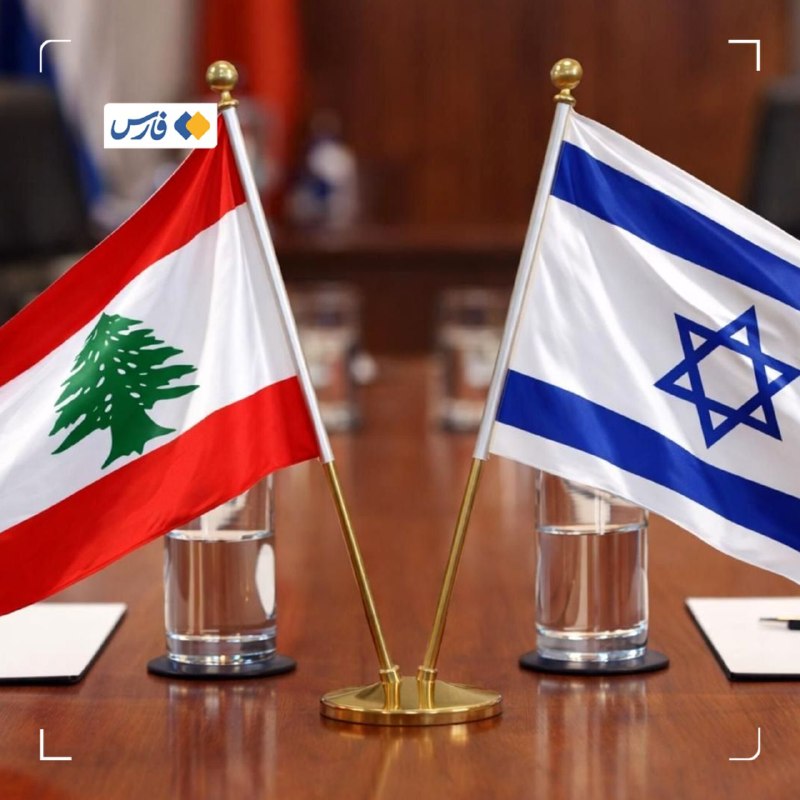
Senior Israeli and Lebanese officials told Axios on 26 June 2026 that a framework agreement between the two governments, accompanied by a security annex, is expected to be announced the same day, following four days of negotiations in Washington. The reporting, by the Axios correspondent Barak Ravid and relayed by Israeli and Lebanese outlets in the early evening UTC window, marks the most concrete sign yet that the long-stalled Israel-Lebanon track is moving off the talking-points stage and into text.
The shape of the deal matters less for its atmospherics than for what it does to the military balance along the Blue Line. A framework that survives the announcement, the cabinet reviews on both sides, and the inevitable opposition objections inside the Knesset and the Lebanese parliament would amount to the first formal diplomatic instrument between Jerusalem and Beirut in years, and the first to address Hezbollah's armed presence directly rather than through the older, narrower UNIFIL-mediated understandings.
What the framework is — and is not
Two separate messages circulated on 26 June 2026 by accounts that track Israeli and Lebanese official comms converged on the same description: a "framework agreement," not a final treaty, paired with a "security annex" that is the operationally binding part. The distinction is not semantic. A framework signals political alignment on first principles — recognition, intent to negotiate the residual questions, a shared security vocabulary — while leaving the harder mechanics to a technical annex.
Ravid's reporting, relayed at 16:38 UTC by the War Monitors channel and again at 16:42 UTC by the Washington File witness feed, and picked up at 17:06 UTC by the Gaza Alanpa account citing him directly, frames the package as the product of a four-day Washington track. That sequence is significant. The choice of venue — rather than the border, Naqoura, or a neutral European capital — points to US mediation as the enabling condition and to American guarantees, or at least American pressure, as the spine of the deal.
The Lebanese state has had to negotiate from a position of domestic weakness: a government that has struggled to assert a monopoly on the decision to make war or peace, an economy that gives any external shock an outsized political echo, and an armed non-state actor whose posture the framework plainly attempts to constrain without explicitly naming in the political cover text. The Israeli side brings the opposite problem: a coalition politics in which a security deal with a neighbour that does not include normalisation can still be sold as a victory, but only if the security annex is tight enough to be defended before a sceptical public.
The structural frame
Several patterns sit underneath this announcement. The first is the return of the United States as the indispensable broker in the Eastern Mediterranean. For most of the past decade, Israel-Greece-Cyprus energy diplomacy and the Abraham Accords track had pushed the US into a supporting role in Israel's regional integration; the Lebanon file pulls Washington back into the driver's seat, because no other capital carries the leverage with both the Israeli defence establishment and the Lebanese Shia political class.
The second is the gradual professionalisation of a diplomatic channel that for years operated only in crisis mode. The four-day Washington track is not a one-off; it follows months of quieter shuttling that has built the procedural muscle for a text-based negotiation rather than a ceasefire-and-press-conference cycle. The shift from firefights to footnotes is itself the news, even if the headlines stay focused on personalities.
A third, more contested, pattern is the question of whether a framework that does not address Hezbollah's arsenal, its external command structure, or its relationship with Tehran is really a settlement or a deferral. The Israeli defence commentariat will read the security annex through that lens, and so will the Iranian foreign ministry. Both are right to. A framework agreement that holds for a year or two still has to face the question it was designed to postpone.
What remains uncertain
The sources do not specify several things the reader will reasonably want to know. The text of the framework has not been published. The annex has not been published. The timetable for signature, ratification, and implementation is not in any of the reporting currently on the wire. The position of Hezbollah, as an organisation distinct from the Lebanese state, is not addressed in the Israeli or Lebanese statements being relayed by Ravid; spokespeople for the movement have not, in the material currently available, confirmed or rejected the deal. The Iranian reaction, often the binding constraint on the Shia political class in Beirut, is also not in the record as of the 17:06 UTC cut.
There is also a credible alternative read of the same facts: that the four-day Washington track produced a document both sides can sign without either side actually conceding anything that will bind them in six months. Frameworks have a history of being announced, welcomed, photographed, and then quietly allowed to atrophy when one side concludes the political cost of implementation exceeds the political cost of letting it die. Whether this framework falls into that category is the question the next ninety days will answer.
Stakes
If the agreement holds and the annex is implemented, the Blue Line will become a quieter border, the dispute over disputed maritime and terrestrial points will move from artillery range to arbitration rooms, and the Lebanese state's claim to a unified foreign policy will get a measurable boost. The Israeli government will be able to argue it has extracted a security gain without a costly ground operation. The United States will be able to add a diplomatic trophy to a portfolio that has been thinner than its Middle East ambitions require.
If the agreement collapses — whether at the announcement stage, the ratification stage, or the first serious test in the field — the costs will be distributed asymmetrically. Lebanon, with an economy that cannot absorb another shock, would bear the heaviest price. Israel would face a renewed cycle of cross-border fire with an adversary that has had four days in Washington to gauge where Jerusalem's red lines really sit. The US would find its broker credibility in the Eastern Mediterranean further eroded at a moment when it is also managing separate tracks in Gaza and with Tehran.
The honest reading of 26 June 2026 is that a credible framework has crossed the finish line of negotiation and entered the longer, harder race of implementation. The wire is reporting movement, not arrival.
How Monexus framed this vs the wire: the wire carried the announcement as a Barak Ravid scoop, with confirmation from Israeli and Lebanese officials. This piece treats the framework as a real but partial diplomatic step, names what the sources do not yet specify, and reads the deal against the longer history of announced-but-unimplemented Israeli-Lebanese understandings.
Wire provenance
This editorial synthesis draws on the following public wire/social posts:
- https://t.me/gazaalanpa
- https://t.me/wfwitness
- https://t.me/WarMonitors
- https://en.wikipedia.org/wiki/Israel%E2%80%93Lebanon_relations
- https://en.wikipedia.org/wiki/Hezbollah
- https://en.wikipedia.org/wiki/United_Nations_Interim_Force_in_Lebanon