Israeli strike kills two in southern Lebanon as flare-ups test the post-ceasefire quiet
An Israeli raid on southern Lebanon on 26 June 2026 killed two people, according to the Lebanese health ministry, hours after IDF aircraft dropped flares over the border zone — the latest in a pattern of post-war tit-for-tats that the wire services have struggled to characterise.
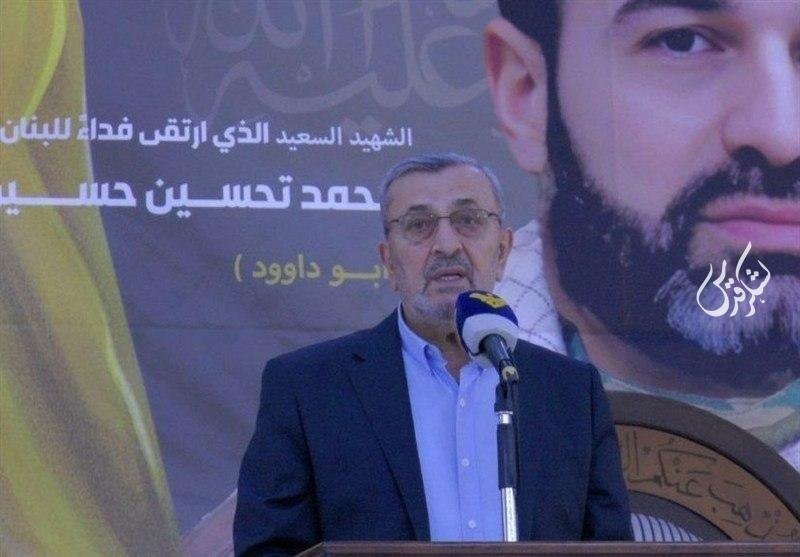
An Israeli raid on southern Lebanon in the early hours of 26 June 2026 killed two people, the Lebanese health ministry said, the latest fatal incident in a stretch of border territory that has not known a sustained quiet since the November 2024 ceasefire. The ministry did not name the dead in its initial statement. An IDF aircraft dropped flares over villages near the frontier late on 25 June, hours before the strike was reported, visible in imagery circulated on social media by English-language monitoring accounts active in the area.
The pattern — strike, denial, flare cycle — is now routine enough that neither the Israeli nor the Lebanese read of the events dominates the day's coverage. What is harder to characterise is whether the two killings on 26 June represent a deliberate escalation or the slow erosion of a holding pattern that has no political backstop. Both readings are plausible. The evidence on offer this morning supports neither cleanly.
What the wire carried
The first reports surfaced shortly after 05:00 UTC on 26 June. Middle East Eye, citing the Lebanese health ministry, reported an Israeli raid had killed two people in southern Lebanon without identifying them. The framing was stripped of context — no claim of responsibility, no named target, no specification of the village or district. By 05:46 UTC, an account affiliated with the English-language monitoring cluster active in southern Lebanon had posted imagery of an IDF fighter jet releasing flares over the border strip the previous night. The two items, taken together, sketch the operational sequence the day's coverage will rest on: flare sortie, then a strike, then a ministry toll.
Israeli military spokespeople had not, as of writing, issued a substantive on-record statement about the specific raid carried over the wire on 26 June. That silence is itself a tell. The IDF's default practice after a cross-border strike is to acknowledge the action within hours and to characterise it — targeted, defensive, in response to an imminent threat. The absence of that template on 26 June suggests either an ongoing operation, a deliberate decision not to amplify, or a strike that the military's own lawyers have not yet signed off on describing.
The border's new normal
Southern Lebanon between the Litani River and the Blue Line has been the site of near-daily Israeli air and drone activity since the November 2024 ceasefire paused the open war between Israel and Hezbollah. The terms of that arrangement — Resolution 1701's framework, supplemented by additional understandings brokered under US and French auspices — were meant to push Hezbollah north of the Litani and to confine Israeli operations to clear, attributable cases of violation. Both sides have tested the line repeatedly.
Israeli officials, in private and occasionally in public, argue that the activity is calibrated: a strike here, a drone strike there, the elimination of a specific operative, the destruction of a specific launcher. The Lebanese state, the village councils, the UN Interim Force in Lebanon (UNIFIL) and the wire reporters covering the area describe a more diffuse picture — strikes on motorbikes, on residential structures, on agricultural workers, with attribution often arriving days later and accountability rarely arriving at all. The two characterisations are not mutually exclusive, but they reflect two different operating definitions of what the ceasefire was supposed to permit.
The health ministry's toll on 26 June — two killed, no immediate claim of militant affiliation — fits inside that ambiguity. It is consistent with the IDF's stated operational pattern and with the village-level reporting of residents who describe strikes on individuals whose names do not appear on any published wanted list.
The framing problem
Coverage of cross-border strikes in southern Lebanon has long suffered from a sourcing asymmetry that would be familiar to readers who follow the broader Israel-Palestine file. Israeli military briefings are on-the-record, attributable, and translated into English within hours. Lebanese reporting depends on a patchwork: the health ministry in Beirut, UNIFIL press notes, a small set of Beirut-based and Tyre-based outlets, and a layer of local stringers who file under intermittent bylines. The result is that the official Israeli characterisation travels faster and further than the on-the-ground Lebanese account, even when both are reporting the same incident.
That asymmetry shapes the public record in ways that are difficult to correct after the fact. An Israeli strike reported as "targeting a Hezbollah operative" by one wire becomes, in the next day's reporting, "the strike Israeli officials said targeted a Hezbollah operative" — the attribution has been quietly laundered into fact, even when no evidence beyond the Israeli statement has been produced. The Lebanese health ministry's toll of two dead, by contrast, will be cited as fact in some outlets and hedged as "according to the Lebanese health ministry" in others, even though the ministry's count is, in this case, the more verifiable figure.
This is not a problem unique to one side. Reporting on rocket fire from southern Lebanon into northern Israel follows the same structural pattern in reverse, with Israeli casualty reporting treated as the primary datum and Lebanese claims of responsibility filtered through caveats. The asymmetry runs whichever way the incident points.
What remains uncertain
The sources available on 26 June do not yet establish several things this article would normally record. The identities of the two dead — whether they were civilians, Hezbollah members, members of another armed faction, or unaffiliated — have not been confirmed by any outlet Monexus could verify. The exact location of the strike inside southern Lebanon has not been specified beyond the regional designation. The Israeli military's account of the operation has not been published, and no Hezbollah statement has, as of 06:30 UTC, claimed or denied responsibility for any activity that might have prompted the strike.
What can be said is limited and should be reported as limited: two people are dead in southern Lebanon in an Israeli raid, according to the Lebanese health ministry, hours after an IDF aircraft flew a flare sortie over the border. The pattern fits a now-familiar operational cadence. The politics underneath it remain contested, and the contested ground is not in the operational facts — it is in what those facts are allowed to mean in the public record.
The safer bet for the next 24 hours is that the Israeli military will issue a statement characterising the strike as targeted and defensive. The Lebanese health ministry's toll will stand. The flare imagery will be cited as colour. And the structural question — what the post-ceasefire arrangement is actually meant to police, and on whose authority — will remain unresolved, again.
Desk note: Monexus framed this incident at the wire's most restrained setting — ministry toll, monitoring-account imagery, named operational pattern — and declined to import either Israeli operational claims or Lebanese political claims that the sources available on 26 June did not themselves carry. Where the wire treated the ministry toll as a lead, this piece treats it as one of several unverified inputs into an operational picture that no outlet has yet fully assembled.
Wire provenance
This editorial synthesis draws on the following public wire/social posts:
- https://t.me/englishabuali
- https://x.com/sprinterpress/status/