Kenya Court Defers Plea for Eight Utumishi Girls Students Pending Mental Assessment in Murder Case
A Kibera High Court has deferred plea-taking for eight Utumishi Girls Academy students and ordered psychiatric evaluation, thrusting questions of childhood, culpability and institutional care back into Kenya's national conversation.
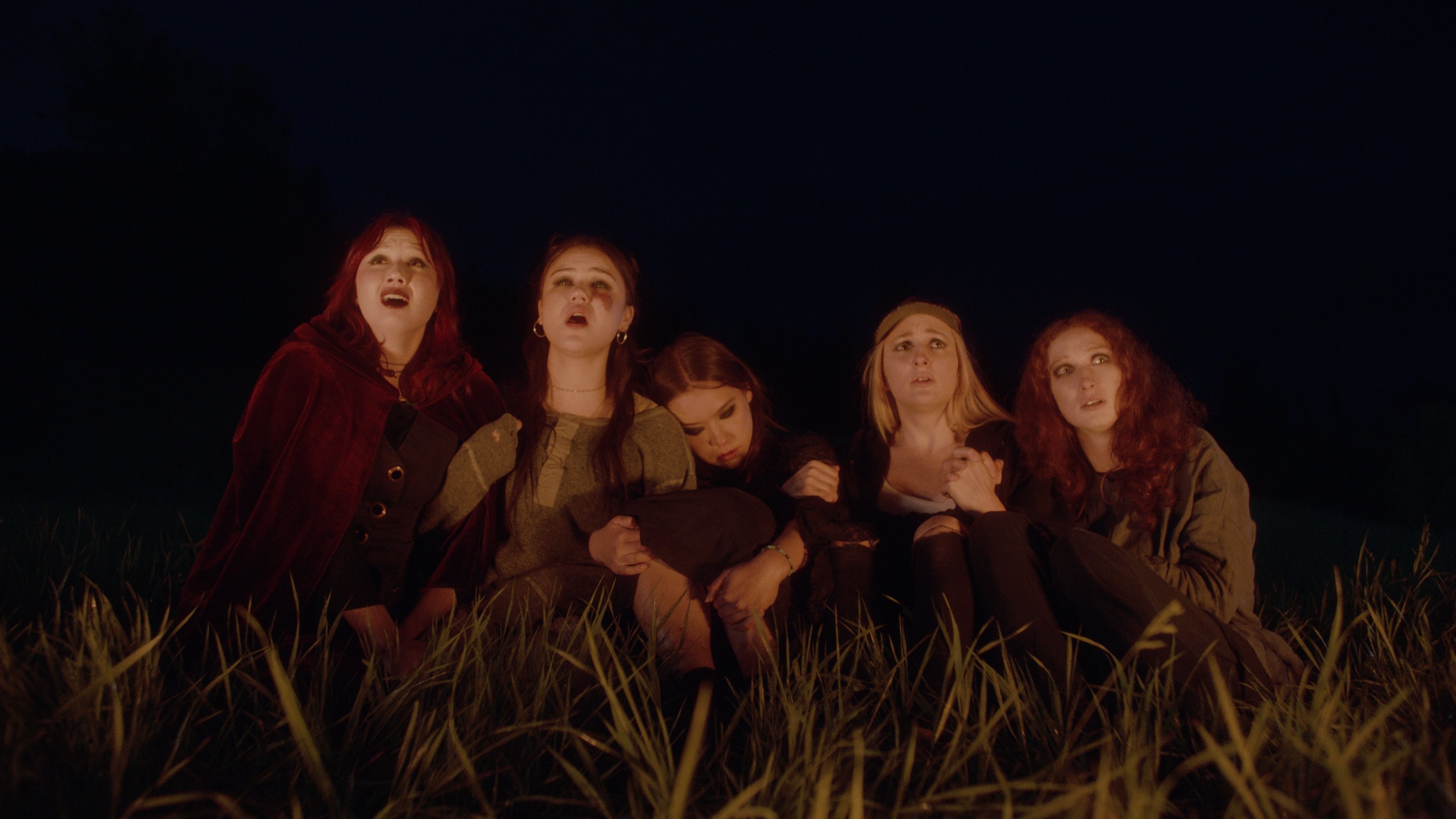
On 26 June 2026, Justice [name not specified in the source items] of the High Court in Kibera deferred plea-taking for eight students of Utumishi Girls Academy and ordered that each undergo a mental health assessment before the case proceeds. The eight are charged in connection with a murder at the school. The ruling, reported by Capital FM and carried on the AllAfrica wire, postpones any entry of plea until the assessment results are before the court — a procedural step that in Kenya's juvenile-justice practice carries significant weight, because the assessment can shape both the charges and the venue in which the children are tried.
The case has drawn attention because of the age of the accused and the gravity of the charge. Murder is not a summary offence, and under Kenyan law, persons under eighteen are ordinarily channelled into the children’s court system rather than the High Court's criminal division. A formal plea, once entered, fixes the litigation; a mental-health order pushes that fixing back, and gives the defence, the prosecution and the court room to argue about fitness, capacity and the appropriate forum. The deferral is therefore not a delay for its own sake. It is the court asking, on the record, whether the children standing in front of it can stand trial at all in the conventional sense.
What the court ordered, and what it did not
According to the Capital FM report carried by AllAfrica, the High Court in Kibera deferred plea-taking and directed mental assessments for all eight students. The report does not specify the name of the presiding judge, the precise wording of the order, the institution tasked with the assessment, or the timeframe within which the assessment must be returned to court. The source items also do not record the exact date on which the alleged killing took place, the name of the deceased, or the relationship of the deceased to the accused. Monexus declines to fill in those blanks; the public record, as currently published, simply does not contain them.
This matters. The narrative arc available to most readers of a story like this one is shaped by details that the source material has not supplied. The court’s order is the load-bearing fact, and it is the only one that this publication is willing to assert on the available evidence. Reporting that goes further — on motive, on the specific role of each accused, on the conduct of the school’s administration, on prior warning signs — would be reporting that the wire has not yet carried, and on a case touching children, that kind of speculation carries a particular cost.
The institutional backdrop: Utumishi Girls Academy and the politics of a name
Utumishi Girls Academy has been the subject of intense public scrutiny in Kenya in recent years. The school gained national attention after reports, including a 2024 investigative series by the BBC’s Africa Eye, alleged systematic abuse and degrading punishment of students at the institution. The BBC’s reporting described physical violence by staff, food deprivation as a disciplinary measure, and a culture in which complaints from parents were reportedly met with denial or retaliation. Those allegations have never been formally resolved in the public record in the sense of a concluded criminal trial against named administrators, but they form the moral backdrop against which any new criminal case involving the school’s students is now read by the Kenyan public. (Source: BBC Africa Eye, 2024 reporting on Utumishi Girls Academy.)
The institutional question — what kind of school produces children charged with murder, and what responsibility the school itself bears — is the one most Kenyan commentators are asking. It is also the one on which the court’s deferral order is silent. The High Court is not, at this stage, ruling on Utumishi Girls Academy. It is ruling on eight individuals. But the court’s order lands inside a national conversation that is already about the institution, and that context is impossible to ignore.
Counter-narrative: childhood, culpability and the limits of the courtroom
Two readings compete. The first holds that whatever the history of the school, the accused are facing a murder charge and the criminal process must run its course; sympathy for the institution or for the broader social conditions of the children cannot displace the legal question of whether a killing occurred and who bears responsibility for it. On this reading, the court’s deferral is a procedural formality, not an exoneration.
The second reading is that mental-health assessment, in a children’s case of this gravity, is not a formality but a substantive intervention. If the assessment concludes that any of the accused were not developmentally capable of forming the intent required for murder, the legal answer is not a lighter sentence but a different framework altogether — one that treats the children as victims of circumstance rather than as perpetrators. Kenya’s Children Act, 2022 (the statute consolidating and updating the country’s juvenile-justice framework) places the welfare of the child at the centre of every decision the court makes about a child accused of an offence. The Kibera court’s order is, on its face, an attempt to apply that standard.
Monexus finds the second reading more consistent with the court’s actual order, and with the law the order invokes. The deferral is not an act of mercy imported from outside the legal system; it is the legal system functioning as designed for cases involving children. Whether that functioning produces a defensible outcome in this specific case will depend on what the assessment reveals and on what the court does with it.
Stakes: a test case for Kenya’s juvenile-justice machinery
The procedural question has substantive consequences. If the court, after assessment, accepts that any of the accused are not fit to plead or not criminally responsible by reason of mental incapacity, the case will be diverted away from the ordinary criminal trial track and into a system of care and supervision that is widely acknowledged to be under-resourced in Kenya. If, on the other hand, the assessment concludes that the accused are fit to plead and stand trial, the children’s court will then take up the substantive question of guilt.
Either way, the case will be read as a measure of how seriously Kenya’s juvenile-justice machinery can be taken in the most extreme cases — those in which the alleged conduct is not a schoolyard fight but a killing, and the alleged perpetrators are not adults but children whose formative years were spent inside an institution now publicly associated with cruelty. The court’s deferral buys time, but it does not buy resolution. Resolution will come, when it comes, from the assessment, from the evidence, and from a legal framework that on paper at least treats children differently from adults. The public record, as of 26 June 2026, is at the procedural stage. It will be some time before the substantive stage begins.
What remains uncertain
The source items do not name the deceased, do not specify the relationship of the deceased to the accused, do not record the date of the alleged killing, do not identify the presiding judge, and do not name the institution that will conduct the mental-health assessment or the timeline for its completion. They do not address whether any of the accused have prior contact with the criminal justice system or with child-protection services. Any of those details, when they emerge, will reshape the public discussion of the case. Until they do, the only fact that this publication is prepared to assert on the available evidence is the one the wire reported: on 26 June 2026, the High Court in Kibera deferred plea-taking for eight Utumishi Girls Academy students and ordered mental-health assessments before the case proceeds.
Desk note: Monexus has reported only what the wire has confirmed — the court’s order and the deferral of plea-taking. The institutional context of Utumishi Girls Academy is drawn from prior BBC reporting; the legal framework from Kenya’s Children Act, 2022. We have declined to fill in the gaps the wire has not filled, and we will update this article as those gaps are closed.
Wire provenance
This editorial synthesis draws on the following public wire/social posts:
- https://en.wikipedia.org/wiki/Children_Act,2022(Kenya)
- https://en.wikipedia.org/wiki/High_Court_of_Kenya