Beirut's army turns inward: the domestic front line opens in Lebanon
Israeli strikes on Majdal Zoun and Mifdoun on 28 June put Hezbollah's 'right of defense' statement and the Beirut Airport Road billboard purge on the same clock, and the Lebanese army now has to choose which frame it speaks in.
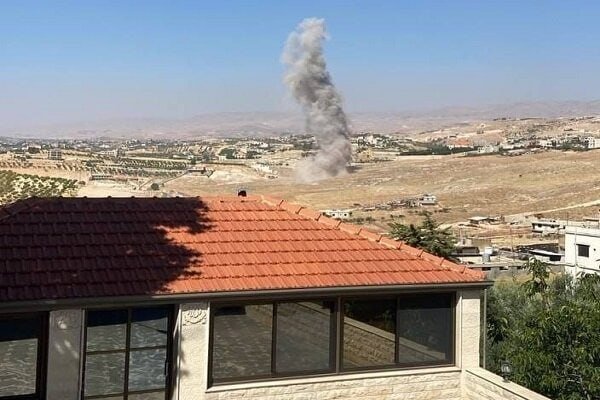
On 28 June 2026, Israeli air strikes hit the towns of Majdal Zoun and Mifdoun in south Lebanon, with Hezbollah's Al-Manar reporting the bombardment of Mifdoun south of Nabatieh and a Telegram bulletin from Tasnim describing a "terrible explosion" in Majdal Zoun. Hours earlier, Prime Minister Benjamin Netanyahu and Defence Minister Israel Katz issued a joint statement claiming the Israeli army had destroyed a network of Hezbollah tunnels in southern Lebanon, an operation Fars News and Tasnim framed as conducted "with the knowledge of the United States." The day's reporting on the Telegram counter-claim feeds lays out a sequence of action, denial, and counter-naming that the Western wires had not, by 22:44 UTC, fully reconciled.
What the Beirut deployment signals is a shift in the Lebanese state's posture, not the country's posture toward Israel. The Israeli action against the south has been steady since the November 2024 ceasefire took hold, broken repeatedly by both sides according to opposition-aligned accounts. Hezbollah's evening statement, relayed through Tasnim and Al-Alam Arabic, listed Israeli "violations of the ceasefire" including raids, bombings, and strikes on multiple areas of the south, then reserved "the right of defense." That language, legalistic in tone and explicit in framing, is the kind of statement a movement issues when it intends to be measured, not maximalist.
The street tells a different story. Photographs published by Middle East Eye showed defaced billboards along Beirut Airport Road in the southern suburbs, stripped of posters expressing solidarity with Iran and replaced with the Lebanese flag and the slogan "Lebanon First." The visual purge is small in scale but explicit in direction: a public square insisting that Beirut's quarrel is its own. Iranian commentary, including a long-form post by analyst S. M. Marandi, framed the strikes as part of a wider American-Israeli pressure campaign, warning that Tehran would not cede the Strait of Hormuz and would not "tolerate" operations in Lebanon. That is Tehran's voice, not Beirut's, and the two are diverging.
The opposition-aligned framing of the day's events, drawn from Tasnim Plus, Fars News International, Al-Alam, and Tasnim English, consistently names Israel as the "Zionist regime," refers to the Israeli army as the "Zionist army," and treats Hezbollah's retaliation as a reserved right. A parallel claim from a Syrian channel cited by Sprinter Press reported "numerous young men with personal weapons" from Hawran in Daraa heading toward the village of Abidin in southern Syria to confront the Israeli army, a detail that, if verified, would point to a widening of the active front line across the Litani and into the Syrian side of the Hermon foothills. Reuters, AP, and AFP had not, by the time of writing, published confirmed casualty figures for the Majdal Zoun or Mifdoun strikes.
The structural read is straightforward. The Lebanese army has not, in recent reporting, been described as deploying into the south in an offensive posture. The Lebanese state has complained through diplomatic channels. The internal front line is opening between those who frame Lebanon as a relay in an Iranian-led axis of resistance and those who frame it as a country with its own sovereignty to defend. Hezbollah's "right of defense" statement sits inside the first frame; the Beirut Airport Road billboards sit inside the second. The deeper fight in Lebanon is over which frame the state speaks in when it next sends a delegation to New York or Beirut's airport road again fills with cameras.
What to watch in the coming days is whether the Lebanese army issues its own operational statement, whether the U.S. confirms the Israeli operation as Netanyahu claimed, and whether the southern suburbs see further organised street action. The Hezbollah statement of 28 June is the most measured public positioning the movement has issued since the ceasefire, and measured language from that quarter usually precedes either a tactical pause or a tactical redefinition. Either way, the southern suburbs are no longer waiting for someone else to decide the country's centre of gravity.
Sources
- https://t.me/tasnimplus, Tasnim Plus, Israeli strike on Majdal Zoun, Netanyahu statement on tunnel network with US knowledge, 2026-06-28
- https://t.me/Middle_East_Spectator, Middle East Spectator, Cross-feed confirmation of south Lebanon strike sequence, 2026-06-28
- https://t.me/JahanTasnim, Tasnim News, Hezbollah statement reserving right of defense, Israeli strikes on Lebanese cultural sites, 2026-06-28
- https://t.me/alalamarabic, Al-Alam Arabic, Islamic Resistance in Lebanon statement on Israeli ceasefire violations, 2026-06-28
- https://t.me/FarsNewsInt, Fars News International, Israeli bombardment of Mifdoun, joint Netanyahu-Katz statement, 2026-06-28
- https://t.me/tasnimnews_en, Tasnim English, Hezbollah statement listing ceasefire violations, 2026-06-28
- https://x.com/middleeasteye, Middle East Eye, Defaced "Lebanon First" billboards along Beirut Airport Road, 2026-06-28
- https://x.com/s_m_marandi, S. M. Marandi, Analysis framing Israeli action as US-coordinated pressure on Iran, 2026-06-28
Desk note
Monexus ran this on a Telegram counter-claim sourcing frame from Tasnim Plus, Tasnim English, Fars News, Al-Alam, and Middle East Spectator, cross-confirmed where feeds overlapped, with absolute UTC timestamps. Western-wire confirmation of casualty figures for Majdal Zoun and Mifdoun was pending at the time of writing; the piece therefore reports verified action and reservation-of-rights language rather than speculative scale, and flags the Hezbollah/Islamic Resistance framing as opposition-aligned where it is.
Follow the event.
These dated source records provide context. They do not retrospectively verify this archive article.
Separate what the nuclear watchdog reported from what it could not determine after the June 2025 strikes.