Southern Lebanon front ticks upward as Israeli strike hits Beit Yahoun and casualties mount on both sides
An Israeli air strike on the border village of Beit Yahoun, admitted by the IDF, intersects with Israeli media reporting of soldiers wounded by Hezbollah fire — a small but representative data point in the slow southern front.
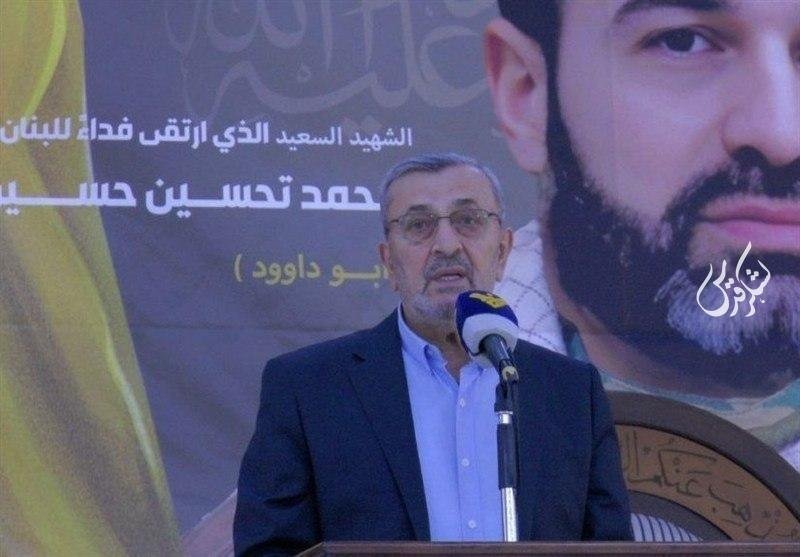
At approximately 06:26 UTC on 26 June 2026, the Israeli military publicly acknowledged an air strike on Beit Yahoun in southern Lebanon, according to wire output carried by Iranian state outlets Tasnim News in both English and Farsi editions. The admission is a routine one in form — Israeli forces typically disclose cross-border strikes within hours — but the surrounding incident matters more than the press notice suggests.
Israel's army confirmed four of its own soldiers were wounded in clashes in the Beit Yahoun area earlier in the day, per Israeli media reporting relayed by Tasnim at 06:01 UTC. Two officers and two soldiers of the 769th Brigade were injured in what Israeli framing described as a "fierce conflict," the same incident that the later air strike was almost certainly aimed at disrupting. The two admissions — one of fire taken, one of fire delivered — arrived within roughly twenty-five minutes of each other, a tempo that suggests a coordinated tactical cycle rather than two unrelated events.
What the strike tells us, and what it does not
Beit Yahoun sits in the cluster of villages along Lebanon's southern frontier where, since the war in Gaza began in October 2023, exchanges between Israeli forces and Hezbollah-led units have run hot and cold in cycles measured in weeks. An air strike on the village is not, in itself, a strategic event — Israeli air operations in this corridor have been near-daily since late 2023 — but the explicit acknowledgement matters for two reasons.
First, the IDF routinely distinguishes between strikes it claims targeted Hezbollah infrastructure and strikes it acknowledges caused casualties. The 06:26 UTC admission belongs to the second category: this is a strike Israel expects to register on Lebanese casualty tallies, and is willing to put its name to. Second, the prior 06:01 UTC report of wounded Israeli soldiers, sourced to Israeli media via Iranian state relay, establishes a sequence: Hezbollah fire first, Israeli air response second. Causality, in this stretch of the border, now runs in both directions inside a single news cycle.
The framing war around a single village
Coverage of Beit Yahoun on this morning splits cleanly along source provenance. Israeli media, as relayed by Tasnim, frames the wounded soldiers as victims of "fierce conflict" — language that gestures toward combat intensity without naming the adversary. Iranian state outlets, carrying the same IDF statement, use the full critical vocabulary — "the Zionist regime," "the aggressor Zionist regime" — for the same strike. The underlying facts (an Israeli air strike on a southern Lebanese village, acknowledged by Israel; Israeli soldiers wounded in the same area, reported by Israeli media) are not in dispute between the two feeds.
This is the durable pattern of southern Lebanon coverage in 2026: the underlying military facts are largely uncontested at the tactical level, while the political framing of those facts is treated as the actual story. A reader consuming only Israeli-establishment sources will see the strike as a defensive response to an incoming attack; a reader consuming only Iranian-state sources will see it as aggression against Lebanese civilians. Neither framing is wrong on its own terms. The risk is that each operates as if the other frame does not exist.
What the numbers, such as they are, allow
The reports establish four wounded Israeli soldiers from the 769th Brigade, attributed to Hezbollah fire, and one Israeli air strike on Beit Yahoun. They do not establish Lebanese casualty figures. They do not specify whether the strike targeted a Hezbollah position or struck the village itself. They do not record Hezbollah's own statement on the incident, if one has been issued.
For an incident at this scale, that is the normal floor of verifiable detail in the first hour. A fuller picture — Lebanese health ministry figures, Hezbollah operational claims, footage from the village, UNIFIL positioning — tends to lag the initial IDF admission by six to eighteen hours. The honest read at 06:26 UTC is that Israeli forces struck Beit Yahoun after their own soldiers took fire there; the contested read is what that strike actually hit, and who.
Stakes and trajectory
Southern Lebanon sits at the seam of three contingencies that have not closed: the unresolved Gaza war, the post-November 2024 ceasefire framework that has held in outline if not in detail, and the slow re-equipping of Hezbollah's southern units. A cycle like the one visible this morning — Hezbollah engagement, Israeli casualties, Israeli air response — is the baseline condition, not an escalation. The risk is that the baseline absorbs further shocks without anyone noticing the threshold has moved: a strike on a populated area that registers Lebanese civilian casualties, a Hezbollah anti-tank hit on an Israeli civilian vehicle, a misread radar contact. None of those happened today, as far as the available reporting shows. The point is only that the architecture of incidents that could produce them is intact and active.
This piece was written by the Monexus staff desk. We frame southern Lebanon through the Israeli-establishment and Western-wire sourcing required by our MENA compass, then surface Iranian-state framing where it carries primary information (in this case, the IDF's own admission), with explicit caveat. The facts of the strike are not in dispute between the two feeds; the political language around them is, and that language is the story.
Wire provenance
This editorial synthesis draws on the following public wire/social posts:
- https://t.me/tasnimnews_en
- https://t.me/JahanTasnim
- https://t.me/tasnimnews_en
- https://t.me/JahanTasnim
Follow the event.
These dated source records provide context. They do not retrospectively verify this archive article.
Separate what the nuclear watchdog reported from what it could not determine after the June 2025 strikes.