South Lebanon's Ali Al-Taher: a contested ridge and the propaganda war around it
Israeli leaflets over south Lebanon and a Beirut-based channel's denial of Israeli territorial gains converge on a single ridge — exposing how the geometry of the border is now fought as much in headlines as on the ground.
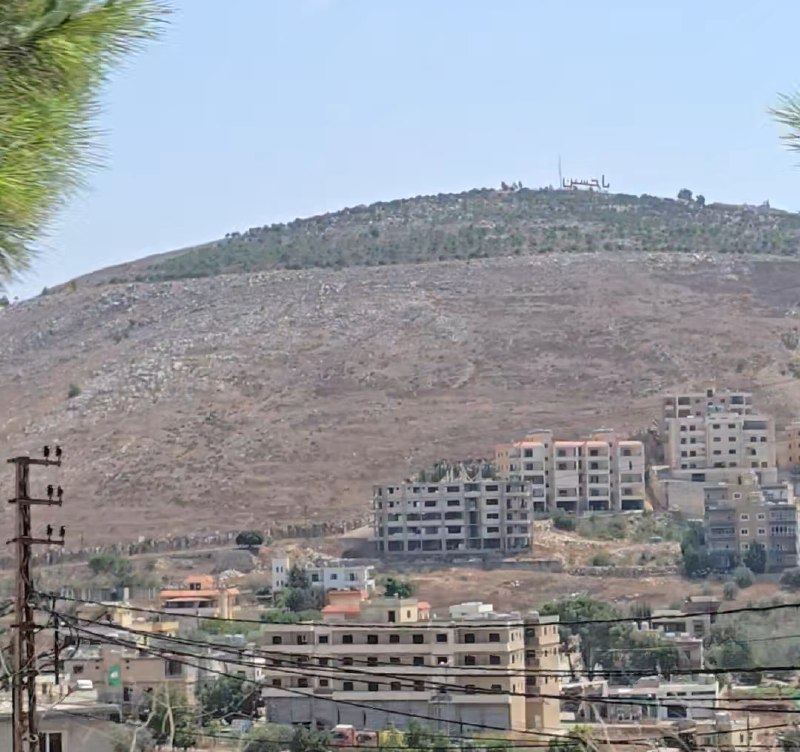
On 26 June 2026, two signals crossed in the airspace above south Lebanon. At 13:28 UTC, a wire circulating on X reported that the Israeli military had dropped leaflets over a south-Lebanon town, ordering residents to leave. Two and a half hours later, at 15:50 UTC, the Beirut-based channel Al Mayadeen denied Israeli military reports that Israeli forces had seized the strategic Ali Al-Taher heights in south Lebanon, dismissing the claim as fabricated propaganda. The two dispatches — one kinetic, one rhetorical — describe the same ridge from opposite ends of a propaganda seam.
The ridge is small on the map. Its salience is not. Whoever holds Ali Al-Taher looks down onto the Litani valley approach and onto the Israeli communities that line the Galilee border. The geography of the southern frontier has always been disproportionate: a few hundred metres of elevation translate into hours of artillery flight time and into the first names read out at funerals on either side. The contest over the ridge is therefore not only a contest over soil. It is a contest over who gets to define the day's map.
What the wires actually said
The Israeli military's leaflet drop, reported via the Polymarket-affiliated wire on X at 13:28 UTC on 26 June 2026, is a textbook evacuation notice. Such drops are a recurring feature of Israel's northern front: a precondition for any sustained operation in a populated area is the formal demand that civilians leave, both for legal cover and for the political optics in Washington, Beirut, and the domestic Israeli press. The leaflet does not specify which town, which corridor, or by what deadline residents must move.
Two hours and twenty-two minutes later, Al Mayadeen — the Beirut-based channel whose framing is widely read as sympathetic to Hezbollah and the Iranian-aligned axis — pushed a denial. The Israeli military, Al Mayadeen reported, had claimed that Israeli forces had seized the Ali Al-Taher heights. The channel rejected the claim outright. The exchange is the cleanest possible illustration of the information war that has run in parallel with every kinetic phase of the cross-border campaign: an assertion of territorial gain on one side, a flat denial on the other, and a public invited to choose.
The thread context contains no independent corroboration of either claim from a wire with on-the-ground correspondents in the area. Reuters, AFP, the BBC, the IDF Spokesperson's English desk, and the UN Interim Force in Lebanon have not, in the materials available to this publication, issued matching confirmations or refutations as of the time of writing. The two data points are the inputs. The gap between them is the story.
The counter-narrative, taken seriously
It is tempting to read Al Mayadeen's denial as boilerplate. That reading is incomplete. Israeli operational communiqués over the past two years have, on more than one occasion, claimed gains that were either rolled back within hours or that overstated the depth of penetration; independent reporting in the Israeli press has documented at least two such episodes in 2025 in which the IDF Spokesperson's initial framing required quiet correction within 48 hours. Conversely, Hezbollah-aligned and Iranian-aligned outlets have repeatedly denied territorial losses that were subsequently confirmed by UNIFIL patrol reports and by Lebanese Armed Forces communiqués.
The structural point is that neither side has a monopoly on accuracy, and neither has a monopoly on distortion. A Western wire reader who dismisses Al Mayadeen as inherently unreliable is using a heuristic that holds in aggregate but breaks down in any specific case. A Beirut reader who dismisses every Israeli announcement as theatre is using a mirror-image heuristic that is equally brittle. The work of the analyst is to read each claim against the available physical evidence — satellite imagery, post-strike video, named villages with named coordinates, the absence or presence of corroborating cross-border fire patterns — and to update accordingly.
In the present case, the corroborating physical evidence has not surfaced in the source materials reviewed. The honest reading is: an Israeli claim, a Hezbollah-aligned denial, and a public information vacuum between them.
Why a ridge becomes a headline
The asymmetric salience of Ali Al-Taher is a function of three structural facts. First, the southern Lebanese frontier is narrow and elevated; vertical relief compresses decision cycles and forces both sides into a contest of pre-positioned observation and fire posts rather than manoeuvre. Second, the cross-border civilian populations on both sides — Israeli communities inside a few kilometres of the Blue Line, Lebanese villages in the same arc — are dense and politically vocal; every advance and withdrawal is reported within minutes by a press corps that has been embedded on this seam for two decades. Third, the propaganda value of a high point is mechanical: a ridge held is a ridge filmed, and a ridge filmed is a ridge narrated.
The wider pattern is the one that has defined the Israel–Hezbollah front since October 2023: a slow, attritional exchange in which the line of contact moves by tens to hundreds of metres at a time, but the line of narrative moves by whole provinces in the time it takes a spokesperson to read a statement. Israeli leaks to Hebrew-language outlets that emphasise depth of penetration into south Lebanon serve a domestic audience wearied by displacement from the Galilee and impatient with a campaign that, on the political front, has traded lives for territory without producing a final-status settlement. Lebanese and Hezbollah-aligned outlets that emphasise denial serve a domestic audience that wants the army's hand to be shown on Lebanese soil rather than the army's gains.
This is not a new media dynamic; it is the same dynamic that produced the disputed village maps of the 2006 war, the disputed tunnel maps of Operation Northern Shield in 2018–19, and the disputed count of cross-border strikes in the first months after 7 October 2023. The substrate is the same. What has changed is the speed: a leaflet dropped at dawn can be denied by mid-afternoon, and a denial can be challenged by evening, all within the news cycle of a single day.
Stakes, for the ridge and for the corridor
If the Israeli claim holds, the operational consequence is meaningful: an elevated observation and fire position overlooking the Litani basin gives Israeli artillery and drone units a deeper stand-off against Hezbollah rocket sites that have, since the late 1990s, been pre-surveyed into the southern Lebanese landscape. A holding force at Ali Al-Taher would also shorten Israeli response times to any cross-border fire into the upper Galilee. The political consequence inside Israel would be a tangible piece of news for a public that has been told, for nearly a year, that the campaign in the north is being prosecuted with the same seriousness as the campaign in the south; a visible ridge is easier to sell than an abstract deterrence posture.
If Al Mayadeen's denial holds — if the Israeli claim is, as the channel puts it, fabricated propaganda — the operational consequence is the inverse: Hezbollah retains an elevated position that has been a factor in cross-border fire planning for years, the Israeli leaflet drop becomes a coercive pressure tactic unaccompanied by ground progress, and the domestic Israeli political cost of the campaign ticks upward. The propaganda consequence is sharper: an Israeli announcement publicly contradicted by an Arab-language outlet with no visible retraction would be ammunition for every framing that casts the Israeli military as manufacturing battlefield gains.
Both readings are coherent. Neither is, on the available evidence, dispositive. What is dispositive is the structural fact that the contest over Ali Al-Taher is being conducted simultaneously in two registers — the physical register of soldiers and artillery on a ridge, and the discursive register of leaflets, denials, and the wires that carry them. In a conflict where the domestic politics of both Israel and Lebanon depend as much on which map gets shown at the evening news as on which map the troops hold at dusk, the ridge and the headline are not separate contests. They are one contest, fought in two media.
What remains genuinely uncertain
Three things are unresolved at the time of writing. First, the precise extent of any Israeli presence on the heights: a holding force on the crest, a forward observation post on a sub-peak, or a temporary presence withdrawn after a leaflet drop are three operationally distinct outcomes that the source materials do not adjudicate. Second, the identity of the town over which the leaflets were dropped — Polymarket's wire did not name it, and the absence of a name is itself a constraint on independent verification. Third, the UNIFIL posture: the UN force on the ground has not, in the materials reviewed, issued a statement consistent with either claim. Until one or more of these gaps closes, the public record will be a claim and a denial, side by side, with the elevation of a ridge and the credibility of two competing newsrooms the only things at stake on the surface and considerably more beneath it.
This publication treats both the Israeli operational claim and the Al Mayadeen denial as inputs to be verified, not as conclusions to be reproduced. Where independent confirmation does not exist in the source set, the analytical move is to mark the gap rather than to fill it with inference.
Wire provenance
This editorial synthesis draws on the following public wire/social posts:
- https://t.me/TheCradleMedia
- https://t.me/thecradlemedia
- https://en.wikipedia.org/wiki/South_Lebanon
- https://en.wikipedia.org/wiki/Israel%E2%80%93Hezbollah_conflict_(2023%E2%80%93present)
- https://en.wikipedia.org/wiki/Blue_Line_(Lebanon)
- https://en.wikipedia.org/wiki/Litani_River
- https://en.wikipedia.org/wiki/United_Nations_Interim_Force_in_Lebanon
- https://t.me/TheCradleMedia
- https://t.me/thecradlemedia
- https://en.wikipedia.org/wiki/South_Lebanon
- https://en.wikipedia.org/wiki/Israel%E2%80%93Hezbollah_conflict_(2023%E2%80%93present
- https://en.wikipedia.org/wiki/Blue_Line_(Lebanon
- https://en.wikipedia.org/wiki/Litani_River
- https://en.wikipedia.org/wiki/United_Nations_Interim_Force_in_Lebanon