Three foreign tankers turned back at the Strait of Hormuz as Iran's IRGC tightens the chokepoint
Iran's Revolutionary Guard forced three unauthorised foreign oil tankers to reverse course at the Strait of Hormuz, underscoring that the world's most consequential energy chokepoint remains in the hands of a single, sanctioned state actor.
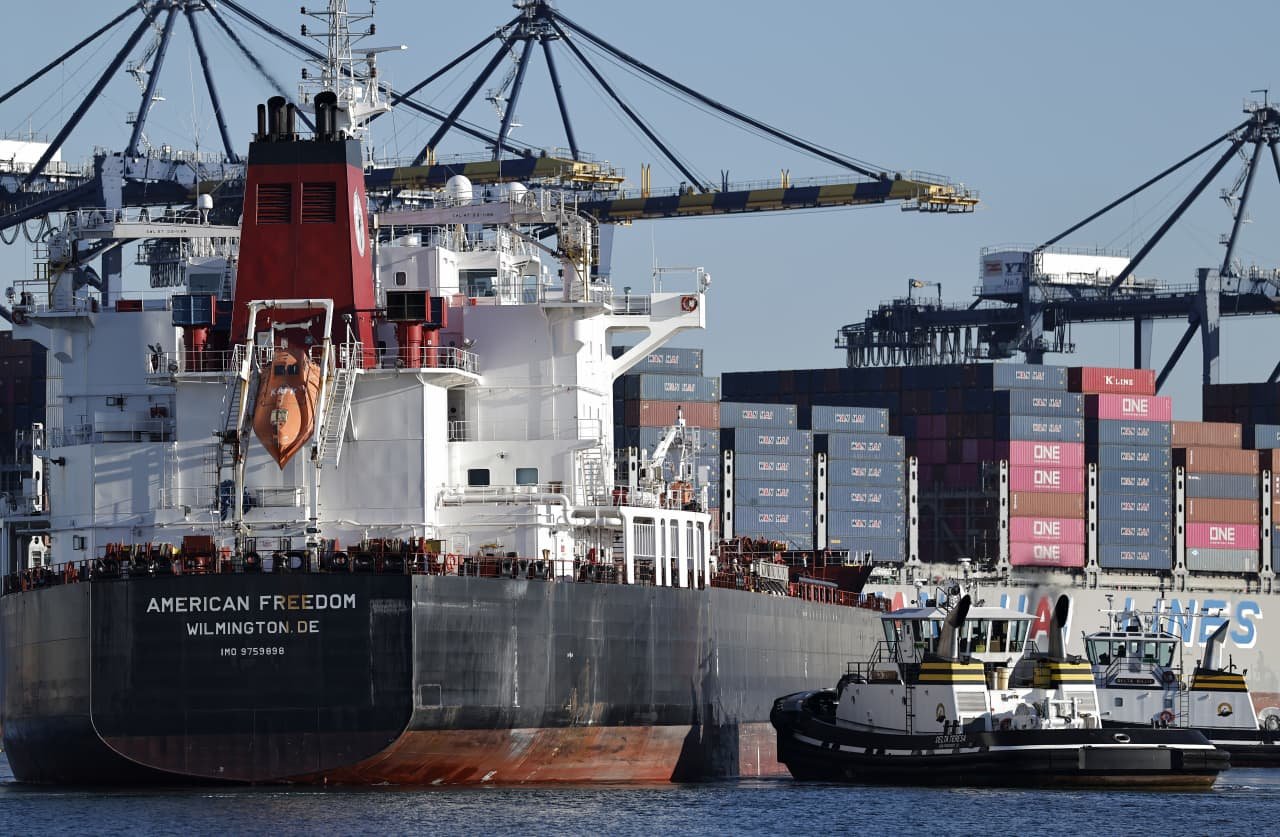
Three foreign oil tankers attempted to traverse the Strait of Hormuz without Iranian authorisation on the afternoon of 26 June 2026 and were forced to turn back after a warning from the Islamic Revolutionary Guard Corps, according to parallel accounts circulating on X and Telegram channels that track the waterway. The incident, reported at 13:33 UTC by the BRICS News wire on Telegram and corroborated shortly after by the OSINTLIVE channel and the @sprinterpress account on X, is the most concrete public confirmation in weeks that Iran is still prepared to police the strait unilaterally, even as global attention has drifted toward other flashpoints.
The story is not the ships. It is the seam. Roughly a fifth of the world's seaborne crude and nearly a third of its liquefied natural gas moves through a channel that at its narrowest point is barely 21 nautical miles wide, with shipping lanes on either side of the Iranian and Omani territorial seas. For four decades that geography has given the Islamic Republic a veto it could not afford to use often, but did not have to use often to be priced in. The 26 June incident is a reminder that the pricing is real, that the veto still works, and that Iran's leverage in any future negotiation over its nuclear file, its sanctions architecture, or its regional proxy network is reinforced every time a tanker changes course.
What is known about the incident
The factual spine is narrow. Three foreign-flagged oil tankers, names and registries not yet disclosed in the wire traffic, sought to transit the strait without the clearance that Iran's ports and maritime authority require for vessels touching Iranian-controlled waters or seeking passage during periods of elevated alert. The IRGC Navy, which has de facto operational primacy over the northern side of the waterway, issued warnings via standard maritime channels. The vessels complied and reversed. There are no reported casualties, no shots fired, no boarding reported in the open-source accounts that surfaced the story. The BRICS News Telegram channel flagged the incident at 13:33 UTC; the @sprinterpress account on X confirmed it at 14:32 UTC; the OSINTLIVE Telegram channel aggregated commentary from the maritime analyst Brett Erickson at 14:25 UTC, who framed the strait as a strategic asset whose value, in his telling, has been mispriced by Western analysts.
That last point is the load-bearing claim of the day. Erickson's argument, paraphrased in the OSINTLIVE thread, is that observers who describe the Strait of Hormuz as a "diminishing asset" for Iran are making a category error. A private jet, he suggests, is not less valuable because it is gifted rather than bought; it is more so, because the recipient controls the use of it without paying the operating cost. By extension, Iran's ability to selectively close, slow, or threaten the strait carries strategic weight precisely because Tehran does not have to use the lever often for the leverage to remain priced into global benchmarks. The framing is contested but it is the framing circulating in the non-Western commentary layer, and it deserves equal airtime with the Western wire read.
The Western wire read
The conventional Western framing, visible in think-tank and financial-press coverage that Monexus has tracked over recent months, treats the strait as a declining Iranian asset for three reasons. First, the development of pipeline bypass routes — the UAE's Habshan-Fujairah line, Saudi Arabia's East-West pipeline to Yanbu, Iraqi flows to Ceyhan — has reduced the Gulf producers' dependence on Hormuz for their own exports, even if the absolute volume of oil transiting the strait has not collapsed. Second, Iran's own export capacity, hemmed in by US sanctions, does not require an open strait in the same way it once did; Iranian crude now moves through shadow-fleet mechanisms, often to Asian buyers via ship-to-ship transfers and disguised flags. Third, the United States Fifth Fleet, based in Bahrain, retains the capacity to escort commercial traffic in extremis, a capability that deters a sustained Iranian closure.
Each of these points has merit, and none of them changes the underlying arithmetic: a single IRGC fast-boat squadron, a few anti-ship cruise missile batteries on the Larak and Qeshm islands, and a handful of naval mines can still slow traffic enough to spike the front of the Brent curve within hours. Markets know this. The Western framing is not wrong so much as it is incomplete; it describes the bypass capacity without describing what happens during the hours it takes to switch on.
The structural frame
Strip the commentary away and the structural fact remains. The Strait of Hormuz is the most consequential energy chokepoint on the planet, controlled in practice by an Iranian security apparatus that has spent forty years preparing to use it. The incident on 26 June is consistent with a long pattern: the IRGC does not need to close the strait to exercise power through it. Periodic warnings, selective inspections, the occasional detention of a tanker — these are the instruments of a calibrated coercion that costs Iran little and earns it leverage in every negotiation in which the United States, the Gulf states, or Europe is a counterparty. The leverage is asymmetric because the geography is asymmetric. No amount of pipeline construction changes the fact that the world's largest single concentration of proved hydrocarbons sits upstream of a 21-mile bottleneck that one country polices.
This is the seam the energy market has been trading around since the tanker war of the late 1980s. Every insurance premium, every war-risk surcharge, every hedging decision at the front of the Brent curve is a quiet acknowledgement that the strait is not a diminishing asset by any measure that matters to the people who actually move the oil. The disagreement between the Western analytical layer and the layer represented by the Erickson commentary is not about the geography. It is about who counts as the relevant actor and whose framing of leverage gets to anchor the policy debate in Washington, Brussels, and the Gulf capitals.
What remains contested
The open-source accounts do not name the three tankers, their flag states, or the operators. That detail matters. A Saudi-, UAE-, or Kuwaiti-flagged vessel would carry different diplomatic weight than a Greek-, Marshall Islands-, or Panama-flagged commercial tanker. The sources do not specify whether the vessels were inbound to a Gulf loading terminal or outbound from one, whether they had previously transited without incident, or whether any of them had been issued advance clearance that lapsed. Iranian state media had not, as of the wire traffic Monexus reviewed, published its own version of the event. Until the flag states and operators confirm — or until an outlet with the standing of Reuters, the Associated Press, or the Financial Times publishes an independently sourced account — the episode remains a data point rather than a verdict.
What can be said with confidence is that the price of Brent crude will respond. Even the rumour of an Iranian interdiction at Hormuz adds a few cents to the front-month contract and a wider band to the longer-dated options. The tanker market, already tight on VLCC capacity, will reprice war-risk premia within hours. Insurers will issue advisories. The pattern is well-rehearsed. The question is whether the 26 June incident is a one-off calibration — a routine reminder of whose waterway it is — or the first beat of a more sustained escalation tied to the diplomatic calendar around Iran's nuclear file, the snapback of UN sanctions, or the regional confrontation that has been gathering since the autumn of 2025.
The honest answer is that the sources do not yet let a reader tell. What they do let a reader see is that the lever still works, that the geography has not changed, and that the difference between "diminishing asset" and "asymmetric veto" is the difference between a debate inside the Washington policy world and a debate that the people who actually insure the tankers are forced to have every time a single IRGC unit hails a vessel on VHF Channel 16.
Desk note: Monexus framed this incident by foregrounding the non-Western commentary on Hormuz's strategic value alongside the Western bypass-and-Fifth-Fleet read, then let the geography adjudicate. We did not name tankers, flag states, or operators because the open-source accounts did not, and we did not speculate on Iranian intent beyond what the warning itself implies.
Wire provenance
This editorial synthesis draws on the following public wire/social posts:
- https://x.com/sprinterpress/status/
- https://t.me/osintlive
- https://t.me/bricsnews
- https://en.wikipedia.org/wiki/Strait_of_Hormuz
- https://www.eia.gov/international/analysis/world-oil-transit