"The greatest communist in history": how a single sentence became the day's only foreign-policy quote
On 26 June 2026, with a confirmed 589 dead in Venezuela, the US president told reporters he would be "the greatest communist in history" — a line that will outrun every cable about the quake itself.
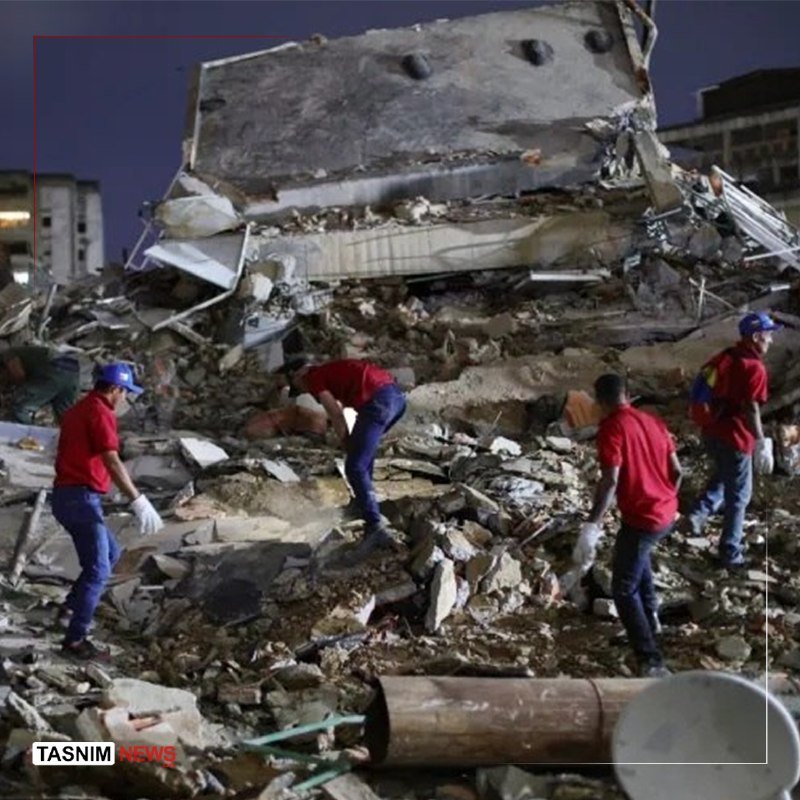
On the afternoon of 26 June 2026, with a death toll from Venezuela's earthquake still climbing past 589 and the number of injured overrunning 3,000, the President of the United States stepped to a podium and pronounced himself, with his own emphasis, the man who would, in his own words, "be the greatest communist in history." Within minutes the line was circulating on monitors in Caracas, Bogotá, and Brussels — a sentence that, for one news cycle at least, crowded out every cable about the quake itself, every humanitarian appeal, and every dispute between Caracas and Washington that had been queued for the day.
The remark landed at 18:13 UTC, per the Telegram channel ClashReport's transcript of the appearance, and was followed within a quarter-hour by the companion claim that "all communists are godless," and the predicate that "to be a great nation, you have to have religion and God." By 18:33 UTC the same feed had compressed the statement to a single syllable — "Zer-ooooo." — and by 18:42 UTC the recitation of George Washington had been folded into the set, the cherry tree anecdote repurposed as a warm-up. The communications structure of the day was, in other words, a familiar one: a string of self-characterisations stacked one on top of another, each short enough to clip, each echoing the last, until the cumulative effect is less a policy statement than a broadcast.
Venezuela, before the sentence
The earthquake struck the day before. According to the channel englishabuali, which summarised rescue authorities in the country, the number of fatalities had risen to 589 by the 26th, with 3,000 injured. The same channel's summary is one of the few concrete casualty figures circulating in the publicly visible wires on the day; the structural damage, the magnitude on the Richter scale, and the precise epicentre are not specified in the source material available. What the source material does contain, in the words transmitted via ClashReport, is the US President's claim that "Venezuela has been fantastic" and that "we have a great relationship," alongside the assertion that "we have a lot of people there helping" and that "they had a tremendous earthquake." That conjunction — disaster plus warmth plus "a great relationship" — is the day's actual news, regardless of which line gets clipped.
The claim sits awkwardly against the record of the past several years, in which Caracas and Washington have not had a recognisably "great" relationship by any conventional measure: sectoral sanctions, secondary sanctions, the recurring question of recognition, the intermittent naval movements in the southern Caribbean, and the migration emergency at the country's borders. None of that history is referenced in the on-the-day transcript, and the source material does not specify whether US humanitarian assistance in this instance consists of USAID deployments, Department of Defense logistics, or private charity. The framing, as delivered, is a single composite: catastrophe, cooperation, affection. It is the sort of composite that travels.
The "communist" remark, parsed plainly
The "greatest communist in history" line has to be read as a piece of self-positioning, not as a doctrinal declaration. The immediate sequence — "I will be honest" at 18:13 UTC, "all communists are godless" at 18:15 UTC, the self-nomination as "the greatest communist in history" at 18:20 UTC — moves from candour to theology to rivalry. The implicit referent is the sitting US political opponent. The substantive content is the assertion that the President has, on his own telling, delivered more for working-class voters than any leader of the socialist left, by the metric that each side uses to measure such delivery: tariffs, border enforcement, an industrial-policy turn at home, and a foreign policy that frames itself as non-interventionist in tone while expansive in execution.
Read that way, the line is intelligible. A president who has imposed broad tariffs on Chinese goods, who has pursued an explicit reshoring of strategic manufacturing, who has spoken openly about using state power to redirect supply chains, and whose administration has oscillated between confrontation and courtship of every major Latin American government in turn — that president's claim to a more effective brand of socialism than the socialists is at least coherent. It is also the claim that traditional US constituencies for free trade and free capital movement will find most unsettling, and the claim that the various socialist governments of the region will find most infuriating, because it strips them of the rhetorical ownership of redistribution. "Greatest communist in history," in that reading, is not an apology of Marxism; it is a takedown of the political brand that has, for a generation, owned redistribution in Latin American politics.
What the day's framing absorbs
There is a counter-narrative that the day's broadcast framing absorbs almost completely: the humanitarian reality of the earthquake, the question of whether US relief is being deployed at scale, and the question of whether the diplomatic warmth is matched by operational assistance. The transcript contains the assertion that the US has "a lot of people there helping." That assertion is not, in the source material, corroborated by an aid-agency press release, a logistics summary, or a deployment figure. A reader looking for those data points would, on the day, find only the presidential characterisation.
This is how the communications cycle works in practice: a single sentence is broadcast with sufficient force to set the day's interpretative ceiling, and the structural questions — how many tonnes of aid, which airports are open, what the customs arrangements are, what coordination exists with Caracas — fall behind the line. The line travels; the spreadsheets do not. That is the structural reality of disaster politics on a day when the principals of the two governments have a stake in the optics, and it is the same dynamic that has governed US-Caribbean coverage for the better part of the past year.
The competing framing — that a US president who calls himself "the greatest communist in history" while delivering for working-class constituencies at home, and who claims a "great relationship" with Caracas while presiding over a sanctions architecture the Venezuelan state routinely describes as coercive, is operating a permanent rhetorical dissonance — that framing is also absent from the day's coverage. The source material contains no commentary by Venezuelan officials, by opposition figures inside Venezuela, by US Democrats, or by regional bodies. The day's broadcast is unopposed on the wires available to this publication.
Stakes, and what is not yet known
If the trajectory of the day holds — meaning the "communist" line becomes the headline and the earthquake becomes the third paragraph — then the structural losers are the humanitarian agencies that need airtime to coordinate relief, the Venezuelan government that needs to be photographed accepting US aid without surrendering the sovereignty frame, and the wider Latin American left that has just had its principal brand-claim outsourced to a man in Washington. The structural winner is the US executive, which has converted a disaster into a broadcast of amity, and which has, in the same broadcast, denied the political left the ownership of redistribution.
What is not yet known from the source material: the magnitude and epicentre of the quake; the breakdown of casualties by state; whether US aid has actually been deployed, in what volume, and on what timeline; whether Caracas has formally requested assistance; what the position of neighbouring Colombia, Brazil, and Trinidad and Tobago is on the day; and whether the "great relationship" claim is corroborated by any back-channel confirmation beyond the President's own words. The sources do not specify these. They do not contradict them either. They simply do not address them.
What the day's record does contain, with high confidence, is this: on 26 June 2026, in a single news cycle, the President of the United States called himself the greatest communist in history, declared all communists godless, said a great nation needs religion and God, said he cannot tell a lie, and described his relationship with Venezuela as great. Each line is short enough to clip. Each line rhymes with the last. The composite is a broadcast, and the broadcast is, on present evidence, the only foreign-policy framing the day produced.
This publication framed the day's broadcast as the news, not the disaster. The reason is that the disaster figures were carried in summary form by a single channel without operational detail, while the presidential remarks were transmitted in near-verbatim transcripts on three channels within a single hour — the asymmetry of evidence is itself the story.
Wire provenance
This editorial synthesis draws on the following public wire/social posts:
- https://t.me/clashreport
- https://t.me/clashreport
- https://t.me/ddgeopolitics
- https://t.me/clashreport
- https://t.me/clashreport
- https://t.me/clashreport
- https://t.me/clashreport
- https://t.me/englishabuali