After the Strikes: Reading the White House's Narrow Definition of War
Three wire reports on 26 June 2026 carry the same US official, telling three outlets different things about whether the latest strikes on Iran are war. The contradictions say more than the bombing.
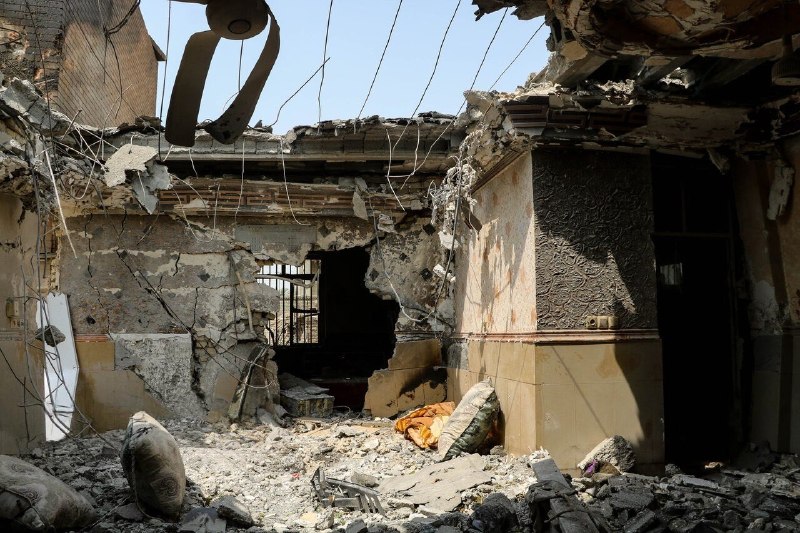
In the space of three minutes on the evening of 26 June 2026, three Iranian state-linked wires carried a single piece of US administration messaging and rendered it three slightly different ways. An American official, talking to The New York Times, told the paper that the day's strikes against targets inside Iran were neither the beginning of a war nor a resumption of large-scale military operations. The English-language account from Fars News went out at 21:44 UTC under the headline that the attacks "do not mean the start of war." The Persian-language Fars account, posted at the same timestamp, softened the line further: the attacks "do not mean the resumption of military operations." Mehr News, citing the Times directly, ran a third formulation: tonight's attacks are not a resumption of large-scale combat. Each version, in its own idiom, is a disclaimer dressed as a headline.
The semantic gap between "start of war," "resumption of military operations," and "resumption of large-scale military operations" is the story. It is the language of an administration that wants kinetic action on the record without the legal, budgetary and coalition consequences that the word "war" would carry. The strikes happened; the official quoted to The New York Times does not dispute the strikes. The dispute is over what the strikes are called.
What the three wires actually said
Reading the Fars and Mehr reports side by side, the pattern is consistent. Each credits The New York Times — not the Pentagon, not the White House, not US Central Command — as the venue of the unnamed American official's remarks. Each frames the official as interpreting the event downward, away from a categorical shift. The English Fars wire at 21:44 UTC used the strongest de-escalatory framing: attacks "do not mean the start of war." The Persian Fars wire at the same timestamp used a narrower one: the attacks "do not mean the resumption of military operations," without the "large-scale" qualifier. CNN, citing the same pool of reporting, added a second element not present in the Iranian wires: that Arab sources had reported standby orders at US bases in Bahrain and Kuwait. Fars carried that standby reporting; Mehr did not.
Three things follow. First, the originating source is one American official, on background, to one American newspaper. The whole edifice of "the US says this is not a war" rests on a single attributed remark. Second, the Iranian state press read that remark through its own calibrations, sharpening or softening it depending on which audience the wire is built for. Third, the standby reporting at the Gulf bases is doing the same kind of work in the opposite direction: it tells the same Iranian readership that the military posture on the ground is not consistent with the verbal posture in the briefing.
The narrow definition of war is not new
The US has, since at least the 1991 Gulf War, run a routine of striking Iranian assets, Iranian proxies, or both, while insisting that no hostilities exist in the legal sense that would trigger a new authorisation of force, a new appropriations debate, or a redefinition of the force posture. The 1988 Operation Praying Mantis — the last major US-Iran naval engagement — was described at the time as a measured response, not a war. The strikes that killed Qassem Soleimani in January 2020 were characterised as a defensive action against an imminent threat, not a war. The pattern is older than this administration. The novelty in the present case is that the disclaimer is being issued at the level of The New York Times in the same hour as the strikes themselves, in language that explicitly contemplates the "resumption" of large-scale combat — a phrasing that presumes the public understands that large-scale combat is the alternative being ruled out.
That phrasing is doing real work. "Resumption" implies that large-scale operations are an available option, a setting on a dial. The unnamed official is not denying that the United States is willing to escalate. The official is denying that the dial has been turned. This is a meaningful distinction for the Gulf states being asked to host US forces, for the European allies being asked to absorb any fallout, and for oil markets reading the Strait of Hormuz risk in real time.
The base posture says something different
The second-tier reporting in the Fars and CNN-aggregated pool — that US facilities in Bahrain and Kuwait have been placed on standby — is a counterweight that the wire packages themselves do not reconcile. A defence establishment that genuinely believed the strikes were a one-off would not, in the same news cycle, be reporting heightened alert posture at its forward Gulf bases. Bahrain hosts the headquarters of the US Navy's Fifth Fleet, the component that would carry any sustained maritime campaign against Iran. Kuwait hosts forward-deployed air and ground elements. A heightened alert at those installations is not a rhetorical event; it is a force-protection event with logistics, sortie generation and rules-of-engagement consequences.
The two readings are not necessarily incompatible. A limited strike followed by a heightened alert posture is exactly what a rational escalation-management posture looks like. But the administration's messaging is designed to make the limited-strike framing travel without the alert posture, and the Iranian state press, with its standby reports, is doing the opposite work: it is keeping the alert posture on the front page while the "not a war" line circulates in English. Each side is selecting the half of the signal that suits it. The reader who consumes only the Fars English wire will conclude that the United States has conducted a limited action and is walking it back; the reader who consumes only the alert-posture reporting will conclude that a larger operation is being staged. Both readers are working from the same underlying facts.
What the framing is built to do
The narrow definition of war, in this context, is not a semantic curiosity. It is a governing instrument. A strike that is not a "war" does not require a fresh authorisation of force from Congress. It does not trigger the existing war-powers clock the way a "hostilities" finding would. It does not automatically require allied consultation under NATO or bilateral defence pacts to the same degree. It permits the operation to be funded out of existing Department of Defense authorities rather than a supplemental appropriation. It also allows the administration to insulate the action from domestic political liability, because "war" carries a price in polling that a "response" or a "defensive action" does not.
This is the structural frame the wire reports sit inside. The Trump-era precedent of describing strikes against Syrian government positions as "targeted" and "proportional" rather than as acts of war established the template. The Biden administration's continuation of strikes against Iran-linked groups in Syria and Iraq under Title 10 authorities rather than Title 50 authorities narrowed the legal frame further. What the 26 June strikes suggest is a continuation of the same logic, applied with a level of Iranian-targeting that the prior decade's strikes generally did not reach. The legal frame has not changed. The target set has.
The cost of this arrangement, when it works, is that the United States retains the ability to conduct kinetic operations against a country it is not at war with, on the legal theory that the operations are not a war. The cost when it does not work — when an Iranian retaliatory strike, a miscalculated intercept, or a downed pilot escalates the situation — is that the administration has built no public framework for treating the result as anything other than an accident, and the allied framework for consultation was never engaged because the situation was never, formally, a war.
What remains uncertain
The sources at hand do not specify the target set inside Iran, the weapon system used, or the Iranian casualty count. The "American official" is unnamed in every wire; the New York Times attribution is the only chain of provenance, and it runs through a single background remark. CNN's standby reporting at the Gulf bases is itself sourced to "Arab sources" and has not been independently confirmed by the US Navy or the Pentagon in the materials reviewed here. Whether the heightened posture at Bahrain and Kuwait reflects a genuine alert or is the routine force-protection baseline for facilities of that class is a question the wire reports do not resolve.
What the sources do say, with consistency, is that the United States wants the 26 June action recorded as something narrower than war; that Iran wants the same action recorded as evidence that a larger operation is being staged; and that the Gulf allies, whose bases and airspace sit between the two readings, are positioned to absorb whichever of the two proves correct. The gap between those readings is the policy space the strikes are operating inside.
Desk note: Monexus read this story from Iranian state-press wires carrying a single unattributed US official's line to The New York Times, and from the Persian- and English-language Fars accounts that framed it for different audiences. We have foregrounded the contradiction in the messaging — the disclaimer that this is not a war, paired with the standby posture that suggests the option is on the table — because that is the most important fact in the available material. Where the wires diverge, we have shown both halves of the signal rather than picking one.
Wire provenance
This editorial synthesis draws on the following public wire/social posts:
- https://t.me/FarsNewsInt/38514
- https://t.me/farsna/41208
- https://t.me/mehrnews/92011
- https://en.wikipedia.org/wiki/Operation_Praying_Mantis
- https://en.wikipedia.org/wiki/2020_Baghdad_International_Airport_airstrike
- https://en.wikipedia.org/wiki/United_States_Fifth_Fleet
- https://en.wikipedia.org/wiki/Strait_of_Hormuz
- https://en.wikipedia.org/wiki/2024_Iranian_strikes_in_Iraq_and_Syria
Follow the event.
These dated source records provide context. They do not retrospectively verify this archive article.
Separate what the nuclear watchdog reported from what it could not determine after the June 2025 strikes.
- https://t.me/FarsNewsInt/38514
- https://t.me/farsna/41208
- https://t.me/mehrnews/92011
- https://en.wikipedia.org/wiki/Operation_Praying_Mantis
- https://en.wikipedia.org/wiki/2020_Baghdad_International_Airport_airstrike
- https://en.wikipedia.org/wiki/United_States_Fifth_Fleet
- https://en.wikipedia.org/wiki/Strait_of_Hormuz
- https://en.wikipedia.org/wiki/2024_Iranian_strikes_in_Iraq_and_Syria