U.S. Strikes Iranian Missile and Drone Sites in Retaliation for Strait of Hormuz Attack
U.S. Central Command says it struck Iranian missile and drone storage sites and coastal radar positions on 26 June, framing the action as a 'powerful response' to a one-way attack on a commercial vessel in the Strait of Hormuz.
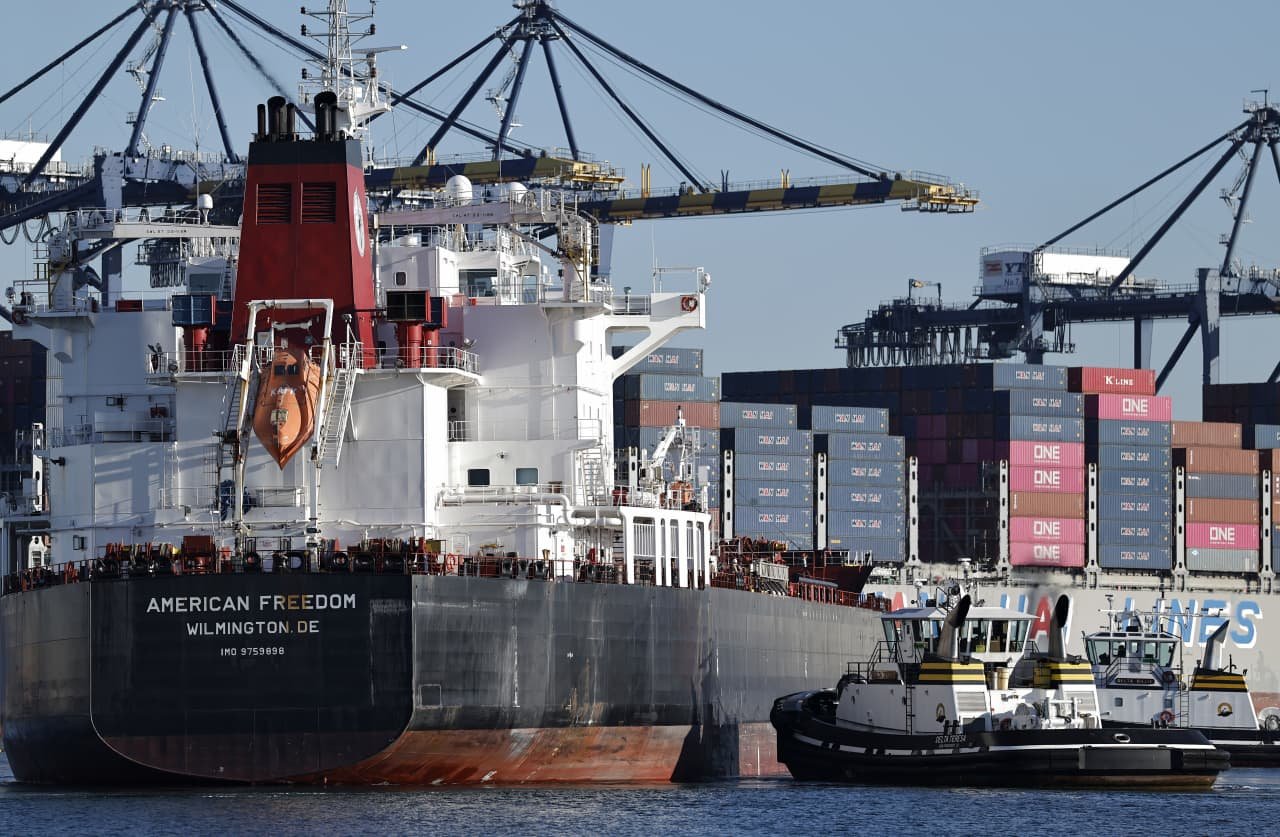
U.S. Central Command said on 26 June 2026 that American forces had conducted airstrikes against Iranian missile and drone storage sites and coastal radar positions, characterising the operation as a "powerful response" to what it described as a one-way attack on a commercial vessel in the Strait of Hormuz. The announcement, carried by CENTCOM-affiliated channels and relayed by multiple Telegram feeds between roughly 21:00 and 21:11 UTC, marked the most direct publicly acknowledged American military action against Iranian military infrastructure on the Persian Gulf coast since the current escalation cycle began. Reporting from the @wfwitness, @intelslava and @osintlive channels converged within minutes on the same core facts: naval air assets had hit Islamic Revolutionary Guard Corps positions in southern Iran, in a geography consistent with the Hormuz littoral. The strikes come against a backdrop of recurrent Iranian harassment of commercial shipping in the strait — a corridor through which roughly a fifth of the world's traded oil passes — and a year of low-grade tit-for-tat exchanges between Tehran and Washington that have repeatedly threatened to break into open conflict.
What CENTCOM said, and what it didn't
CENTCOM's own framing, as carried by @wfwitness at 21:11 UTC on 26 June, described the package of strikes as a response to a specific Iranian "one-way attack" — a category that, in CENTCOM usage, normally refers to a one-way unmanned aerial vehicle (a loitering munition or kamikaze drone) — against a commercial vessel transiting the strait. The command did not, in the messages reviewed, name the vessel, its flag, its owner or its cargo; nor did it specify the number of weapons used, the platforms involved, or the precise coordinates of the storage sites and radar positions struck. That opacity is consistent with CENTCOM's standard practice of withholding tactical detail in the first hours after a strike to allow battle-damage assessment to mature, but it leaves significant gaps that independent reporting will need to fill.
The @osintlive feed at 21:00 UTC added that U.S. naval air forces had struck IRGC military positions in southern Iran "near the Strait of Hormuz," reinforcing the geographic frame. The @intelslava feed at 21:06 UTC reported an explosion in Taheruyeh, in the Sirik district of Hormozgan province — a stretch of coast that hosts a mix of IRGC naval facilities, missile storage sites and coastal radar arrays — citing IRIB News, Iran's state broadcaster, as the source of the local report. IRIB is not an independent outlet and the reference serves principally to confirm that the strikes registered on Iranian soil and were quickly acknowledged inside Iran.
The strategic context: a corridor under strain
The Strait of Hormuz is the world's most consequential oil chokepoint. The U.S. Energy Information Administration has long estimated that roughly 20 percent of globally traded crude passes through it, alongside substantial volumes of liquefied natural gas from Qatar. Iran does not need to close the strait to weaponise it: harassment of individual tankers, the seizure of commercial vessels, and the deployment of coastal anti-ship missiles and drones are sufficient to raise insurance premia, force routing changes, and impose political cost on Gulf shipping states. A U.S. strike on the very infrastructure that underwrites that coercive capability — missile and drone storage, coastal radar — is therefore best read not as a punitive gesture but as a counter-architecture strike. The implicit logic is that degrading the launch and targeting complex raises the cost of the next Iranian move, even if it does not eliminate the underlying capability.
That logic carries its own risks. Iran retains a deep bench of mobile launchers, dispersed storage, and merchant-militia proxies across the Gulf. A focused strike on a finite set of fixed sites invites Iran to rebalance toward survivable assets and to retaliate through asymmetric channels — cyber, proxy, or hybrid maritime — where attribution is harder and escalation ladders are less legible.
The Iranian counter-frame
Iranian state-aligned messaging, as filtered through IRIB News reporting cited by @intelslava, has so far confined itself to acknowledging the explosion in Taheruyeh and labelling the source "unconfirmed." That is a familiar first-hours posture: concede the event, contest the framing, avoid providing a target list. Tehran's longer-running line, familiar from prior cycles, is that Iran's missile and drone programme is defensive, that Gulf shipping security is a shared responsibility, and that any U.S. strike on Iranian soil is itself the provocation. Whether that framing holds in the current cycle will depend in part on what Iran concludes about the political coalition inside Washington that authorised the operation — a determination that takes days, not hours, to settle.
What remains uncertain
Several material questions are unresolved as of this writing. The sources reviewed do not specify the identity of the commercial vessel reportedly targeted in the precipitating drone strike, the damage assessment at the Iranian sites, or whether Iranian forces have conducted any retaliatory action in the hours since. The Iranian casualty count, if any, is not reported in the available feeds. The diplomatic track — whether Gulf states, Iraq, Oman, or Qatar were notified in advance, and whether back-channels to Tehran are active — is not visible in open sources. And the political authorisation chain inside Washington — White House sign-off, congressional notification, any allied coordination — has not been disclosed. These are the gaps that will determine whether 26 June 2026 is remembered as a discrete punitive action or the opening move of a broader campaign.
Monexus framed this as a counter-architecture strike against the infrastructure of maritime coercion, not as a generic punitive raid — the difference matters for how the next 72 hours are read.
Wire provenance
This editorial synthesis draws on the following public wire/social posts:
- https://t.me/wfwitness
- https://t.me/intelslava
- https://t.me/osintlive
Follow the event.
These dated source records provide context. They do not retrospectively verify this archive article.
Separate what the nuclear watchdog reported from what it could not determine after the June 2025 strikes.