Venezuela's earthquake and the missing: a slow disaster inside a faster one
Days after back-to-back tremors near the Colombian border, Venezuelan families are posting photographs of relatives online. The official casualty math has not caught up with the personal one.
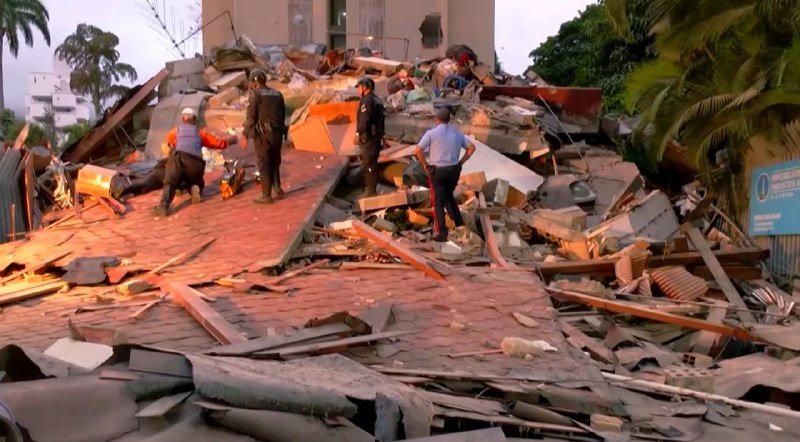
Another tremor rolled across northern Venezuela late on Thursday evening. Reuters reported a 4.9-magnitude event felt across the country, days after a larger sequence of quakes struck near the Colombian border, with a 5.4-magnitude shock confirmed by multiple seismic monitoring accounts on Telegram at 2026-06-26T22:34 and again at 2026-06-26T23:06 UTC. Within hours, families across Venezuela were sharing details about missing loved ones on social platforms, the digital equivalent of pinning a photograph to a tree in the town square. According to Al Jazeera's breaking-news wire at 2026-06-26T22:44 UTC, more than 50,000 people remain missing in Venezuela.
That figure is the kind of number that resists comprehension until you slow down and read it twice. It is larger than the population of many mid-sized Latin American cities. It is also a number that almost certainly does not describe a single event. It describes the cumulative weight of years — of displacement, of economic collapse, of families pulled apart by migration and crisis — on top of which an earthquake sequence is now being layered. The tremor is the breaking news. The missing are the longer story.
The tremor itself
The technical picture is straightforward enough. A 5.4-magnitude earthquake struck northern Venezuela on the evening of 26 June 2026, confirmed by seismic observers reporting on Telegram channels tracking regional seismicity. A second, 4.9-magnitude event followed within hours, reported by Reuters as having been felt across the country, days after what the same wire described as "major earthquakes" in the same region. Both readings are consistent with activity along the complex fault systems running through the country's northern coast and border zones with Colombia. None of the source material available to Monexus specifies a precise epicentre, depth, or extent of damage at the time of writing.
The missing, and what their families are doing
The more revealing reporting sits beneath the seismology. Al Jazeera's wire on the evening of 26 June described desperate families searching for missing loved ones, sharing details online as the official count of unaccounted-for people climbed past 50,000. The platforms doing this work are not Venezuelan state media. They are personal WhatsApp chains, Instagram accounts, family Facebook groups, and increasingly Telegram channels — a vernacular missing-persons infrastructure built outside any government framework.
This is the part of the story Western wire reporting routinely flattens. An earthquake gets a magnitude, a depth, and a casualty figure. A migration crisis gets a flow chart and a politics. What a country in protracted crisis actually experiences is the two happening at the same time: a seismic event that displaces people who were already displaced, knocks down structures inside an economy that was already short on functioning ones, and forces relatives to perform triage over mobile networks that may or may not stay up.
Why the framing matters
Coverage of Venezuelan disasters tends to bifurcate along predictable lines. One strand emphasises the political emergency — sanctions, contested elections, the long standoff between Caracas and Washington. Another emphasises humanitarian emergency — food insecurity, health system collapse, internal displacement. The two are usually reported as if they were separate stories.
They are not. A 5.4-magnitude earthquake in northern Venezuela does not strike a normal country. It strikes a country where families have already learned to share photographs of relatives on messaging apps because the institutional channels have been overwhelmed, eroded, or politicised for years. The seismology is the same in Caracas as it would be in Santiago or Bogotá. The absorptive capacity underneath it is not.
There is also a question of whose voices get cited. Western wires will, in the coming days, lean heavily on Caracas government statements, opposition figures, and Colombian border officials. Venezuelan civil society — the neighbourhood associations, the diaspora family networks, the parish-level volunteers — tends to appear as colour rather than as a primary source. That is a structural choice, not a journalistic necessity. The people sharing details about their missing loved ones online are not bystanders to the story. They are the story.
What remains uncertain
The source material available to Monexus at publication does not specify the precise location, depth, or damage footprint of the 26 June sequence. It does not give a confirmed death toll attributable to the recent tremors as distinct from the longer-running missing-persons figure. It does not say how many of the 50,000-plus missing are directly tied to earthquake displacement versus prior economic and political migration. Reporting that conflates those numbers — or that treats the seismic event as a standalone catastrophe without the cumulative context — will mislead readers in opposite directions.
The honest framing is the more uncomfortable one. Venezuela is not experiencing an earthquake. It is experiencing an earthquake inside a slower disaster, and the families searching for missing loved ones on their phones at midnight are the people most qualified to say so.
Monexus framed this story as the intersection of a seismic event with a protracted humanitarian emergency, rather than as either a pure disaster report or a politics-of-sanctions piece. The 50,000-missing figure from Al Jazeera is treated as cumulative context, not as a tremor-specific count.
Wire provenance
This editorial synthesis draws on the following public wire/social posts:
- http://reut.rs/4xNU8xW
- https://t.me/wfwitness
- https://t.me/rnintel