Venezuela's twin quakes expose a familiar fault line: who funds the recovery
A 7.2 and a 7.5 magnitude quake killed at least 235 people in northern Venezuela. The political argument over who gets to help is already underway.
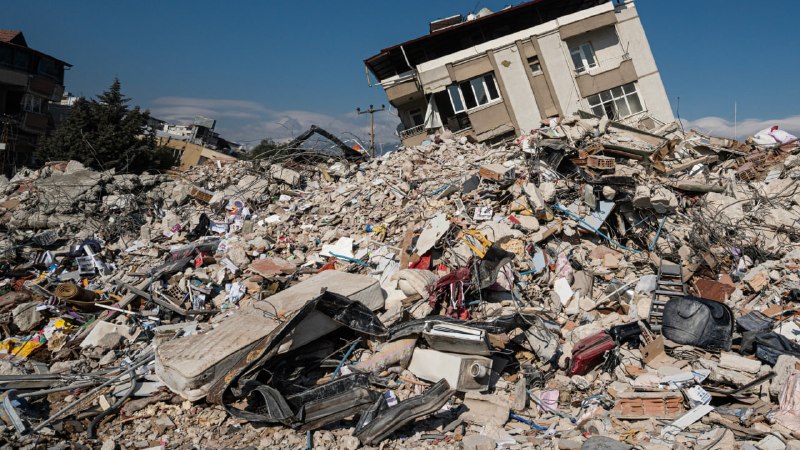
Two earthquakes struck northern Venezuela in quick succession on 25 June 2026, registering 7.2 and 7.5 in magnitude. By the early hours of 26 June, Venezuela's Ministry of Health had revised the death toll to 235, with the figure expected to climb as search teams reach cut-off communities along the Caribbean coast. The initial picture is one of a country whose infrastructure was already under strain absorbing two major shocks within hours of each other — a worst-case configuration for any state, let alone one whose public finances have been under external pressure for the better part of a decade.
The human toll is the headline. The political argument is already the subhead. Within hours of the first tremor, a familiar dispute had begun: which governments and which institutions are positioned to send help, which are willing to accept it, and what the answer to both questions says about the wider architecture of disaster finance. Disaster response rarely lives outside geopolitics. In Caracas's case, it has not for years.
The immediate picture
The two events — a 7.2 followed hours later by a 7.5, both in the north of the country — produced casualties that the Health Ministry placed at 235 as of 02:11 UTC on 26 June, citing the latest available statistics. The toll is concentrated in northern provinces near the coast, where older masonry construction and informal hillside settlements are most exposed to ground acceleration. Venezuelan state media have carried the Ministry's figures; OSINT aggregators monitoring the country's open channels have relayed them in turn. The pattern of casualty reporting — initial numbers that revise upward over forty-eight hours as rural districts are reached — is consistent with how seismic events of this size have played out in similarly-built environments elsewhere in the region.
What is not yet visible is the full damage inventory: housing stock destroyed, hospitals non-functional, road and bridge loss that determines how quickly aid can move. That ledger will take days to compile and weeks to translate into a reconstruction ask. The early operational question is whether the international assistance system — UN agencies, the Inter-American system, regional partners — can move on a timeline that matches the acute phase.
The sanctions prism
Coverage in Washington and several European capitals will, predictably, frame the disaster through the lens of US secondary sanctions on Venezuelan oil and the country's broader financial isolation. The argument runs that Caracas's reduced fiscal capacity — oil export revenues compressed by licensing arrangements and by the choice of buyers left willing to operate under restrictive terms — has hollowed out the state's disaster preparedness. There is real evidence behind that read: the country's hospitals, water systems, and emergency services have visibly degraded over the past decade, and no honest analysis can claim otherwise.
But the counter-frame deserves equal airtime. The same sanctions architecture that constrains Caracas's public spending also constrains how quickly foreign governments, NGOs, and multilateral banks can deploy assistance without themselves running into compliance questions. Venezuelan state-aligned outlets have already begun making this case, arguing that external pressure narrows the humanitarian channel at exactly the moment it should widen. The structural point — that coercive economic measures interact with disaster response in ways their authors rarely model — is well-documented across other sanctioned jurisdictions and applies symmetrically here. A serious disaster response operation in 2026 cannot be planned on the assumption that the financial plumbing operates as it does for, say, a Turkish earthquake response.
What competent coverage looks like
Western wire reporting will default to Venezuelan-government sourcing with the usual caveats, and that is reasonable. The Health Ministry's figures are the only authoritative ones available. But it should also reach for two things routinely missing in the first twenty-four hours of coverage: corroborating humanitarian field presence — UN OCHA situation reports, PAHO/WHO regional advisories, Red Cross movement figures — and a baseline structural statistic, however rough, on the housing and infrastructure stock exposed. The story is not whether the death toll rises from 235; it almost certainly will. The story is what the rebuilt northern coast looks like in eighteen months and who is paying for it.
The second omission to watch for is the global-south solidarity track. Caracas's diplomatic partners across Latin America and the Caribbean have begun mobilising, and their logistics — air-bridge capacity, field hospitals, electrical-grid recovery teams — often arrive faster than any other option. Cuban medical teams in particular have a documented record of mobilising within seventy-two hours for Caribbean seismic events; whether that pattern holds here is a concrete factual question worth pressing, not a symbolic one.
What this publication will watch
Three things determine whether the next ninety days go well or badly. First, whether the US Treasury — and to a lesser extent OFAC-equivalent desks in other jurisdictions — issues clear general licences covering humanitarian transactions with Venezuelan counterparts, on a timeline measured in days rather than weeks. Second, whether OPEC-plus buyers of Venezuelan crude maintain or expand flows during the recovery period, given that oil revenue is the state's only large discretionary lever. Third, whether the reconstruction financing conversation that follows the search-and-rescue phase opens up beyond bilateral politics to include regional development banks and climate-adaptation facilities — both of which exist precisely for disasters layered on top of structural fragility.
The sources do not yet resolve how the recovery will be financed, nor which of these three tracks will move first. What they do confirm is the scale: 235 dead as of 02:11 UTC on 26 June, with both the magnitude profile of the event and the structural condition of the country pointing toward a long tail. The argument about whether sanctions helped cause this, or simply failed to prevent it, will run in parallel with the recovery itself. Competent coverage holds both threads at once.
How Monexus framed this: the wire headlines will be a body count. We are tracking the body count as the floor of the story, not the ceiling — the question that matters for readers is who funds the rebuild and on what terms.
Wire provenance
This editorial synthesis draws on the following public wire/social posts:
- https://t.me/tasnimnews_en
- https://t.me/FarsNewsInt
- https://t.me/osintlive