White House asks OpenAI to stagger GPT-5.6 release as IPO timing slips
The Trump administration has asked OpenAI to slow the rollout of its next model and approve access "customer by customer," while the company weighs pushing its public offering into 2027.
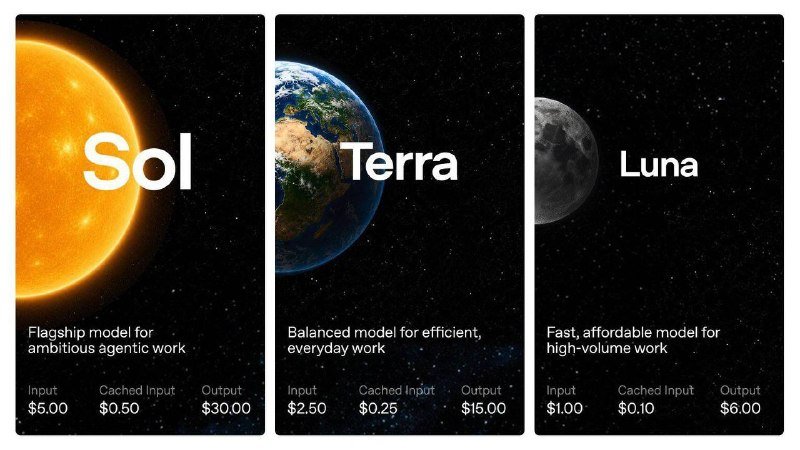
The Trump administration has asked OpenAI to stagger the rollout of its next frontier model, GPT-5.6, and to approve access "customer by customer" during a preview window, according to posts by prediction-market operator Polymarket on the evening of 25 June 2026 UTC, citing initial reporting on the request. The intervention — described in those posts as driven by national-security concerns — adds a second front of political friction to a year in which the company has also been weighing when, and how, to come to market.
The news, if confirmed in detail by OpenAI and the White House, would mark a notable shift in the relationship between the leading US AI lab and the federal government: not a ban, not a subpoena, but a coordinated slowdown. It also lands on top of a separate report that OpenAI is leaning toward pushing its initial public offering into 2027, a delay that pushed the company's odds of going public this year to 29% on Polymarket as of 25 June 2026.
What was asked, and by whom
The earliest circulating account of the request comes from a Polymarket alert posted at 20:54 UTC on 25 June 2026, which said the Trump administration had "reportedly asked OpenAI to stagger the release of GPT-5.6 over security concerns." A follow-up post at 21:12 UTC added a procedural detail: during the preview period, OpenAI would be required to approve access "customer by customer." An hour later, at 22:21 UTC, Polymarket posted that the company's odds to IPO this year had dropped to 29% on reports it may hold off for a less "choppy" market. A subsequent Unusual Whales post at 00:14 UTC on 26 June framed the move as the Trump administration "asking OpenAI to limit next model release over security concerns."
The mechanics, as described in those posts, are unusual. US frontier-model labs have previously negotiated voluntary safety commitments with the Commerce Department and with foreign regulators — most prominently the EU AI Act's general-purpose AI obligations — but those arrangements have typically covered evaluation, red-teaming, and disclosure. The arrangement sketched here is narrower and more operational: a curated, partner-by-partner preview, with the executive branch signalling a preference for pacing the public release rather than letting OpenAI ship on its own commercial timetable.
The IPO clock
The second story running underneath the model-delay report is a corporate-finance story. OpenAI is "leaning toward" holding off its IPO until next year, according to a New York Times report referenced by an Unusual Whales post at 23:24 UTC on 25 June 2026. Polymarket's contract on the question repriced sharply on the news: 29% probability of a 2026 listing, down from a level that was, until the past week, treating a 2026 debut as the base case.
The two threads feed each other. A staggered GPT-5.6 release narrows the window in which OpenAI can demonstrate the kind of revenue acceleration that late-stage IPO buyers tend to demand. A delayed IPO, in turn, reduces the political cost of a slower model rollout: the company does not need a Q3 or Q4 splash moment to satisfy public-market expectations. The pattern is consistent with a firm trading near-term valuation optics for regulatory breathing room.
TechCrunch's own write-up of the delay, posted at 23:34 UTC on 25 June, characterised the arrangement as OpenAI "sharing its newest model, GPT 5.6, with a select group of partners instead of to the broader public" at the administration's request, and treated the move as the leading AI lab acceding to a White House preference rather than being compelled by formal rule-making. That distinction matters: a request from the executive branch is not the same as a binding order, and the legal posture — voluntary compliance versus compelled delay — will determine how durable the arrangement is across administrations.
Why a slowdown, and on whose terms
The "national security" framing in the Polymarket and Unusual Whales posts is consistent with a now-familiar set of Washington concerns about frontier models: cyber-offensive capability, bioweapon design uplift, and the export of weights and architectures to strategic competitors. None of the source items specify which of those vectors the administration is most worried about in the case of GPT-5.6, and OpenAI has not, in the materials available here, published a technical justification for the staggered schedule. That gap is itself the story: the underlying rationale is being treated as executive-branch prerogative rather than as a matter for public comment.
There is a plausible counter-read. The White House may be acting less from a coherent AI-security doctrine than from a tactical preference for keeping the most capable US model in the hands of named American partners during a period in which Chinese labs — including those aligned with the Ministry of Industry and Information Technology's preferred compute build-out — are releasing competitive systems on overlapping timelines. Under that reading, "national security" is the framing, but the operative concern is competitive posture: a US government that wants a frontier model available to its defence and intelligence customers before it is broadly available to anyone else.
A third reading, harder to test from the source items alone, is that the administration is buying time while it tries to install a more durable export-control and compute-governance regime — the kind of rule that was sketched in the Biden-era AI diffusion rule and partially unwound under the Trump administration's 2025 review. If so, the GPT-5.6 delay is interim policy by informal pressure, not a substitute for a formal framework.
Stakes and what to watch
For OpenAI, the immediate stakes are commercial and reputational. A staggered release constrains the company's ability to convert developer mindshare into API revenue at the moment when enterprise buyers are signing multi-year contracts. It also cedes narrative ground to Anthropic, Google DeepMind, and the open-weights community, all of which can market their own releases as "unencumbered" by political friction. The IPO delay, separately, lets the company wait out a market environment in which large-model software multiples have been repriced downward by investors trying to square generative-AI revenue curves against mounting compute and capital costs.
For the administration, the political upside is short and concentrated: it can claim credit for restraint if GPT-5.6 turns out to have been genuinely dangerous, and the cost of getting it wrong — a slower American frontier rollout while Chinese and open-source models advance — is dispersed and easy to disclaim. That asymmetry of incentives is the structural reason informal pacing requests keep recurring: they impose the cost on the lab, and collect the political benefit on the executive side.
The watch items over the coming weeks are concrete. First, whether OpenAI publishes any description of the security concerns that triggered the request, or whether the rationale stays classified or undisclosed. Second, which partners receive preview access under the "customer by customer" arrangement — defence integrators, hyperscalers, a small set of named enterprises. Third, whether the IPO delay is a single quarter's slip or a more durable reset of the listing timetable. And fourth, whether the same arrangement is offered, voluntarily or otherwise, to other US frontier labs, or whether OpenAI alone carries the staggered-release burden.
What remains genuinely uncertain, as of 26 June 2026, is whether the request has been confirmed by OpenAI and the White House in their own words. The reporting chain so far runs through prediction-market alerts and an investor-news account citing the New York Times; the primary statements, when they arrive, will sharpen — or complicate — the picture sketched here.
Desk note: Monexus framed this story around the policy ask and its procedural shape rather than around model-capability speculation. Where prediction-market data was the earliest public signal of the request, we have said so and let the Polymarket and Unusual Whales alerts carry that provenance, while treating the TechCrunch write-up as the most developed wire confirmation available.
Wire provenance
This editorial synthesis draws on the following public wire/social posts:
- https://x.com/Polymarket/status/
- https://x.com/Polymarket/status/
- https://x.com/Polymarket/status/
- https://x.com/unusual_whales/status/
- https://x.com/unusual_whales/status/