Annecy 2026 pushes animation into its platform era
The world's biggest animation festival wrapped a week of deal-making that signalled a deeper shift: the animation business is being reorganised around platform economics, IP libraries, and offshore production, with creative ambition riding alongside.
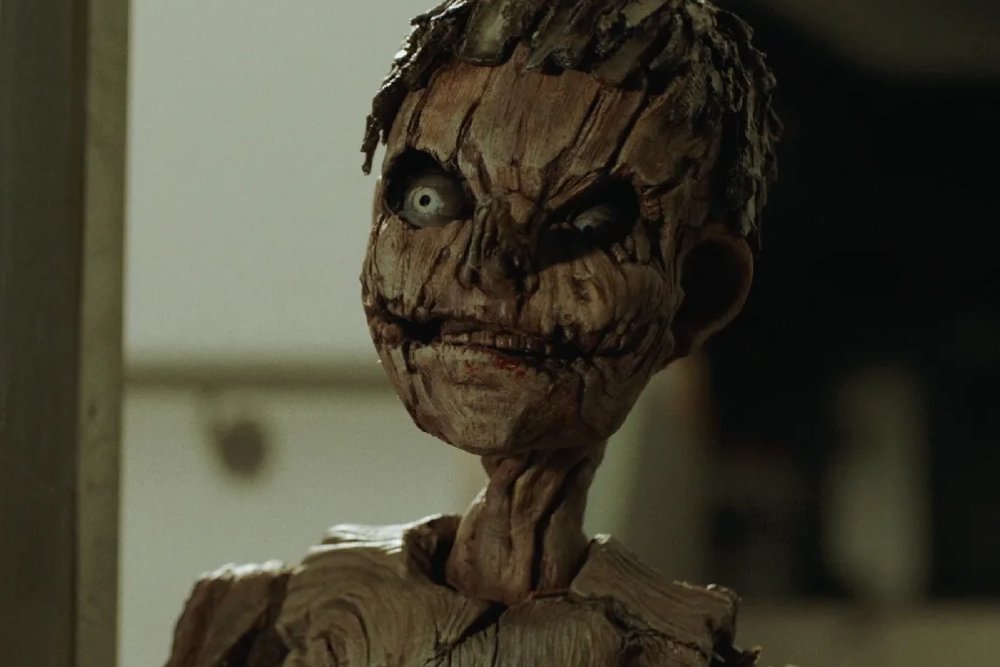
Annecy 2026 closed its doors on 21 June after a week that traded the festival's usual air of auteurist mystique for something closer to an industry trade show. IndieWire's rolling coverage catalogued a slate of announcements spanning feature greenlights, series pickups, and franchise extensions — including, by the trade's account, a Joker-themed anime project and a Donkey origin-story offshoot — that read less like a curated competition and more like a stock-taking of where the global animation business now sits.
The headline takeaway is structural. Animation has spent a decade being absorbed into the same logic that already governs scripted television, prestige cinema, and live-action tentpoles: ownership of library IP, control of distribution windows, and the cost arbitrage of producing overseas. Annecy used to be the festival that showcased work in defiance of that logic. In 2026, it showcased work that had already been folded into it.
A festival recast as a deal floor
For most of its history the Festival International du Film d'Animation d'Annecy has functioned as a curated showcase — competition screenings, retrospectives, and a market whose deal volume was secondary to its critical reputation. The 2026 edition, as IndieWire's daily reporting emphasised, blurred that line. Studio announcements on the Annecy stage sat alongside acquisition news on the floor of Mifa, the festival's industry market, and the press cycle ran continuously across the week rather than clustering around a closing-weekend awards narrative.
That shift mirrors what has happened in live-action independent film over the past five years, where Sundance and Berlin increasingly function as launchpads for streaming-platform slates rather than as autonomous tastemaker institutions. Animation, long a more protected niche, has now joined that pattern. The buyers at Annecy in 2026 were not primarily arthouse distributors; they were platform executives shopping IP that could feed multi-year content pipelines.
The franchise machine reaches the form
The most consequential announcements, in trade-press terms, were the franchise-adjacent ones. The reported Joker anime and the Donkey origin-story project both fit the same template: take an existing, library-protected property from a parent studio's live-action or hybrid slate, and adapt it into a form — anime stylisation, family-friendly spin-off — that opens new merchandising and demographic territory without cannibalising the original release cadence.
This is not new behaviour for major studios; it is, however, new at the scale animation is now seeing it. The economics work because anime production in particular has a structural cost advantage in certain jurisdictions, and because the form carries a built-in global fanbase that reduces the marketing burden for new entrants. The reported Donkey project in particular signals that family-animation extensions are being treated less as standalone creative bets and more as portfolio diversification — a way to keep a dormant intellectual property generating revenue between tentpole releases.
Where the work is actually made
The less-discussed half of the Annecy conversation is labour geography. Major Western animation has been outsourcing production to studios in Korea, the Philippines, India, and increasingly Vietnam for two decades. The 2026 edition surfaced continuing tension over what that means for the auteurist tradition Annecy was built to celebrate. Several European delegations used festival panels to press for stronger local production incentives, framing the issue as cultural sovereignty; American and Japanese studio representatives, where they engaged the question at all, argued that global production pipelines are what make mid-budget animation economically possible at all.
Both framings have merit. The Korean animation industry, by any honest accounting, has built world-class technical capacity in the past fifteen years and now occupies a structurally important position in the global pipeline. That is a development story worth reporting on its own terms, not solely as a cost line for Western studios. At the same time, the European argument that flagship cultural industries require domestic production infrastructure is a serious policy claim with serious policy costs, and one that public broadcasters across the continent are now being asked to underwrite.
What it adds up to
Annecy in 2026 read as an inflection point, not an aberration. The festival's prestige branding still commands attention — its competition winners carry genuine career consequences for independent animators — but the commercial gravity of the event has shifted decisively toward platform buyers and IP holders. Independent shorts now compete for the same week of coverage that studio franchise announcements command, and the latter tend to win the column inches.
The structural frame here is familiar from film, music, and publishing: a creative form with a strong independent tradition gets absorbed into the catalogue economics of a handful of distribution giants, and the festival infrastructure that once mediated between the two gradually reorients itself toward the larger gravity well. Animation's version of this has been slower than live-action's, partly because the production costs are higher and the talent pools more concentrated. It is no longer slower.
The contestable question is whether auteurist animation can survive inside the new geometry, or whether it will increasingly be relegated to the festival's competition strand while the commercial machine runs on the stage. The 2026 edition did not answer that. It did, however, make it harder to avoid.
Monexus covered Annecy 2026 through IndieWire's trade dispatch rather than on-the-ground reporting; the structural read here is editorial, drawn from the festival's announcement slate as catalogued in industry coverage.
Wire provenance
This editorial synthesis draws on the following public wire/social posts:
- https://en.wikipedia.org/wiki/Annecy_International_Animated_Film_Festival
- https://en.wikipedia.org/wiki/Mifa_(market)
- https://en.wikipedia.org/wiki/Animation_of_Korea