Binance's European exit and a Venezuelan earthquake: the geopolitical footprint of a stateless exchange
In a single week, Binance pulled out of the EU after failing to secure a MiCA licence and wrote a $3 million cheque for Venezuelan earthquake relief — a reminder that the world's largest exchange now operates somewhere between diplomatic actor and regulator-proof wildcard.
On 26 June 2026, the world's largest cryptocurrency exchange confirmed it would stop serving European Union customers after failing to secure a Markets in Crypto-Assets (MiCA) licence on time, and Madrid publicly rejected any deadline extension for unlicensed crypto firms operating in Spain. Forty-eight hours earlier, the same firm had announced a $3 million donation to support victims of an earthquake in Venezuela. Two stories, two continents, one company — and a useful lens on what a stateless crypto exchange looks like once regulation, humanitarian optics and geopolitics collide.
The pattern is straightforward in its outline and awkward in its implications. An exchange that cannot or will not comply with the EU's new comprehensive crypto regime has, in the same week, written a cheque for disaster relief in a country that the United States has spent years isolating financially. The juxtaposition is not coincidence. It is the shape of an industry whose biggest player now operates as something closer to a sovereign-adjacent actor than to a normal financial intermediary — and whose choices about where to comply, where to exit, and where to write cheques are quietly redrawing the boundaries of who counts as a credible international actor.
The MiCA wall, and what it actually means
MiCA, the EU's unified crypto regulatory framework, came into full effect in 2024 and gives member-state regulators authority over crypto-asset service providers operating across the bloc. Compliance requires licences, capital buffers, governance disclosures and operational resilience — none of which can be improvised at the last minute. On 26 June, CryptoBriefing reported that Binance would stop serving EU clients after failing to obtain a MiCA licence, and that Spain had rejected calls for deadline extensions for unlicensed crypto firms.
The decision tells you something important about MiCA's bite. The regulation was designed, in part, precisely to prevent the kind of regulatory arbitrage that allowed Binance to operate across dozens of jurisdictions under a patchwork of light-touch registrations. Madrid's refusal to grant extensions is the sharper signal: member states are not going to soften the deadline for a firm that built its global footprint on jurisdictional improvisation.
Venezuela, and the soft-power cheque
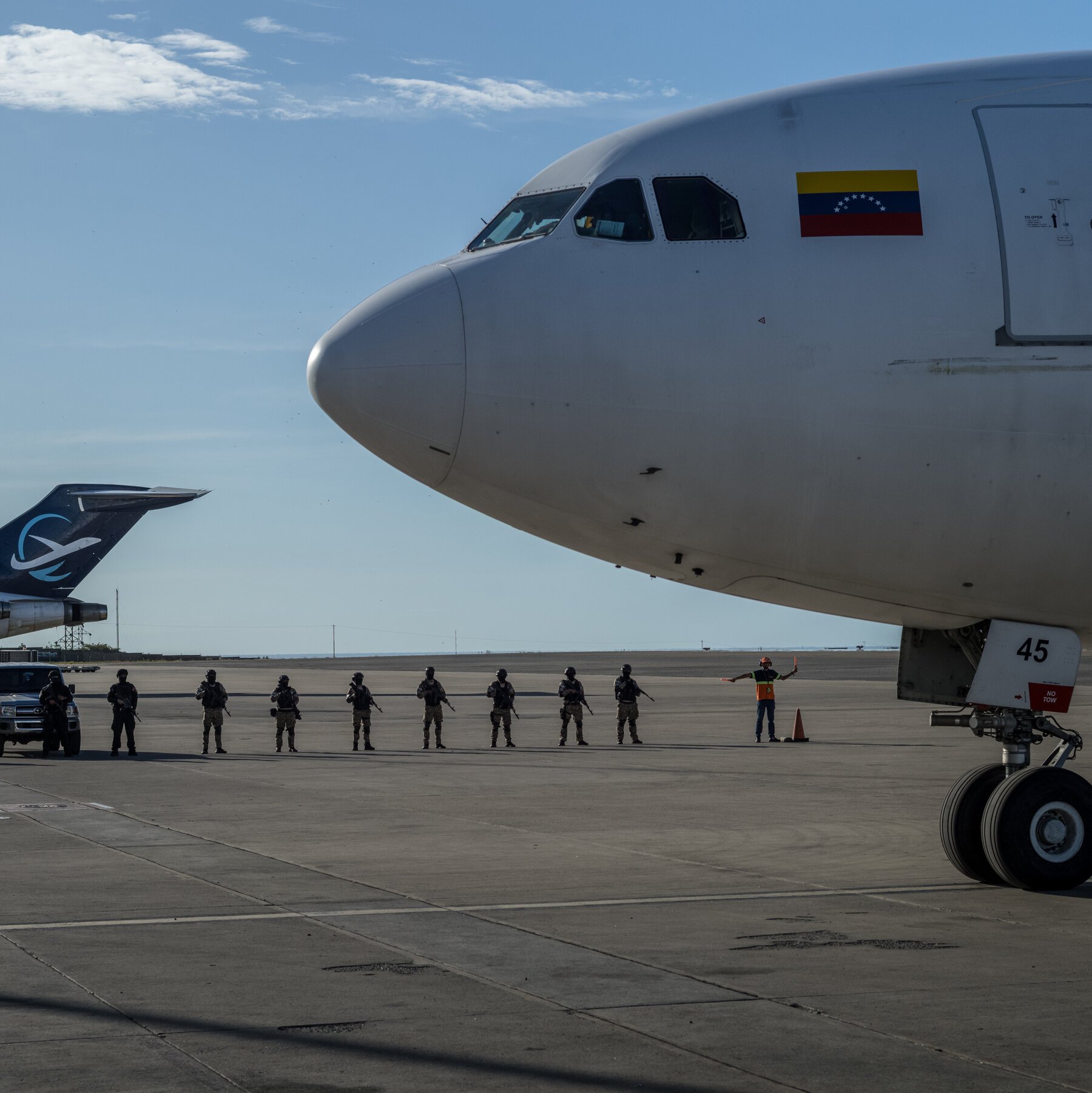
Two days before the European announcement, on 26 June 2026, Binance publicly committed $3 million to support Venezuelan earthquake victims. The disaster-relief framing is uncomplicated on its surface — natural catastrophe, corporate philanthropy. But the politics underneath are not.
Venezuela has been under heavy US sanctions architecture for years, with secondary sanctions enforcement making dollar-clearing and conventional banking channels difficult for humanitarian actors. A crypto-denominated or stablecoin-routed donation has practical advantages: it can land faster than a wire through a correspondent bank that has been told to be careful, and it does not require a sanctions-licensing opinion letter. Binance has been among the firms most willing to operate in jurisdictions Western banks will not touch. That has been the source of repeated regulatory trouble for the company — but it is also the source of its usefulness to actors and populations outside the Western financial perimeter.
Why a staff writer should care
What we are watching is the emergence of a new kind of corporate actor: one whose regulatory exposure in rich jurisdictions and whose operational footprint in poor or sanctioned ones give it a structural incentive to behave, in public, like a humanitarian and a compliant partner simultaneously. Neither description is false. Neither is the whole story. The same balance sheet that writes a $3 million earthquake cheque cannot bring itself to file the disclosures MiCA requires, and has chosen to walk away from the EU rather than comply. That is a coherent commercial choice. It is not a neutral one.
For EU policymakers, the question is whether MiCA's first big test — an exchange too big to ignore simply walking — will be read as a victory for the regulation or as proof that the regulation is good at repelling firms it should be taming. For US Treasury and OFAC, the Venezuela cheque raises an older question: when does corporate humanitarian activity in sanctioned jurisdictions function as quiet normalisation, and when does it function as a sanctions-evasion channel for ordinary citizens who need aid? Both readings have evidence behind them.
The stakes
The longer the picture extends, the more clearly the firm — and its peers — sit at the hinge between two financial systems. In one, compliance with MiCA-style frameworks is the price of admission and the cost of trust. In the other, speed of disbursement and willingness to operate under Western disfavour is the price of relevance to populations the formal system underserves. Binance has, this week, demonstrated that it can be disciplined out of the first and indispensable to the second. Whether those two roles can coexist inside a single corporate structure is the open question. The next major disaster, the next round of MiCA enforcement, and the next sanctions package will each provide a partial answer.
This article was framed by Monexus as a single thesis on regulatory and humanitarian asymmetry, rather than two unrelated wire items, because the actor and the week connect them.
Wire provenance
This editorial synthesis draws on the following public wire/social posts:
- https://t.me/CryptoBriefing
