China doubles down on critical metals and Iranian crude as US pressure mounts on two fronts
Chinese customs data show critical-metal imports up 60% year on year, while a temporary US waiver on Iranian oil reshuffles the buyers' map for Beijing's independent refiners.
China's customs administration reported on 26 June 2026 that imports of critical metals — the inputs behind magnets, semiconductors, batteries, jet engines and most modern defence systems — have risen roughly 60% year on year, even as export volumes from the same upstream suppliers have stayed flat or fallen. The number, circulated by Nikkei Asia, is the clearest data point yet that Beijing is not waiting for prices or geopolitics to settle before locking in physical tonnage.
The pattern is not a market reflex. It is a procurement programme: while mines abroad produce as much as ever, China is the one buying the marginal barrel of concentrate, the marginal tonne of rare-earth oxide, the marginal drum of high-purity gallium. The strategic intent is to convert global dependence on its midstream processing into a structural advantage, and to do it before any future export regime gives the rest of the world a reason to build competing refineries at speed.
What the customs data actually show
The Nikkei reading of the trade flow is blunt: imports of selected critical metals are running about 60% higher than the same period a year earlier, while China's own exports of processed critical materials have held steady or slipped. That asymmetry — buying more, shipping less — is the operational signature of a stockpile build, not of a cyclical inventory adjustment by individual smelters.
Two implications follow. First, the price signal is being deliberately absorbed. Spot quotes for some rare earths and battery-grade lithium compounds have softened through 2025 and into 2026 despite the buying, which suggests the state is willing to pay above-market premia to keep the flow moving. Second, the constraint is no longer upstream supply. Mines in Africa, Latin America, Australia and Southeast Asia are producing; what is scarce is the willingness of those producers' customers outside China to take delivery, and the willingness of mid-stream processors outside China to refine it. China is the residual buyer of last resort, and it is behaving like one.
The Iranian oil wrinkle
Two hours earlier in the wire, Nikkei's second piece landed the other half of the story: a temporary US waiver of sanctions on Iranian crude, framed by the Trump administration as a narrow concession, is reshaping the buyers' map for Chinese independent refiners — the Shandong "teapot" operators that for the past decade have been Iran's most reliable off-taker.
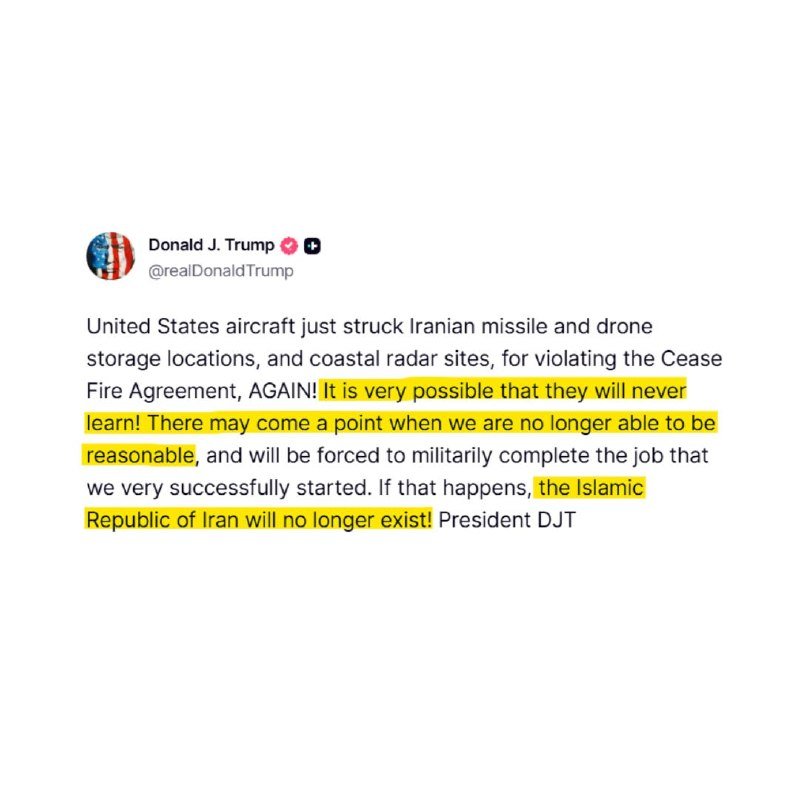
The mechanics matter. Teapot refiners run on thin margins and long crude diets; Iranian barrels are heavy, sour, and discounted, and they are the only feedstock that lets a teapot stay in the black when global benchmarks rise. A US waiver technically opens the door for more formal, lower-risk purchases — but it also invites compliance scrutiny, banking friction, and the possibility that the waiver is revoked the moment a drone lands in the wrong place. On 26 June 2026, that moment may have arrived. FRANCE 24 reported US strikes on Iran after President Donald Trump said a ceasefire had been violated, and an Epoch Times wire cited Trump's claim that an Iranian drone strike on a cargo ship in the Strait of Hormuz was the trigger.
Read together, the two data points describe a single hedging posture. China is accumulating metals because it expects the next decade to be defined by export controls and friend-shoring; it is also positioning its oil book so that a sudden re-tightening of US enforcement — or a hot flash in the Gulf — does not immediately break the teapots that keep its coastal fuel market liquid.
Why the Chinese position deserves a serious hearing
The default Western reading is that China is weaponising supply chains — building chokepoints it can later squeeze. That reading is not wrong, but it is incomplete. From Beijing's vantage point, the United States has spent fifteen years building its own instrument set: chip export controls, the CHIPS and Science Act, the Inflation Reduction Act's sourcing rules, the Entity List, secondary sanctions on third-country buyers of Iranian crude, and an export-finance architecture that ties development lending to political alignment. In that context, a stockpile of critical metals is the symmetric response: it is what a serious industrial power does when its access to inputs is no longer governed by price alone.
There is also a domestic-development case that the Western press rarely grants equal airtime. China's mid-stream processing capacity — rare-earth separation, battery-grade lithium refining, solar polysilicon — was built over two decades at a scale and a speed that no market economy has matched. The infrastructure is real, the engineering workforce is real, and the cost curve is real. Treating the country as a passive hoarder of foreign ore misreads the value chain it actually sits in the middle of. A more honest framing: China is buying the upstream to keep the midstream it already owns fully utilised, and to ensure that any Western attempt to onshore critical-mineral processing starts from a position of paying scarcity premia for years.
The steelman of the policy, then, is that this is what rational supply-chain statecraft looks like when the incumbent hegemon is signalling that rules-based trade no longer applies to the inputs that matter most. The critique — that it leaves China vulnerable to a sudden demand collapse, that it entrenches resource-curse dynamics in Africa, that it locks in a two-tier technology world — is also serious. Both can be true at once.
What the US side is actually doing
The American position looks, on the surface, like pressure from both ends: sanction Iranian crude to squeeze China, then waive the sanction to let Iranian crude flow in a way that is more visible and more controllable. That second move has a logic. A formalised, licensed, dollar-cleared Iranian oil trade is one the US Treasury can throttle at will; an informal, yuan-cleared, teapot-mediated trade is one it cannot.
But the 26 June strikes — and Trump's stated trigger that an Iranian drone hit a commercial vessel in the Strait of Hormuz — exposes the brittleness of the architecture. A waiver is a regulatory instrument; it does not survive a kinetic event. Roughly 20% of the world's seaborne oil transits the Strait, and roughly 85% of that crude goes to Asian buyers. Any sustained disruption is an immediate inflationary shock to China, Japan, South Korea and India, and a slower but larger shock to Europe. The US gains leverage from the threat; it loses from the execution.
It is also worth noting what the US has not done. It has not stood up a domestic mid-stream processing industry at the scale required to break Chinese dominance. The Inflation Reduction Act subsidises downstream demand; it does not, on present evidence, fund the smelters, separators and refineries that would let allied demand pull from non-Chinese supply. Until it does, every sanction on Chinese inputs is a tax on Western manufacturers and every waiver on Iranian crude is a quiet admission that the global oil market still routes through Beijing's independent refiners whether Washington likes it or not.
The counter-narrative worth weighing
A reasonable analyst can argue the dominant framing is overcooked. Two threads support that view. First, the 60% import number is a year-on-year snapshot, and the base period — 2025 — was depressed by soft downstream demand and by destocking across the battery and wind supply chains. Some of the surge is a rebound, not a stockpile. Second, China is not a monolithic actor: provincial governments, private refiners, and even some central agencies have been burned in past cycles by overbuying. The Politburo can set direction, but it cannot eliminate the cycle.
A second counter-narrative is geopolitical rather than economic. If the next US administration returns to a tariff-and-deal posture with Beijing — possible, not certain — much of the metal sitting in bonded warehouses becomes collateral rather than leverage. The stockpile then looks less like a strategic asset and more like an expensive insurance premium whose payoff is contingent on Washington staying the course Mike Poncana and others have described as a structural decoupling.
Stakes over the next eighteen months
If the trajectory holds, three things are likely. First, the price of processed rare earths, battery-grade lithium, gallium and germanium will remain capped not by demand but by Chinese willingness to release inventory, which gives Beijing a new form of price leadership. Second, the teapot refiners will continue to take Iranian and Russian crude, and any US enforcement that tries to choke that flow will need to confront the political cost of raising domestic Chinese fuel prices during a soft growth year. Third, Western and Japanese OEMs will continue to pay a "China premium" — not a tariff, but a structural cost — for any input that has been processed through a Chinese mid-stream facility, and the political pressure to onshore that processing will keep outpacing the capital budgets available to do it.
What remains genuinely uncertain is whether the 26 June US strikes mark the start of a sustained escalation in the Gulf, or a one-off enforcement action. The French and Epoch Times wires describe a specific incident — a drone strike on a cargo ship — and a specific US response. The next 72 hours will determine whether the Iranian-oil waiver survives the kinetic event that allegedly violated it, or whether the whole architecture snaps back to maximum pressure. Chinese importers, on the evidence of the customs data, are clearly betting that pressure is the more durable state.
Desk note: Monexus framed this as a single hedging posture — a critical-metals stockpile and a teapot-oil book — rather than as two unrelated stories. The Western wire line on each piece was treated as evidence, not as the conclusion; the Chinese position is steelmanned in the middle section, and the strike on Iran is read as a stress test of the US waiver architecture rather than as a standalone military event.
Wire provenance
This editorial synthesis draws on the following public wire/social posts:
- https://t.me/NikkeiAsia
- https://t.me/nikkeiasia
- https://t.me/NikkeiAsia
- https://t.me/nikkeiasia
- https://t.me/epochtimes